
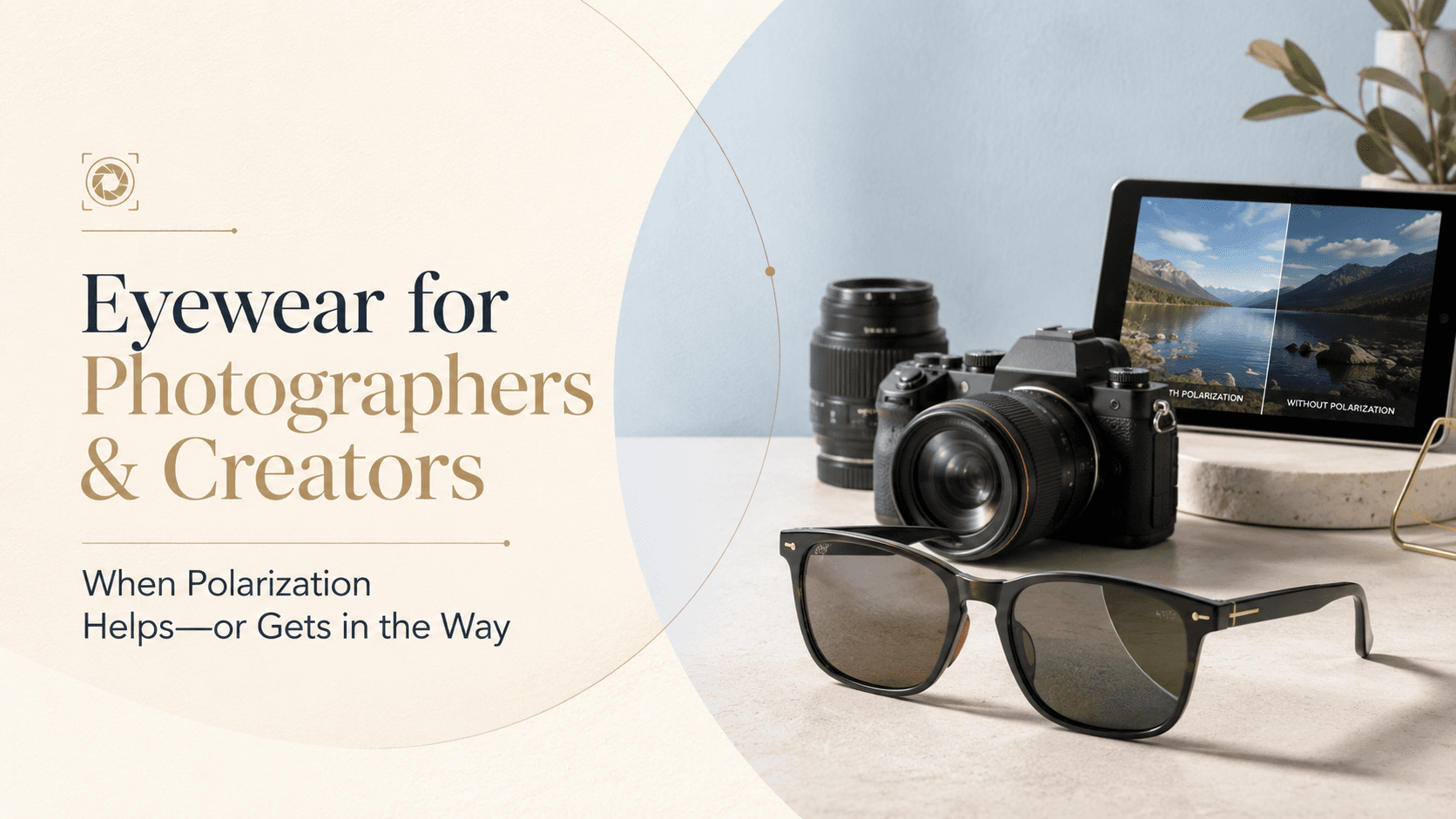
Polarized lenses reduce horizontal glare by filtering reflected light, making them ideal for outdoor activities—but for photographers and content creators, the same filter that protects your eyes can distort LCD screens, hide useful reflections, and throw off your colour judgement. Knowing when polarization works for you, and when it works against you, is the most practical eyewear decision a creator can make.
What Do Polarized Lenses Actually Do?
A polarized lens contains a chemical film oriented to block light waves bouncing off flat surfaces—water, roads, glass, wet sand. The result is a dramatic reduction in glare and improved contrast outdoors. For a landscape photographer hiking to a lake shoot, that sounds like a dream. In practice, it is—right up until you raise the viewfinder or flip open your monitor.
When Polarization Gets in the Way for Creators
Reading LCD and OLED Screens
Camera rear screens, smartphones, laptops, and tablet monitors emit light that is already partially polarized. When you tilt your head or rotate the device slightly, a polarized lens can make the screen go nearly black. If you are reviewing exposure on a sunny shoot or colour-grading on location, this is a serious problem.
Shooting Through Glass
Street photographers and videographers often shoot through shop windows, car windshields, or aquarium glass. A polarized lens on your eyes changes what you perceive versus what the camera actually captures—leading to exposure and white-balance decisions you will regret in post.
Assessing Reflections as a Creative Element
Reflections on water, chrome surfaces, and wet streets are legitimate compositional tools. Polarization removes them from your view even when your camera is capturing them in full, creating a disconnect between what you see and what you shoot.
When Polarization Genuinely Helps Creators
Long Outdoor Shoots Without a Camera in Hand
Event photographers waiting between setups, travel creators on transit days, or YouTubers filming B-roll on water all benefit from polarized protection. Eye fatigue from sustained glare exposure is real—it affects focus, reaction time, and mood. Wearing polarized sunglasses between active shooting moments is a smart compromise.
Video Creators Using External Monitors with Hoods
If your monitor hood eliminates direct sunlight, the screen-blackout problem largely disappears. Polarized sunglasses then become viable for protecting your eyes during outdoor video work without sacrificing monitor readability.
Non-Polarized Sunglasses: The Creator's Default
For most photographers and video creators, a high-quality non-polarized tinted lens is the better everyday choice. Look for lenses with UV400 protection, a neutral grey or brown tint for accurate colour rendering, and an anti-reflective coating on the back surface to reduce secondary glare from behind. These give you eye protection without the perceptual interference polarization introduces.
Prescription Wearers: Extra Considerations
If you shoot in prescription sunglasses, the polarization question matters even more because switching pairs mid-shoot is disruptive. A prescription non-polarized sunglass with UV400 and a good tint density (around 75–80% light reduction) covers most outdoor shooting conditions without the screen-reading headache. Rimloo offers prescription sunglasses in a range of tints suited to outdoor work.
Quick Comparison: Polarized vs Non-Polarized for Creators
Glare reduction outdoors: Polarized wins clearly
Screen readability: Non-polarized wins clearly
Colour accuracy for editing decisions: Non-polarized is safer
Eye fatigue on long outdoor days: Polarized has the edge
Shooting through glass: Non-polarized is far more reliable
General travel and lifestyle use: Polarized is comfortable and practical
The smartest approach for working creators is owning both—a polarized pair for life outside the shoot, and a non-polarized UV400 pair for active work. Your eyes deserve protection; your images deserve accuracy.
