How To Measure the Pupillary Distance (PD)?
What is Pupillary Distance (PD)?
Pupillary Distance (PD) is the distance (in millimeters) between the centers of your pupils.
This measurement ensures that:
- Your lenses align perfectly with your eyes
- You experience clear, comfortable vision
- Your eyes don’t feel strained after wearing glasses
Without accurate PD, even the best lenses can feel uncomfortable.
Why is PD important when ordering glasses?
When your PD is correct:
- Your vision feels natural and sharp
- Your eyes stay relaxed even after long hours
- Your glasses sit perfectly aligned with your face
When it’s incorrect:
- You may feel eye strain or headaches
- Vision may appear slightly blurry
- Glasses may feel “off-center”
That’s why measuring PD correctly is non-negotiable.
What is the difference between Single PD and Dual PD?
- Single PD — A single number showing the total distance between both pupils (for example: 62 mm).
- Dual PD — Two numbers showing the distance from each pupil to the centre of your nose (for example: 31/31).
Both measurements are valid, but dual PD provides slightly more precise lens alignment.
What is the average PD for adults?
The typical PD for adults ranges between 54 mm and 74 mm. However, everyone’s measurements are different, so it’s important to use your exact PD whenever possible.
How to measure your PD?
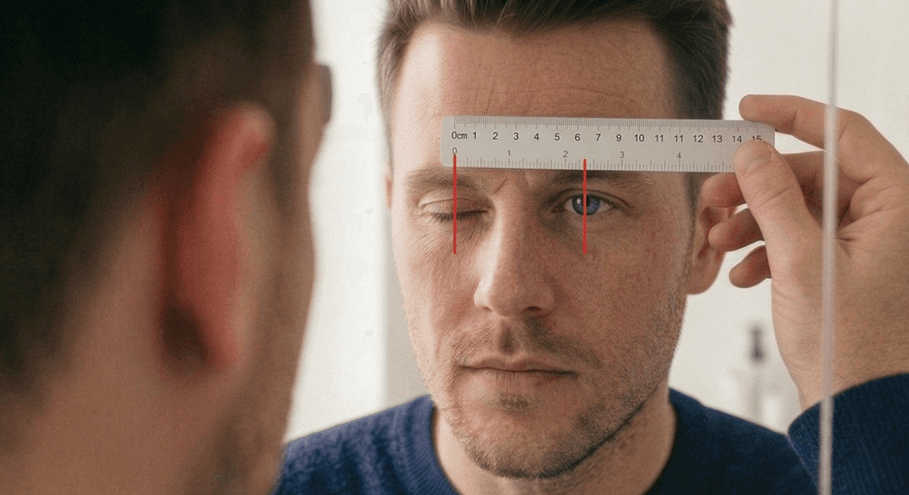
Method 1: Measure PD Yourself (Mirror Method)
Step 1: Stand in front of a mirror


Step 2: Hold a ruler against your forehead or nose bridge
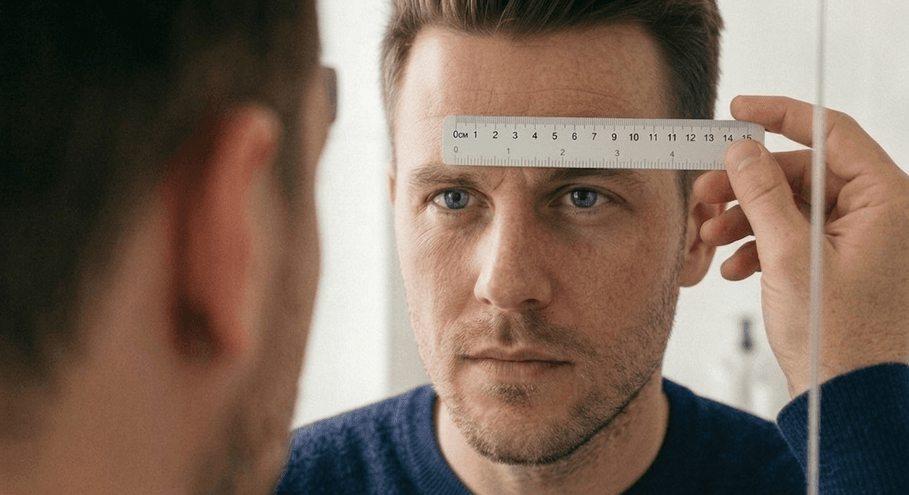
Step 3: Close your right eye and align 0 mm to the center of your left pupil
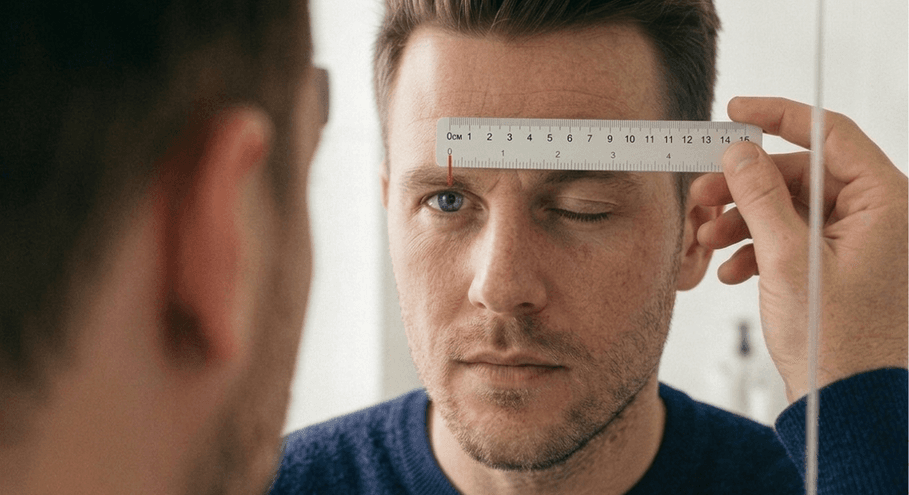
Step 4: Now close your left eye and open your right eye