
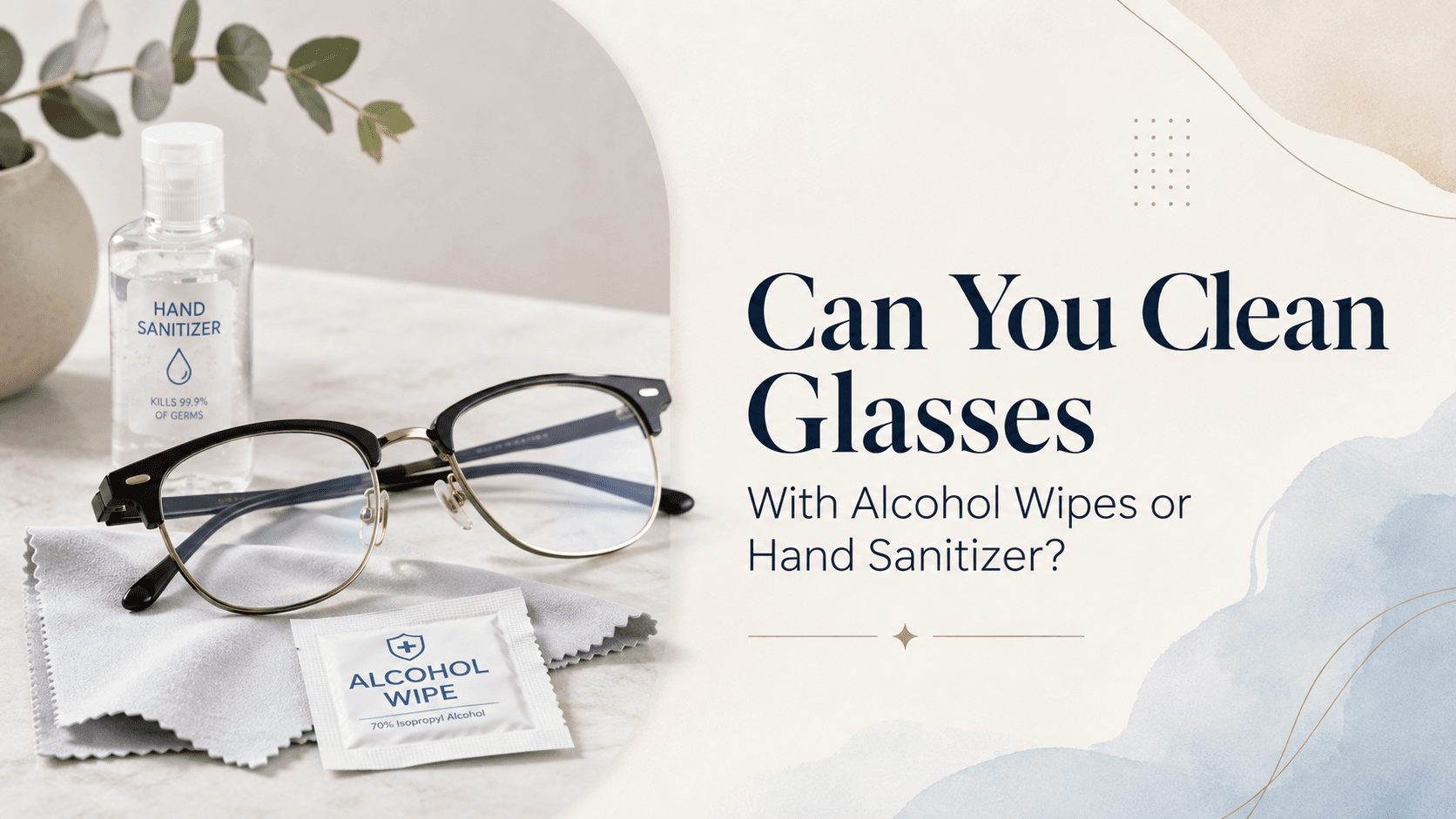
You should not regularly clean glasses with alcohol wipes or hand sanitizer. While a single accidental use is unlikely to cause immediate visible damage, repeated exposure to isopropyl alcohol or ethanol strips away anti-reflective, UV, and blue-light coatings on your lenses. A microfibre cloth with lens-safe solution is the only cleaning method opticians consistently recommend.
Why Alcohol Is Risky for Coated Lenses
Most modern prescription lenses — including those sold by Rimloo — come with multi-layer coatings: anti-reflection, scratch resistance, UV protection, and sometimes a blue-light filter. These coatings are bonded to the lens surface with materials that alcohol dissolves over time.
Isopropyl alcohol (IPA) at concentrations above 30% degrades coating adhesion.
Hand sanitizers typically contain 60–70% alcohol — well above the safe threshold.
Damage appears gradually: you may notice increased glare, haze, or micro-cracks before you realise the coating has failed.
Acetone-based products (nail-polish remover) are even more destructive and must never touch lenses.
What About the Frames?
Alcohol is slightly less risky on metal frames, but it still dries out acetate and TR-90 plastic frames, causing them to become brittle or discoloured with regular use. Nose pads made of silicone can also harden and crack. For a thorough frame clean, warm soapy water and a soft brush around the hinges works best.
The Right Way to Clean Your Glasses
Proper lens care takes under a minute and protects your investment. Follow this routine every day:
Rinse lenses under lukewarm tap water to dislodge dust particles before wiping.
Apply one small drop of mild dish soap (fragrance-free, lotion-free) to each lens.
Gently rub with clean fingertips for 20 seconds.
Rinse thoroughly and shake off excess water.
Dry with a clean, lint-free microfibre cloth using light circular strokes.
When Are Alcohol Wipes Acceptable?
In a genuine emergency — say, you've touched your lenses with sunscreen-covered fingers and have nothing else available — a single, gentle wipe with a 70% IPA lens wipe is far better than smearing the contamination further. Rinse and dry with a microfibre cloth as soon as possible afterwards. Do not make it a habit.
Products That Are Truly Safe
Look for cleaning sprays labelled alcohol-free and coating-safe. Dedicated lens-cleaning sprays use mild surfactants that lift oils and fingerprints without attacking coatings. Pre-moistened lens wipes from optical brands are also formulated to safe pH and alcohol levels. Avoid window cleaners like Colin, which contain ammonia and will permanently cloud coated lenses.
Glasses vs Sunglasses: Same Rules Apply
Polarised and tinted sunglass lenses are just as vulnerable to alcohol damage as clear prescription lenses — sometimes more so, because the polarising film is an additional layer that can delaminate. Treat your sunglasses with the same care as your everyday eyeglasses.
Quick Reference: Safe vs Unsafe Cleaners
Safe: lukewarm water, mild dish soap, alcohol-free lens spray, optical microfibre cloth
Use with caution: single-use optical lens wipes (check the label for coating-safe formula)
Avoid entirely: hand sanitizer, rubbing alcohol, window cleaner, paper towels, shirt fabric, baby wipes with fragrance
