
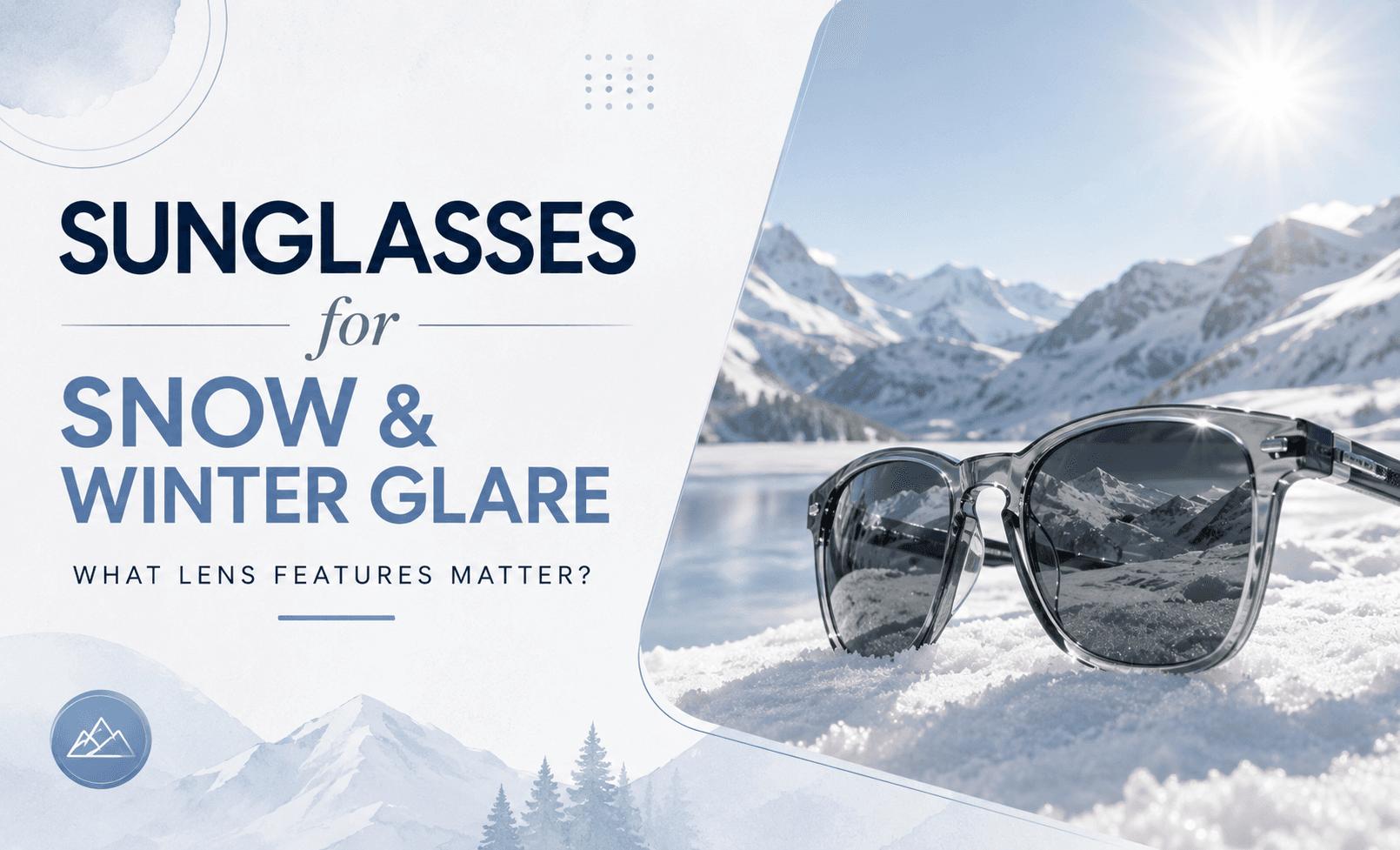
Snow reflects up to 80% of UV radiation — far more than sand or water — which means winter sunglasses are not optional gear, they are a genuine eye-health necessity. The right lens can eliminate blinding glare, reduce eye fatigue, and prevent long-term UV damage even on overcast winter days.
Why Is Snow Glare Harder on Your Eyes Than Summer Sun?
Sunlight bouncing off a flat snowfield hits your eyes from below as well as above, overwhelming your natural squinting reflex. This phenomenon, sometimes called snow blindness or photokeratitis, can cause temporary vision loss, redness, and pain after even a few unprotected hours outdoors. Ordinary dark lenses without specific optical properties do very little to combat it.
What Lens Features Should You Look For?
Polarisation
Polarised lenses are the single most important feature for snow environments. They contain a chemical filter that blocks horizontally reflected light — precisely the angle at which snow glare travels. The result is dramatically reduced glare without darkening your overall view. If you only upgrade one thing about your winter eyewear, make it polarisation.
UV400 Protection
UV400 means the lens blocks all wavelengths up to 400 nanometres, covering both UVA and UVB rays. In snowy conditions, UV exposure is compounded by altitude and reflectivity, so UV400 certification is non-negotiable. Always check this specification before buying — a dark tint alone does not equal UV protection.
Lens Colour and Tint
Not all tints are equal for winter use. Brown and amber lenses enhance contrast on flat, white terrain, making it easier to spot dips and uneven surfaces — ideal for skiing or mountain walking. Yellow and rose tints perform well in low-light or overcast conditions. Grey tints are best for bright, sunny days when true colour accuracy matters.
Mirrored Coatings
A mirrored or flash coating on the outer surface of the lens reflects additional light away before it even reaches the tint layer. This gives extra protection in high-altitude or intensely reflective environments and is commonly seen on sports and ski sunglasses.
Anti-Reflective (AR) Coating on the Inner Surface
An AR coating on the back surface of the lens prevents light that enters from the sides or below from bouncing into your eyes. Combined with a front mirror coating, this creates a complete barrier against winter glare from every angle.
Lens Material: Polycarbonate vs Glass
Polycarbonate lenses are lightweight, impact-resistant, and inherently block UV rays — making them an excellent choice for active winter use. Glass lenses offer superior optical clarity but are heavier and can shatter on impact. For most Indian consumers heading to hill stations or snowy treks, polycarbonate is the practical winner.
Frame Fit Matters Too
A lens with great optical properties loses effectiveness if the frame lets light flood in from the sides. Look for wraparound or close-fitting frames that seal the eye area. Larger lens coverage also protects the delicate skin around your eyes from UV exposure — a detail easy to overlook.
Can You Use Prescription Lenses?
Yes. Prescription sunglasses with polarised, UV400, and tinted lenses are widely available. If you wear corrective lenses daily, prescription sunglasses remove the need to layer contacts under sports eyewear and give you the same optical quality in a single pair.
Choosing the right winter sunglasses comes down to a short checklist: polarised, UV400, the right tint for your light conditions, and a frame that fits snugly. Get those four right and your eyes will be genuinely protected — not just shaded.
