
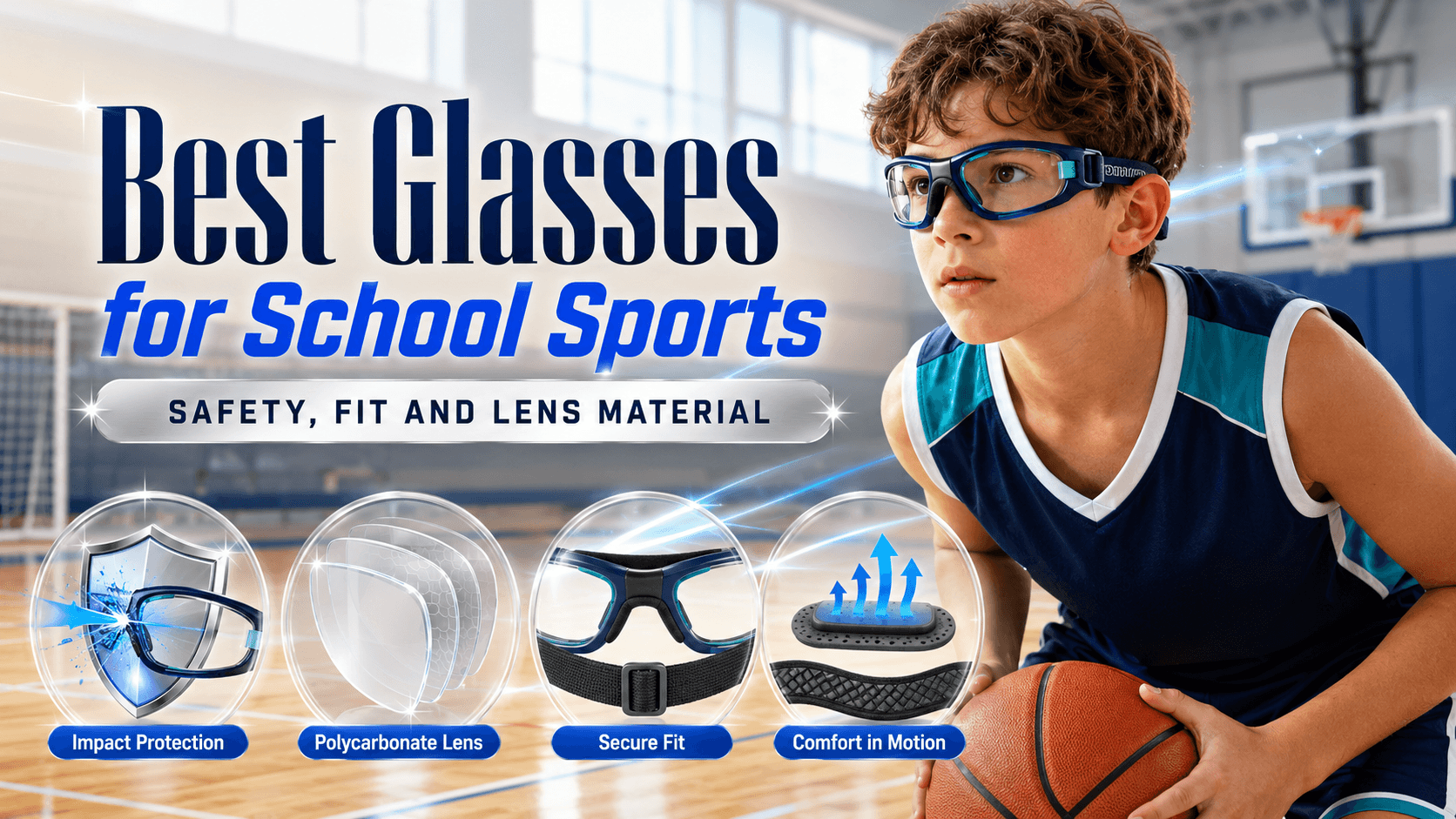
For school sports, the safest and most practical glasses combine polycarbonate or Trivex lenses with flexible TR90 or rubber-tipped frames that stay secure during physical activity. Standard fashion frames are not designed to absorb impact and can shatter, making purpose-built sports eyewear essential for any student who plays on the field or in the gym.
Why Ordinary Glasses Are Not Safe for Sports
Everyday prescription frames are made for comfort in low-impact settings. During sports, a stray ball, an accidental elbow or a hard fall can cause standard lenses to crack and standard frames to bend out of shape — or worse, break against the face. Eye injuries from shattered lenses are among the most preventable sports injuries, which is why ophthalmologists and school sports coaches consistently recommend dedicated sports eyewear for young wearers.
Which Lens Material Is Best for School Sports?
Polycarbonate is the gold-standard lens material for sports eyewear. It is up to ten times more impact-resistant than standard plastic, significantly lighter than glass, and comes with built-in UV protection — a bonus for outdoor sports like cricket, football and athletics. Trivex is a newer alternative that matches polycarbonate's impact resistance while offering slightly sharper optical clarity, though it tends to cost more.
Both materials can be made with prescription corrections, so students who need vision correction do not have to compromise on safety. Anti-scratch and anti-reflective coatings are worth adding, especially for outdoor use where glare can affect performance.
What Frame Material Works Best?
TR90 is the top frame choice for school sports. This thermoplastic material is extremely lightweight, virtually unbreakable under normal sporting conditions, and memory-flex — meaning it returns to its original shape after being bent. Rubber or silicone nose pads and temple tips help the frame grip securely even when a student is sweating.
Avoid acetate or standard metal frames for sports use. Acetate is stylish but brittle under impact. Metal frames can bend permanently and, if they break, pose a sharper injury risk. Titanium is durable and lightweight but is generally over-engineered and overpriced for a school sports context.
Fit: The Feature Most Parents Overlook
Even the best lens and frame material will fail to protect if the glasses do not fit correctly. Look for these fit features when shopping for school sports glasses:
Wraparound or semi-wraparound design for peripheral coverage and stability
Spring hinges that flex outward without snapping
Adjustable nose pads to prevent the frame from sliding during movement
Temple length suited to the child's head size — frames that are too wide will shift during play
Optional strap attachment points so a sports strap can be added for high-intensity activities like basketball or badminton
Indoor vs Outdoor School Sports: Does It Change the Choice?
For indoor sports (badminton, basketball, gymnastics), focus purely on impact resistance and fit. A clear polycarbonate lens is ideal. For outdoor sports (cricket, football, athletics), consider adding a light tint or polarised coating to manage glare. Photochromic lenses that darken in sunlight are a versatile option for students who move between indoor and outdoor environments throughout the school day.
A Quick Reminder on Eye Health
Sports glasses should be part of a broader eye-health routine. Schedule an annual eye check so prescriptions stay current — an outdated prescription can cause eyestrain and affect a student's performance on the field just as much as off it.
