
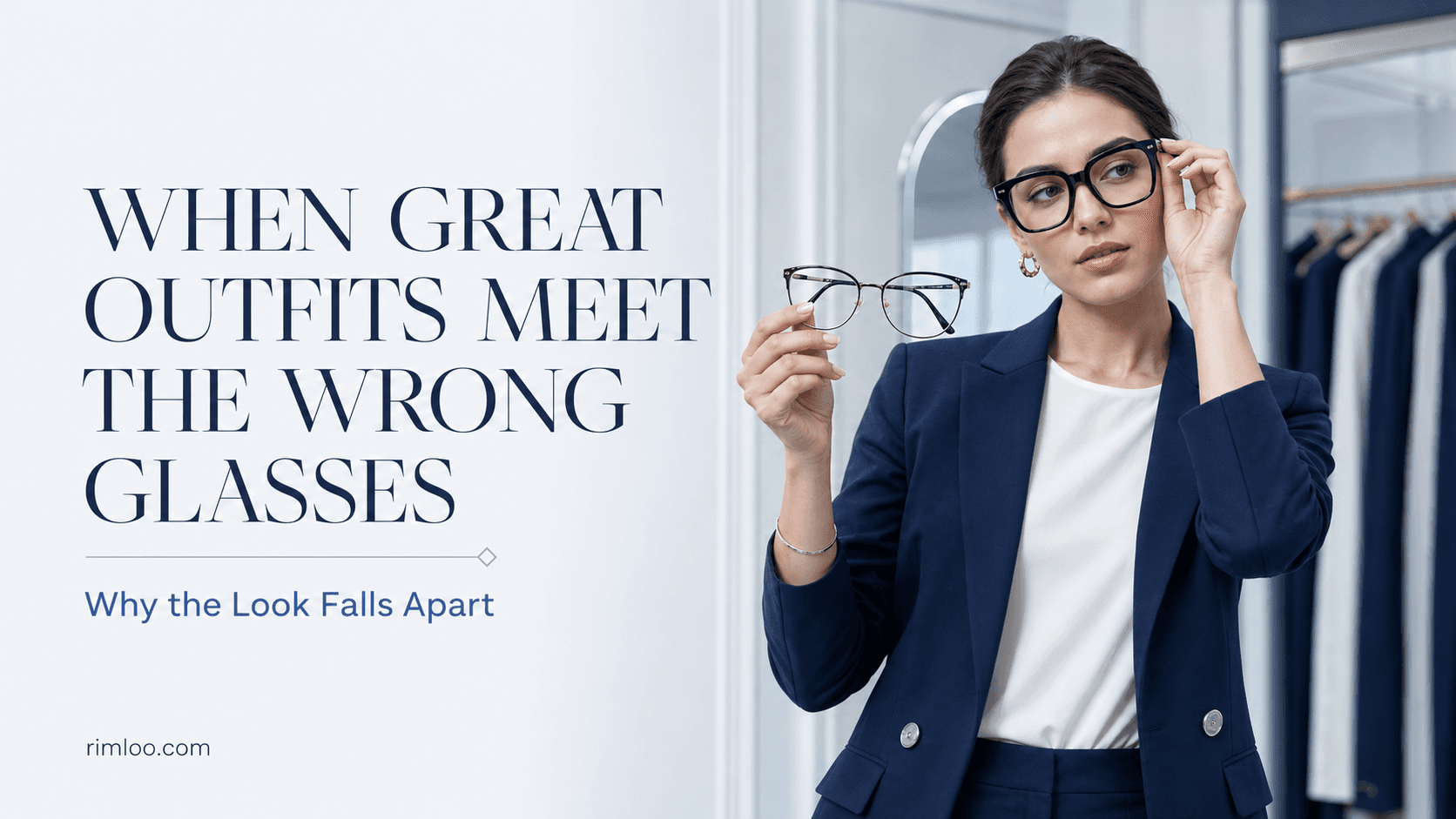
The “Wrong Frame” Effect: Why Some Glasses Make Your Outfit Feel Off
You put together an outfit that should work perfectly. The colours coordinate, the fit looks great and your shoes complete the look. But when you add your glasses, something suddenly feels… off.
Your glasses may suit your face, yet still clash with the visual mood of your outfit. This is the “wrong frame” effect—and it explains why the same pair can look stylish with one outfit but completely out of place with another.
Eyeglasses are not simply vision-correction tools. They sit at the centre of your face, making them one of the first details people notice. Their shape, colour, thickness and finish all contribute to your overall appearance. If your frames and outfit are communicating different style messages, the entire look can feel disconnected.
Your Glasses Are Part of the Outfit
People often choose glasses based only on face shape. While facial proportions matter, they are only part of the styling equation.
Imagine wearing a soft linen outfit in cream and beige with a pair of thick, glossy black frames. The glasses may look excellent on your face, but their strong visual weight could overpower the relaxed outfit.
Now picture delicate gold wire frames with an oversized leather jacket, chunky boots and bold accessories. The frames may disappear completely because the outfit has a much stronger personality.
Neither pair is necessarily wrong. The problem is the relationship between the eyewear and the clothing.
The best glasses do not have to match every item you wear. They should, however, look like they belong in the same style story.
1. The Visual Weight Is Unbalanced
Every frame has visual weight. Thick acetate frames appear bold and substantial, while thin metal or rimless glasses feel lighter and more understated.
Your clothes also carry visual weight. Structured blazers, heavy denim, oversized silhouettes and dark colours feel visually strong. Flowing fabrics, pale shades and minimal designs appear lighter.
When these elements are badly balanced, the eyewear can either dominate the outfit or become almost invisible.
For a polished appearance, try pairing structured clothing with frames that have enough presence to hold their own. With soft, minimal outfits, transparent, slim or lightly coloured frames can create a more natural balance.
Of course, deliberate contrast can look fantastic. The difference is that intentional contrast feels confident; accidental imbalance simply feels confusing.
2. The Frame Colour Competes With Your Clothes
Frame colour does not need to perfectly match your outfit, but it should interact with it thoughtfully.
Warm tortoiseshell, caramel, bronze and champagne frames tend to blend beautifully with earthy wardrobes. Silver, grey, navy and clear frames often complement cooler colours. Black can work almost anywhere, but its high contrast may feel too sharp with certain soft or romantic outfits.
Consider repeating a small colour from your glasses elsewhere in your look. Brown frames might connect with a leather belt, while silver temples can echo your jewellery. This subtle repetition makes the entire outfit feel more intentional.
If matching feels too predictable, use complementary colours. Deep green frames, for example, can add an interesting accent to burgundy, rust or neutral clothing without appearing random.
3. The Frame Shape Changes the Mood
Frame shape carries personality.
Round glasses can feel artistic, intellectual or playful. Rectangular frames often appear precise and professional. Cat-eye glasses introduce confidence and retro glamour, while aviator-inspired frames offer a relaxed, fashion-forward edge.
This means shape can influence how your outfit is perceived.
A sharp rectangular frame may make a casual outfit feel more polished. A bold cat-eye can turn a simple black dress into a statement. Round transparent frames can soften a structured work look without making it feel less professional.
Before choosing your glasses, ask yourself: What mood am I trying to create today? Your answer may be more useful than following a rigid face-shape rule.
4. Too Many Details Are Fighting for Attention
A patterned shirt, statement necklace, bright lipstick and heavily detailed glasses can all look beautiful individually. Together, they may compete for the same attention.
A strong outfit needs a visual focal point. If your glasses feature bold colours, decorative temples or an unusual silhouette, allow them some breathing room. Keep accessories or prints more controlled.
If your clothes are already expressive, simpler frames can provide balance without making the outfit boring. Rimless glasses, clean metal frames or neutral acetate styles can quietly complete the look.
The goal is not to remove personality. It is to decide where you want the personality to speak loudest.
5. The Frames Do Not Match the Occasion
Some glasses naturally feel more formal, creative, sporty or relaxed.
A playful oversized frame may be perfect for brunch but feel distracting during a formal presentation. Similarly, conservative office frames may make an expressive weekend outfit seem unnecessarily serious.
That does not mean you need a separate pair for every event. A small eyewear wardrobe of two or three versatile styles can make dressing much easier:
A refined everyday frame for work and polished outfits
A relaxed or transparent frame for casual clothing
A bold statement pair for social occasions and fashion-led looks
Think of eyewear the way you think about shoes. You could wear one pair everywhere, but changing the style often makes the outfit feel much more complete.
Try the Outfit-First Test
The next time your appearance feels slightly wrong, do not immediately change your clothes. Remove your glasses and look at the outfit again. Then try a different frame colour, shape or thickness.
Ask three quick questions:
Do the glasses support the mood of the outfit?
Is their visual weight balanced with the clothing?
Do they look intentionally chosen?
If the answer is yes, you have found the right frame.
The Right Glasses Make an Outfit Feel Finished
The “wrong frame” effect is not about following strict fashion rules. Personal style should leave room for experimentation, contrast and unexpected combinations.
What matters is visual intention.
Your glasses should not feel like something added after getting dressed. They should feel like part of the look from the beginning. Once you start treating eyewear as a central fashion accessory, you will notice a surprising difference: ordinary outfits become more expressive, polished and unmistakably yours.
