
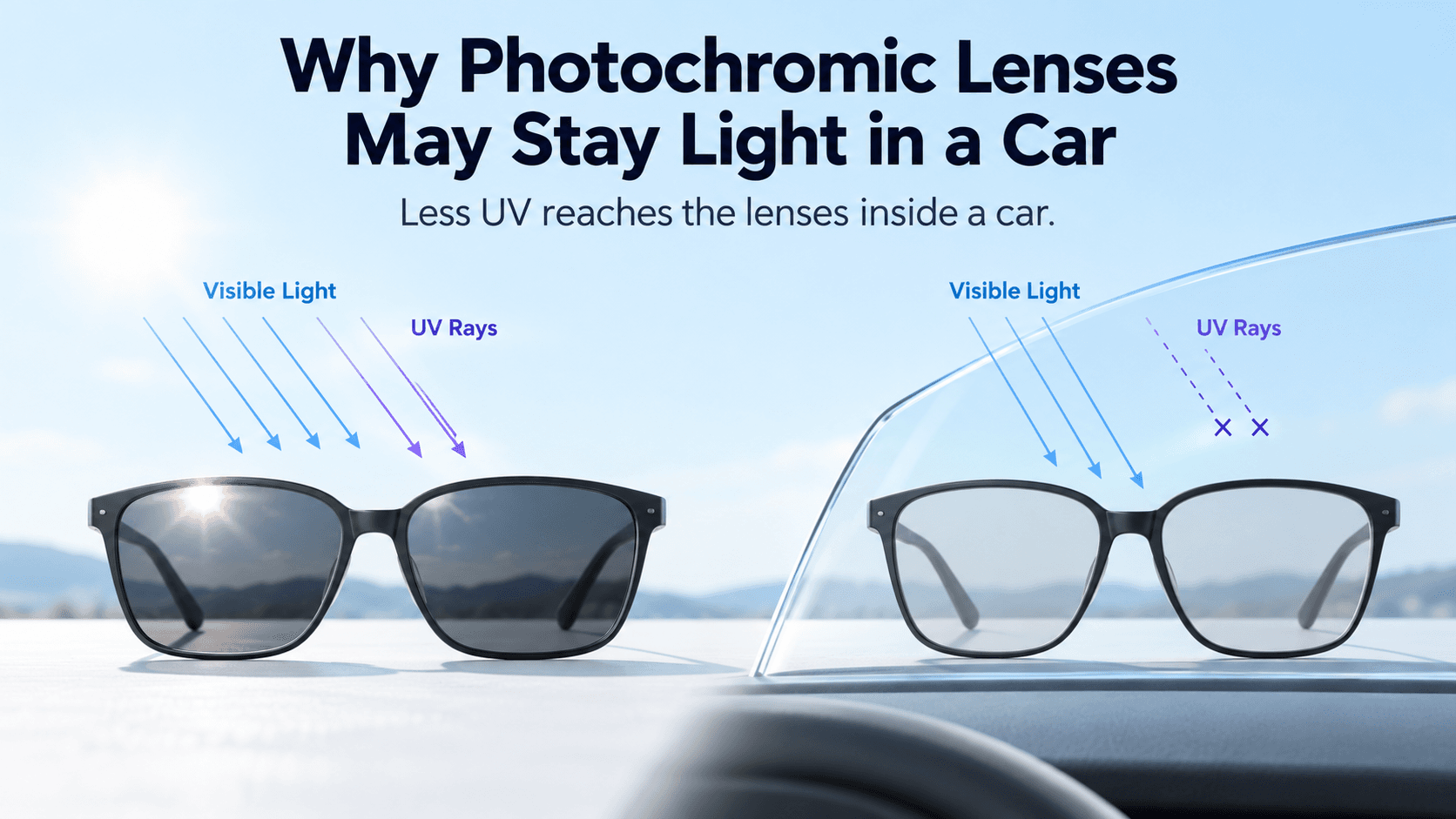
Photochromic lenses stay light inside most cars because the windshield and side windows block the ultraviolet (UV) radiation that triggers the darkening reaction. Without UV exposure, the photosensitive molecules in the lens cannot activate, so the lenses remain in their clear or near-clear state — even on a very bright, sunny day.
How Do Photochromic Lenses Actually Work?
Photochromic lenses contain millions of light-sensitive molecules — typically silver halide compounds or organic photochromic dyes — embedded in or coated onto the lens material. When these molecules are struck by UV rays, they change shape and absorb visible light, causing the lens to darken. When UV exposure stops, the molecules revert to their original form and the lens clears again.
The key trigger is UV radiation, not brightness or visible light intensity. This distinction is critical to understanding the car problem.
Why Does the Car Windshield Block the Reaction?
Modern automotive glass is specifically engineered to filter out UV radiation. Laminated windshields, which are now standard in every car sold in India, block nearly 99% of UV-A and UV-B rays. Side and rear windows made of tempered glass also block a significant portion of UV. This UV-blocking property is a safety feature that protects passengers from sun damage — but it also prevents photochromic lenses from receiving the signal they need to darken.
Does Lens Brand or Quality Make a Difference?
This limitation applies universally to all standard photochromic lenses, regardless of brand or price point. Whether you own Transitions, Sensity, or any other photochromic product, the underlying chemistry responds to UV — not visible light — and car glass blocks UV. A higher-quality photochromic lens will darken faster outdoors and clear faster indoors, but it will still behave the same way behind automotive glass.
Photochromic Lenses vs Polarised Sunglasses for Driving
If reducing glare while driving is your primary goal, polarised sunglasses are a more reliable solution. Polarised lenses work by filtering horizontally reflected glare — the kind that bounces off wet roads, bonnets, and other car surfaces — and they do not rely on UV to function. Photochromic lenses, on the other hand, excel when you move frequently between indoor and outdoor environments on foot, such as walking between office and street.
When to Choose Photochromic Lenses
Photochromic lenses are best suited to people who spend a lot of time outdoors on foot, want the convenience of a single pair of glasses for all lighting conditions, or find it inconvenient to carry a separate pair of sunglasses. They are an excellent everyday lens for commuters who walk or use public transport.
When to Choose Polarised Sunglasses
Choose polarised sunglasses when you drive frequently, spend long hours on the road, or need consistent light control regardless of UV levels. A prescription polarised lens can be made for most vision corrections and gives you predictable, reliable glare reduction every time you are behind the wheel.
Is There a Photochromic Lens That Works in a Car?
Some newer photochromic technologies — such as Transitions XTRActive and certain dual-activation lenses — are formulated to react to both UV and high-intensity visible light. These lenses will darken slightly behind automotive glass, though not as much as they do in open sunlight. If in-car darkening is important to you, ask your optician specifically about visible-light-activated photochromic options when selecting your next pair.
Caring for Your Photochromic Lenses
To keep the photochromic layer performing at its best, avoid leaving your glasses on the car dashboard for long periods in extreme heat, clean lenses only with a microfibre cloth and lens-safe solution, and store them in a hard case when not in use. Heat and abrasive cleaning can degrade the photochromic coating over time and slow the darkening and clearing cycle.
