
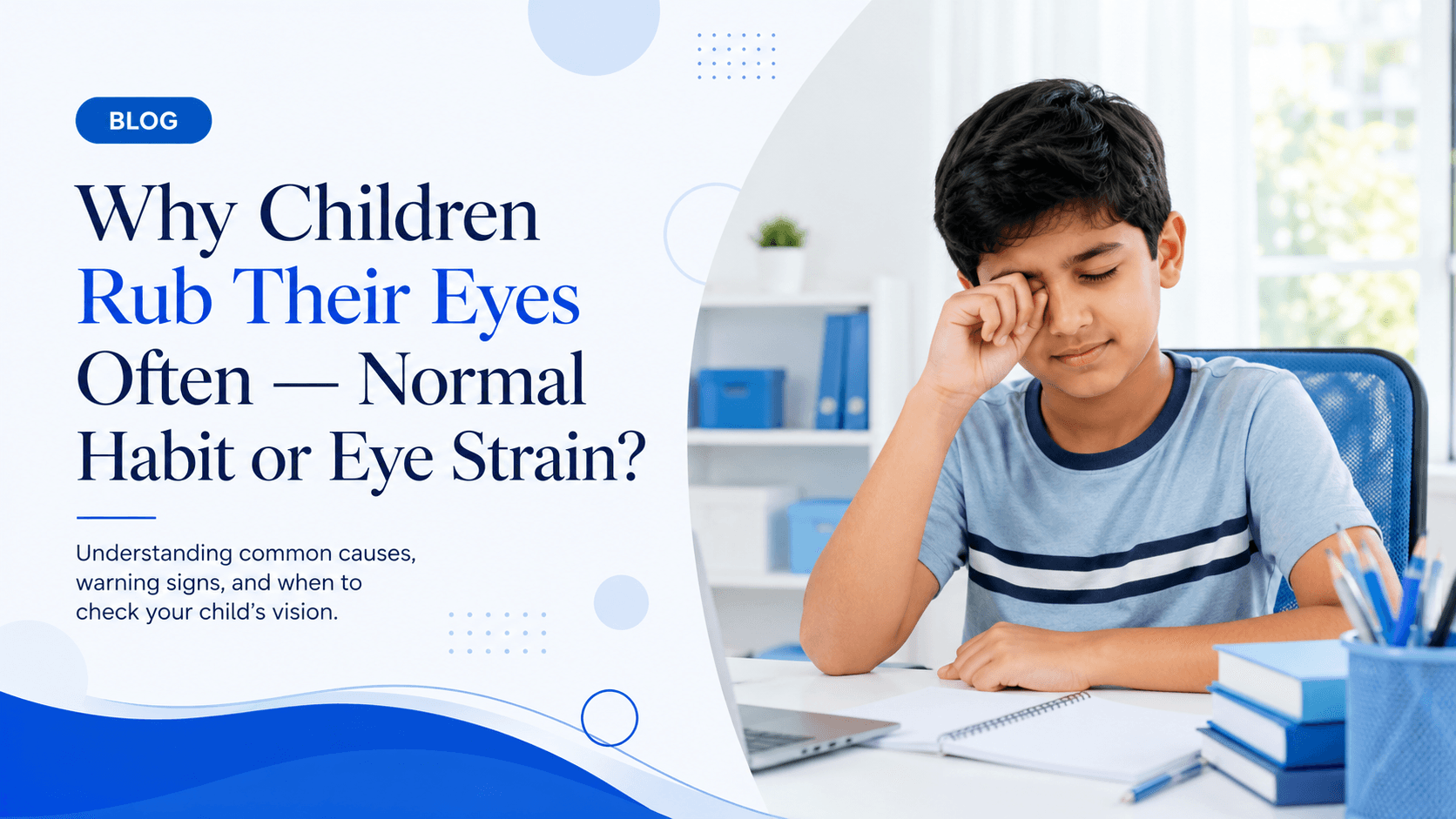
Children rub their eyes because of tiredness, irritation, allergies, or — more often than parents realise — undiagnosed eye strain from uncorrected vision. Most occasional rubbing is harmless, but frequent, forceful, or one-sided rubbing is a signal worth investigating with an eye care professional.
Is Eye Rubbing in Children Always Normal?
Not always. Rubbing the eyes once in a while — after waking up, when feeling sleepy, or after being outdoors on a dusty day — is completely normal for children of all ages. The eyes accumulate mucus overnight and respond to minor irritants during the day, and rubbing is the body's instinctive response.
The concern arises when rubbing becomes frequent, compulsive, or vigorous. At that point it can indicate an underlying problem that needs attention, ranging from simple allergic conjunctivitis to significant refractive errors like myopia or astigmatism.
Common Reasons Children Rub Their Eyes
1. Tiredness and Sleep
The most benign reason. When a child is sleepy, the lacrimal glands slow down, eyes feel dry, and rubbing provides temporary relief. If your child only rubs their eyes near nap time or bedtime, there is nothing to worry about.
2. Allergies and Conjunctivitis
Allergic conjunctivitis is extremely common in Indian children, especially during pollen season, monsoon, or in cities with high pollution. The eyes become itchy, red, and watery. Children rub because the histamine response creates an intense itch sensation. Rubbing provides short-lived relief but actually worsens the inflammation by releasing more histamine. A paediatric ophthalmologist can prescribe age-appropriate antihistamine eye drops.
3. Eye Strain from Screens and Prolonged Near Work
Children today spend significant time on smartphones, tablets, and television — often at closer distances than adults. Sustained near-focus work causes the ciliary muscles inside the eye to fatigue. The child may not be able to articulate that their vision is blurry or their eyes ache, so they rub instead. If your child rubs their eyes during or after screen time, reading, or homework, eye strain is a likely culprit.
4. Uncorrected Refractive Errors
Myopia (short-sightedness), hyperopia (long-sightedness), and astigmatism force the eye muscles to work harder to bring images into focus. This constant effort is exhausting. Children with undiagnosed prescriptions often rub their eyes, squint, sit very close to screens, or complain of headaches. A comprehensive eye examination — ideally before age five and at every school year — can detect and correct these errors early.
5. Foreign Body or Dry Eye
A speck of dust, an eyelash, or low ambient humidity (common in air-conditioned classrooms) can cause dryness and the sensation that something is in the eye. This type of rubbing is usually sudden and accompanied by tearing. Paediatric dry eye is increasingly diagnosed in Indian urban children who spend long hours in air-conditioned environments.
6. Habitual or Self-Soothing Behaviour
Some children develop eye rubbing as a self-soothing habit, similar to thumb-sucking. This is more common in toddlers and usually resolves on its own. However, if the habit persists past age four or five and involves pressure on the eyeball, it should be assessed because repeated forceful rubbing has been linked to corneal thinning (keratoconus) over time.
Normal Rubbing vs. Rubbing That Needs Attention
Use this framework to assess your child's eye rubbing:
Likely normal: Rubbing only when sleepy, after waking, or after a single outdoor exposure to dust — and it stops quickly.
Worth monitoring: Rubbing that happens daily, is accompanied by redness, or seems to increase during reading or screen time.
See a doctor: Rubbing that is forceful and knuckle-deep, one-sided, accompanied by discharge or sensitivity to light, or present in a child who also squints or holds books very close.
How Screen Time Makes Eye Strain Worse for Children
The average Indian child now spends two to four hours daily on screens outside school. On a screen, blink rate drops from the normal 15-20 blinks per minute to as few as 5-7 blinks per minute. Fewer blinks mean a less stable tear film, drier ocular surface, and more fatigue. The 20-20-20 rule — every 20 minutes, look at something 20 feet away for 20 seconds — is a simple habit that significantly reduces digital eye strain in children and adults alike.
When Should You Get Your Child's Eyes Tested?
The Indian Academy of Ophthalmology recommends a baseline eye examination at six months, again at three years, and then annually once the child starts school. Many refractive errors are first detected because a parent or teacher notices the child squinting or rubbing their eyes. Early correction with prescription glasses not only improves academic performance but also prevents conditions like amblyopia (lazy eye) from developing.
If your child is school-aged and has never had a comprehensive eye test, or if their last check-up was over a year ago, this is a good time to book one. Rimloo offers a wide range of kids' eyeglasses designed for active, growing children — lightweight frames with impact-resistant lenses built to handle the demands of school life.
Practical Tips to Reduce Eye Strain in Children
Follow the 20-20-20 rule during all screen and reading sessions.
Ensure reading light comes from the side, not directly behind or in front of the child.
Keep screens at least 40–50 cm from the eyes and slightly below eye level.
Encourage outdoor play for at least one hour daily — natural light has a protective effect against myopia progression.
Use a humidifier or take regular breaks in heavily air-conditioned rooms to prevent dry eyes.
Wash hands frequently so children do not introduce bacteria or allergens when they do rub.
If allergies are suspected, consult a doctor before the season starts rather than after symptoms appear.
The Bottom Line
Occasional eye rubbing is a normal part of childhood. Frequent, forceful, or contextually inappropriate rubbing — especially during or after close work — deserves a proper eye examination. Catching a refractive error or managing allergies early can spare your child years of unnecessary eye strain and protect their long-term vision health.
