
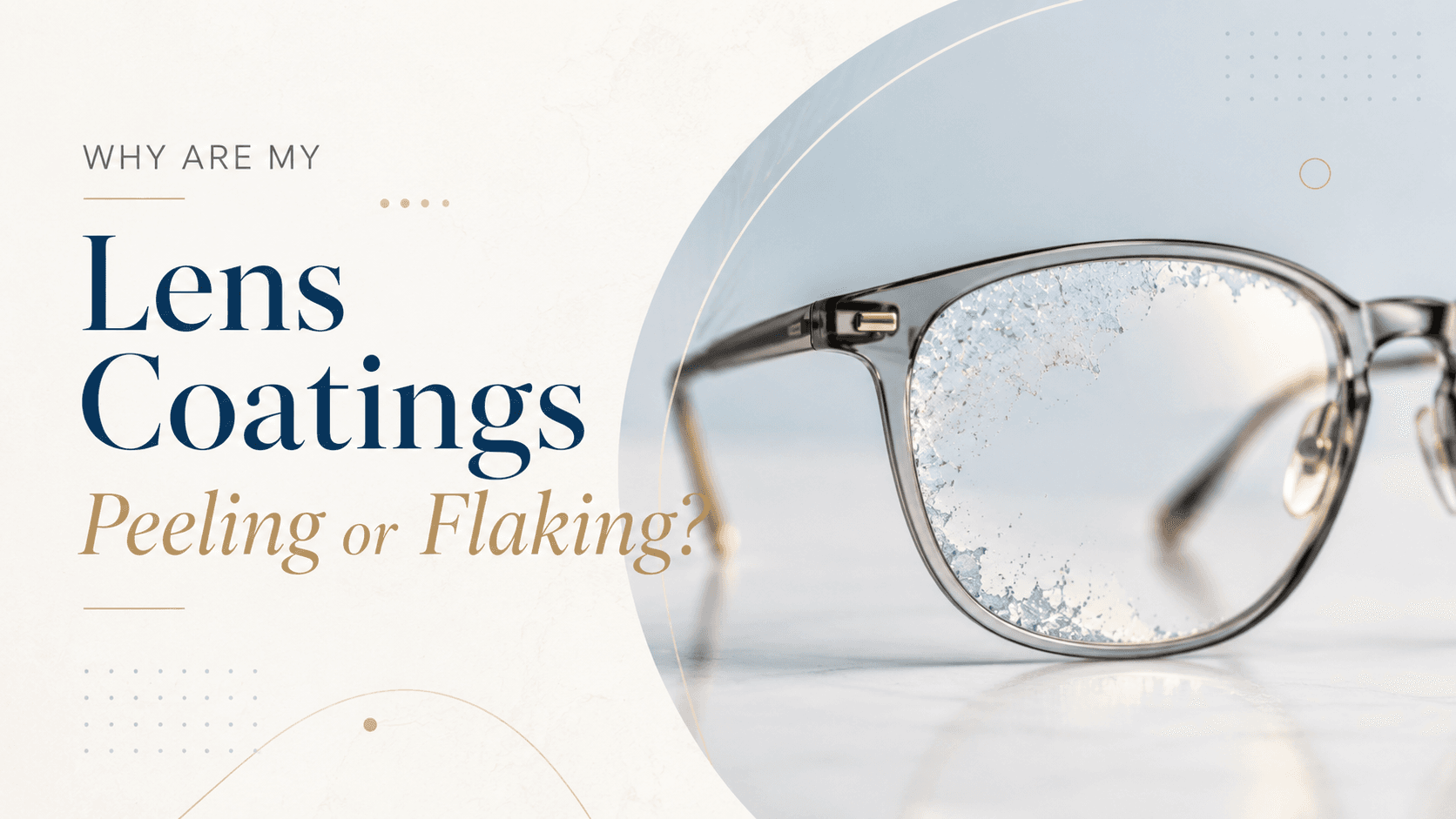
Lens coatings peel or flake when the thin film bonded to the lens surface breaks down — most often due to heat exposure, harsh cleaning habits, or a coating that has simply reached the end of its lifespan. Identifying the exact cause helps you protect your current lenses and avoid repeating the mistake with your next pair.
What Causes Lens Coatings to Peel?
Most modern lenses carry multiple coatings: anti-reflective (AR), anti-scratch, UV, blue-light filtering, or hydrophobic layers. Each is a microscopically thin film. When that film separates from the lens base, you see bubbling, crazing, or flaking. The most common triggers are:
Heat damage — Leaving glasses on a car dashboard, near a stove, or in direct sunlight raises the lens temperature beyond what coatings can tolerate. Polycarbonate and high-index lenses expand under heat, cracking the coating bond.
Wrong cleaning agents — Household glass cleaners, acetone-based nail-polish remover, alcohol-heavy hand sanitisers, and even undiluted dish soap can chemically degrade the coating layer over time.
Dry wiping — Rubbing a dry lens with a cloth drags grit across the surface, creating micro-scratches that eventually lift the coating edges.
Low-quality coating from the start — Budget coatings applied at low temperatures or with poor adhesion fail far earlier than premium multi-layer coatings.
Age and normal wear — Even the best AR coatings typically last two to three years before showing wear, especially with daily use.
Anti-Reflective vs. Anti-Scratch Coating: Which Peels More?
Anti-reflective coatings are the most prone to peeling because they sit on the outermost surface and are exceptionally thin. Anti-scratch coatings are harder and bond more robustly, but they are not immune — heat and chemical exposure degrade them too. If your lenses show a rainbow-like crazing pattern, the AR layer is almost certainly the culprit.
Can You Fix a Peeling Coating at Home?
Unfortunately, no. Once a coating begins to separate, there is no reliable home remedy. Some people attempt to strip the coating entirely using isopropyl alcohol or baking-soda paste — this can remove a failing AR layer and temporarily restore clarity, but it also removes UV and blue-light protection and voids any remaining warranty. The only proper fix is professional re-coating or replacing the lenses.
How to Prevent Lens Coatings from Peeling
Always rinse lenses under lukewarm water before wiping — never wipe them dry.
Use only a microfibre cloth and a lens-safe cleaning spray or mild dish soap diluted in water.
Never leave glasses in a hot car or in direct sunlight for extended periods.
Store glasses in a hard case when not in use.
Avoid spraying perfume, hairspray, or sanitiser directly near your lenses.
Choose lenses with premium multi-layer coatings from the start — they bond more durably and last longer.
When Is It Time to Replace Your Lenses?
If the peeling affects your central vision, causes glare, or covers more than a small area, replacement is the only practical option. Trying to use heavily crazed lenses strains your eyes and reduces optical clarity. Most optometrists recommend updating lenses every one to two years anyway — coating degradation is one more reason to keep to that schedule.
