
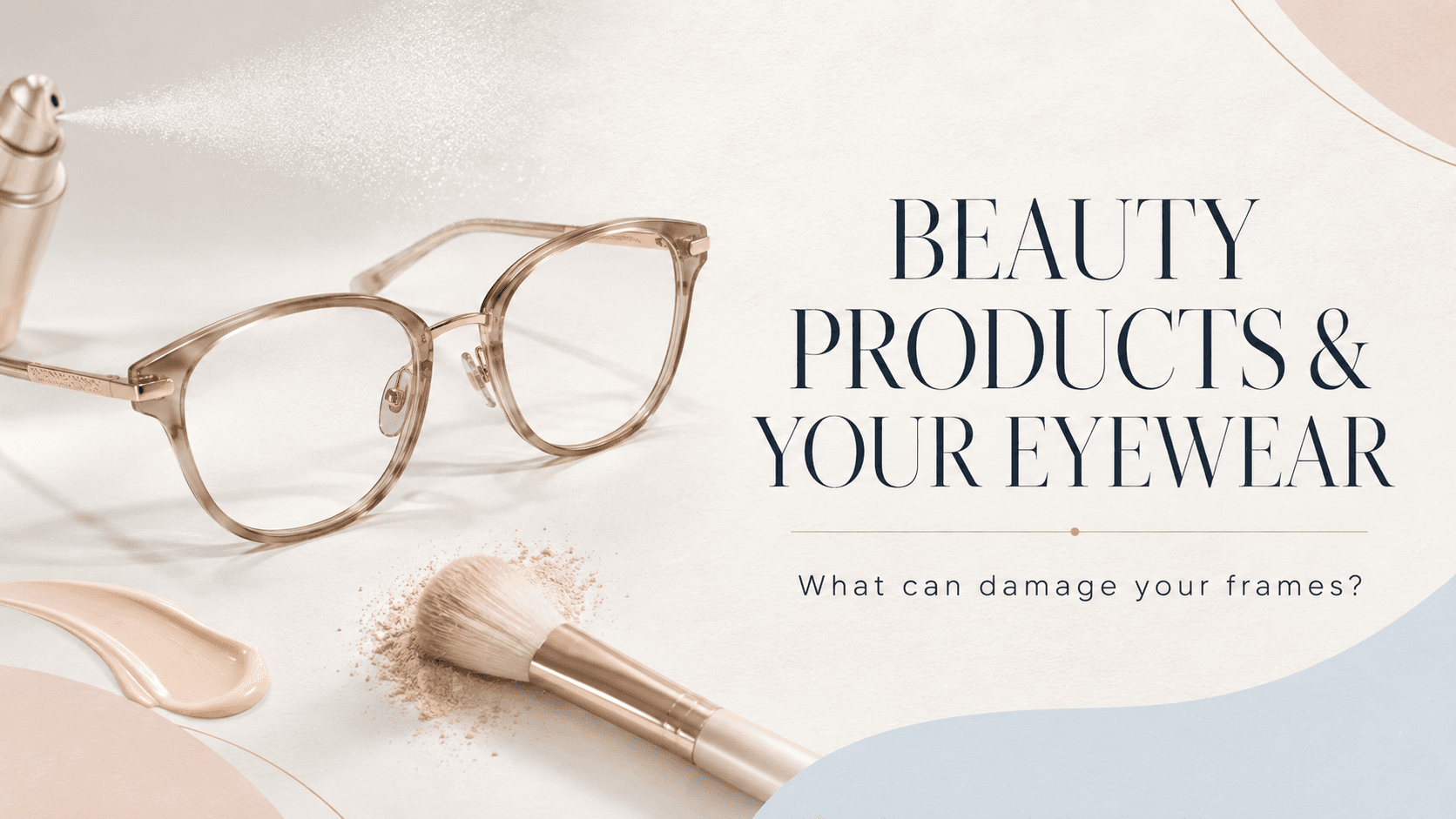
Sunscreen, makeup, and hairspray are among the most common causes of lens coating damage and frame deterioration. These products contain oils, alcohols, silicones, and aerosol propellants that degrade anti-reflective coatings, scratch-resistant layers, and acetate or metal frames over time — often without any visible warning until the damage is already done.
Why Everyday Beauty Products Are Hard on Lenses
Modern lenses are coated with multiple thin layers — anti-reflective, UV-blocking, and scratch-resistant treatments — that sit on the surface of the lens rather than being baked into the glass or polymer. These coatings are chemically sensitive. When sunscreen containing zinc oxide, titanium dioxide, or chemical UV filters comes into contact with a lens, it leaves an oily residue that bonds to the coating. Wiping it away dry can cause micro-scratches, and leaving it on accelerates coating breakdown over weeks.
Makeup — especially foundations, concealers, and powders — transfers to the nose pads and inner frame edges every time you put your glasses on. Over months, this buildup harbors bacteria and can discolor silicone nose pads or cause acetate frames to lose their polish. Mascara and eyeliner that flick onto the lens surface are particularly abrasive if rubbed off without rinsing first.
Hairspray is arguably the most underestimated threat. The aerosol mist settles invisibly on lenses and leaves a thin, sticky film of polymers and alcohol. Alcohol is a known solvent for many lens coatings and for the plasticizers that keep acetate frames flexible. Repeated exposure leads to crazing — a network of fine cracks in the coating that scatters light and cannot be repaired.
Frames Are Not Safe Either
It is not just the lenses at risk. Metal frames can corrode where sunscreen or sweat accumulates around hinges and screws. Acetate frames exposed to alcohol-based products can become brittle or fade. Rubber and silicone temple tips absorb oily residues and degrade faster than the rest of the frame.
How to Protect Your Eyewear During Your Beauty Routine
A few simple habit changes make a significant difference:
Apply sunscreen, moisturiser, and makeup before putting your glasses on, and let products fully absorb or dry first.
When using hairspray, remove your glasses completely and wait at least 30 seconds after spraying before putting them back on.
If product does land on your lenses, rinse under lukewarm water first — never wipe dry — then clean with a microfibre cloth and a lens-safe solution.
Clean nose pads and inner frame edges with a soft, damp cloth weekly to prevent makeup buildup.
Avoid alcohol-based lens sprays or household glass cleaners, which compound the damage already caused by hairspray and makeup.
When to Clean vs. When to See a Professional
Light surface residue from daily beauty product contact can be managed at home with proper rinsing and a quality lens cleaner. However, if you notice haziness, rainbow-like sheen on the lens surface, or fine crazing, the coating has already degraded and no amount of cleaning will restore it. At that point, lens replacement is the most cost-effective solution. Regular professional cleaning at your optical store — every three to six months — catches buildup before it causes permanent harm.
Treating your eyewear as part of your grooming routine rather than an afterthought is the single most effective way to extend the life of your lenses and frames.
