
The Short Answer: Your Two Eyes See Differently
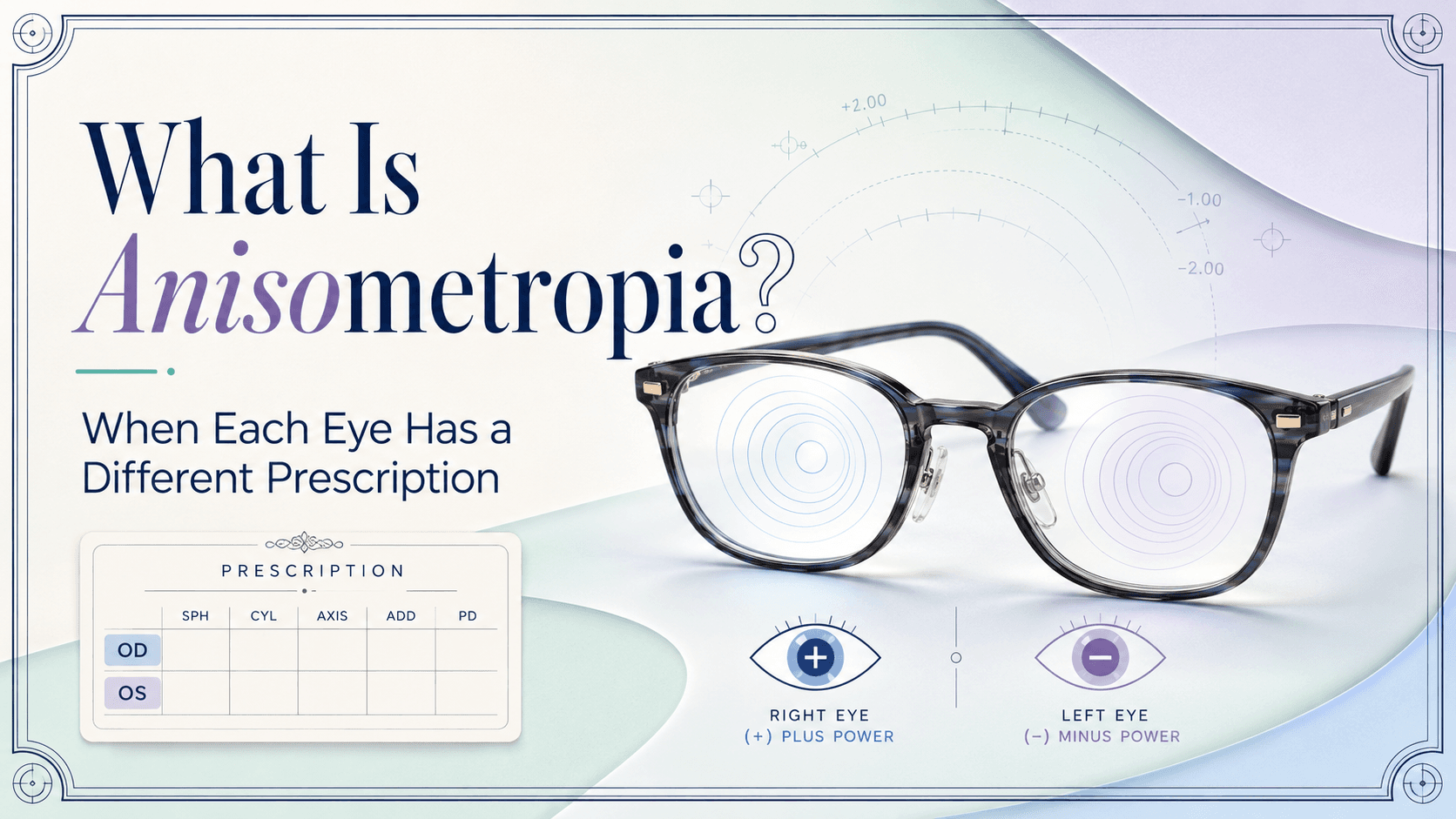
Anisometropia is a refractive condition in which the two eyes have a meaningful difference in prescription power — typically one dioptre or more. One eye may be myopic (short-sighted), hyperopic (long-sighted), or astigmatic to a much greater degree than the other. The brain struggles to merge two images of different sharpness, which can cause eyestrain, headaches, and in children, a lazy eye (amblyopia).
What Causes Anisometropia?
The condition can be present from birth or develop over time. Common causes include:
Genetics — a family history of unequal refractive errors increases risk.
Cataract surgery on one eye — removing a natural lens changes that eye's power significantly.
Trauma or disease — an injury or condition like keratoconus can alter one cornea's shape independently of the other.
Normal developmental variation — children's eyes grow at different rates, sometimes leaving a lasting prescription gap.
How Does It Affect Your Vision?
When the prescription gap between the eyes is small (under one dioptre), most people notice little or no disruption. As the gap widens, the brain receives two images of noticeably different sizes — a phenomenon called aniseikonia. This mismatch makes depth perception unreliable and sustained reading uncomfortable. In young children whose visual system is still developing, one eye may be suppressed entirely, leading to amblyopia if left untreated.
How Is Anisometropia Diagnosed?
A standard eye examination is all that is needed. Your optometrist measures the refractive error of each eye separately using a phoropter or automated refractor, then compares the two readings. If the difference exceeds one dioptre, anisometropia is confirmed. Paediatric screening is especially important because children rarely self-report blurry vision in one eye — they simply adapt, often at the cost of that eye's long-term development.
Glasses vs Contact Lenses for Anisometropia: Which Is Better?
Both options work, but they behave differently. Glasses with a large prescription difference between lenses create a prismatic effect that can cause the images to appear slightly different in size, which some wearers find uncomfortable. Modern high-index lenses reduce lens thickness and partially limit this effect. Contact lenses sit directly on the cornea, so each lens moves with the eye — this minimises image-size difference and is often preferred for larger prescription gaps. Your eye specialist is best placed to recommend the right approach for your specific numbers.
Can Laser Eye Surgery Correct It?
In many cases, yes. Procedures such as LASIK and LASEK reshape each cornea independently to its target prescription, making them well-suited to cases where the two eyes need very different corrections. Eligibility depends on corneal thickness, overall eye health, and the magnitude of the prescription gap. A pre-surgical evaluation will confirm whether you are a suitable candidate.
Living With Anisometropia: Practical Tips
Never skip your annual eye examination — the prescription gap can shift, especially in your twenties and thirties.
Keep your glasses updated; an outdated prescription worsens the image-size mismatch.
If you wear glasses, ask your optician about aspheric high-index lenses, which are thinner and reduce distortion.
Children diagnosed with anisometropia may need patching therapy alongside corrective lenses to strengthen the weaker eye.
Mention any persistent headaches or double vision to your eye doctor promptly — these are signals that your current correction needs review.
