
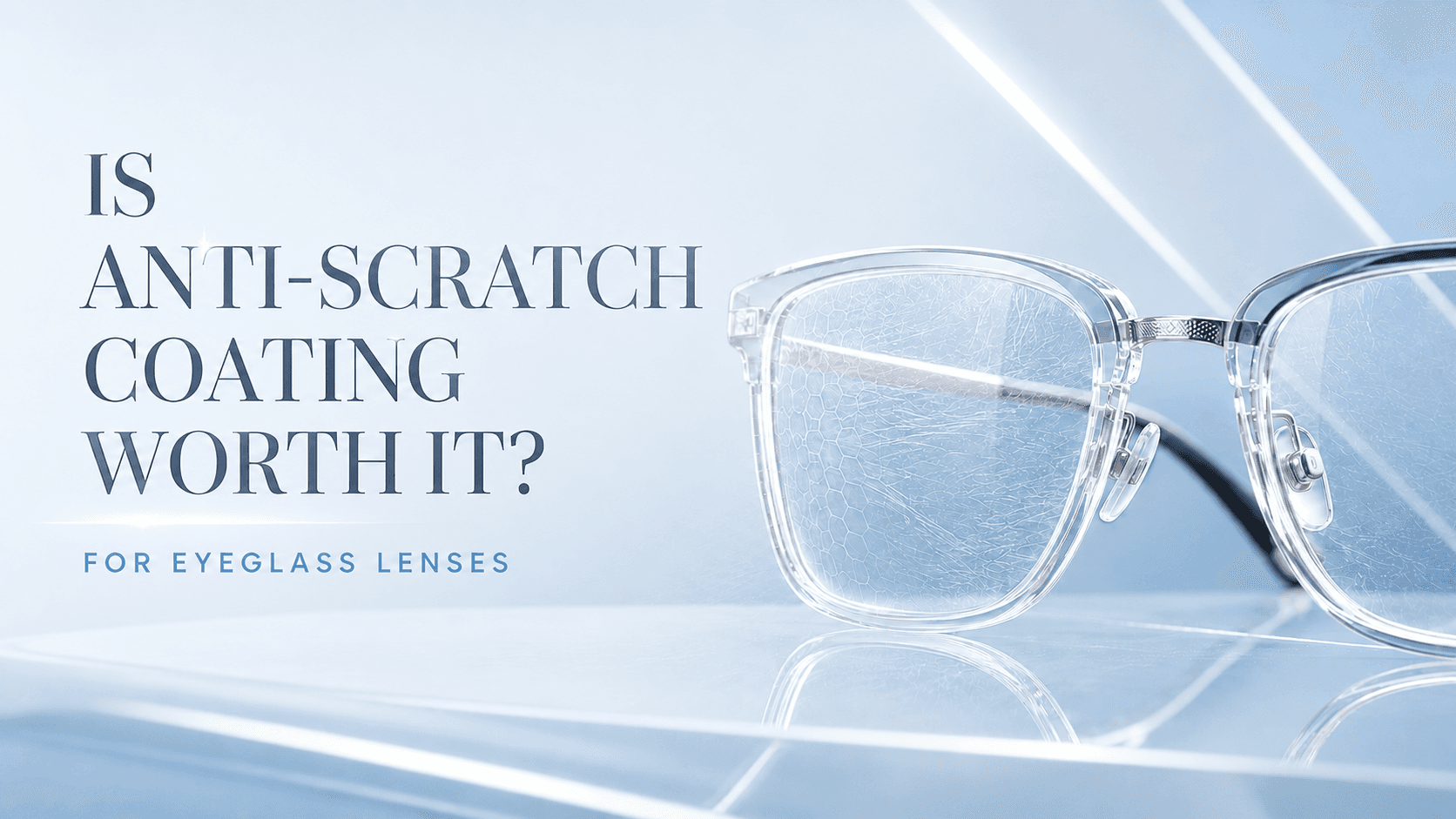
Anti-scratch coating is almost always worth it for eyeglass lenses. It bonds a hard, transparent layer to the lens surface that resists everyday abrasions from dust, cleaning cloths, and accidental drops. Without it, even premium lenses develop micro-scratches within months, distorting vision and forcing early replacement. For most Indian wearers — dealing with dust, humidity, and busy daily routines — the coating pays for itself quickly.
What Is Anti-Scratch Coating and How Does It Work?
Anti-scratch coating (also called a scratch-resistant or hard coat) is a thin, chemically bonded layer applied to one or both sides of a lens during manufacturing. It does not make lenses completely scratchproof, but it dramatically raises the threshold of force needed to leave a visible mark. Modern coatings are typically made from silicone-based or polysiloxane compounds that cure to a hardness far greater than bare plastic or polycarbonate.
Most quality eyeglass lenses today come with at least a basic hard coat included in the base price. Premium versions offer multi-layer protection, combining scratch resistance with anti-reflective or UV properties in a single stack.
Why Do Lenses Scratch So Easily Without a Coating?
Plastic and polycarbonate lenses — the most common materials sold in India — are inherently softer than glass. Polycarbonate is lightweight and impact-resistant, making it ideal for everyday wear and kids' glasses, but its soft surface scratches with almost any abrasive contact. Even wiping a lens with a cotton shirt can leave hairline marks over time. Dust particles trapped between cloth and lens act like sandpaper on an uncoated surface.
Glass lenses are harder but heavier and less safe. The practical solution for lightweight, safe lenses is a quality hard coat rather than switching materials.
Anti-Scratch Coating vs. No Coating: A Direct Comparison
Durability: Coated lenses typically last 2-4 years before scratches noticeably affect optics. Uncoated lenses of the same material often show problematic scratching within 6-12 months under normal Indian urban conditions.
Visual clarity: Even fine scratches cause light scatter, leading to glare and reduced sharpness, especially when driving at night or using screens. A coated lens maintains optical consistency far longer.
Cost over time: An anti-scratch upgrade at the time of purchase is almost always cheaper than replacing lenses ahead of schedule. Lens replacement without a frame change can cost ₹1,500-₹4,000 or more depending on the prescription and material.
Maintenance effort: Coated lenses still require proper care, but they forgive minor lapses far better than uncoated ones.
Who Needs Anti-Scratch Coating the Most?
While the coating benefits almost every wearer, certain groups see the greatest return:
Children and teenagers: Kids are hard on their glasses — bags, playgrounds, and careless cleaning mean scratches happen fast. Anti-scratch coating is practically non-negotiable for younger wearers.
Active adults and outdoor workers: Dust, sweat, and physical activity create constant abrasion risk. Coated lenses hold up significantly better in field conditions.
High-prescription wearers: Thinner, high-index lenses required for strong prescriptions cost considerably more to replace, making protection a smart investment.
Frequent screen users: People who clean their glasses multiple times a day to remove smudges put coatings to the test — and benefit most from a durable hard layer.
Polycarbonate lens wearers: Since polycarbonate is the softest common lens material, a scratch-resistant coat is especially important and often bundled by default.
Does Anti-Scratch Coating Affect Other Lens Properties?
A well-applied hard coat does not noticeably alter lens transparency, colour, or optical power. It is thin enough — typically just a few microns — to have no measurable effect on prescription accuracy. However, a poorly applied or delaminating coat can cause haze, which is why buying from reputable sources matters.
Anti-scratch coating is also fully compatible with other lens treatments. It can be layered beneath or above anti-reflective (AR) coating, UV protection, and blue-light filtering layers without conflict. In fact, most complete lens packages stack all four for comprehensive protection.
How to Make Your Anti-Scratch Coating Last Longer
Even the best coating degrades faster with poor habits. A few simple practices extend its life significantly:
Always rinse lenses under lukewarm water before wiping — this dislodges grit that would otherwise scratch during cleaning.
Use only microfibre cloths designated for lenses. Avoid tissues, paper towels, and clothing.
Store glasses in a hard case when not in use, not loosely in a bag or pocket.
Avoid placing glasses lens-side down on any surface.
Do not use household glass cleaners containing ammonia or bleach — they degrade coatings rapidly.
Use a lens-safe cleaning spray or plain water; mild dish soap is acceptable for a thorough wash.
When Anti-Scratch Coating May Not Be Enough
It is important to set realistic expectations. Anti-scratch coating is not the same as scratchproof. Dropping glasses on concrete, storing them loose with keys or coins, or using abrasive wipes will still cause damage. For very rough environments — construction sites, certain sports — consider impact-resistant polycarbonate or Trivex lenses paired with the coating, plus a protective case carried at all times.
If your lenses already have visible deep scratches affecting vision, no polish or home remedy will safely restore optical clarity. Replacement is the only reliable fix at that stage.
Is the Upgrade Cost Justified?
At Rimloo, anti-scratch coating is included as standard on most lens packages, so you are not typically paying a separate surcharge for basic protection. Where premium multi-layer hard coats are offered as an upgrade, the incremental cost is generally a fraction of what a lens replacement would run. Given the lens lifespan extension and daily visual comfort gains, the value calculation is straightforward for almost any wearer.
Bottom line: if your lenses do not already include an anti-scratch coat, it is one of the most cost-effective upgrades available in eyewear.
