
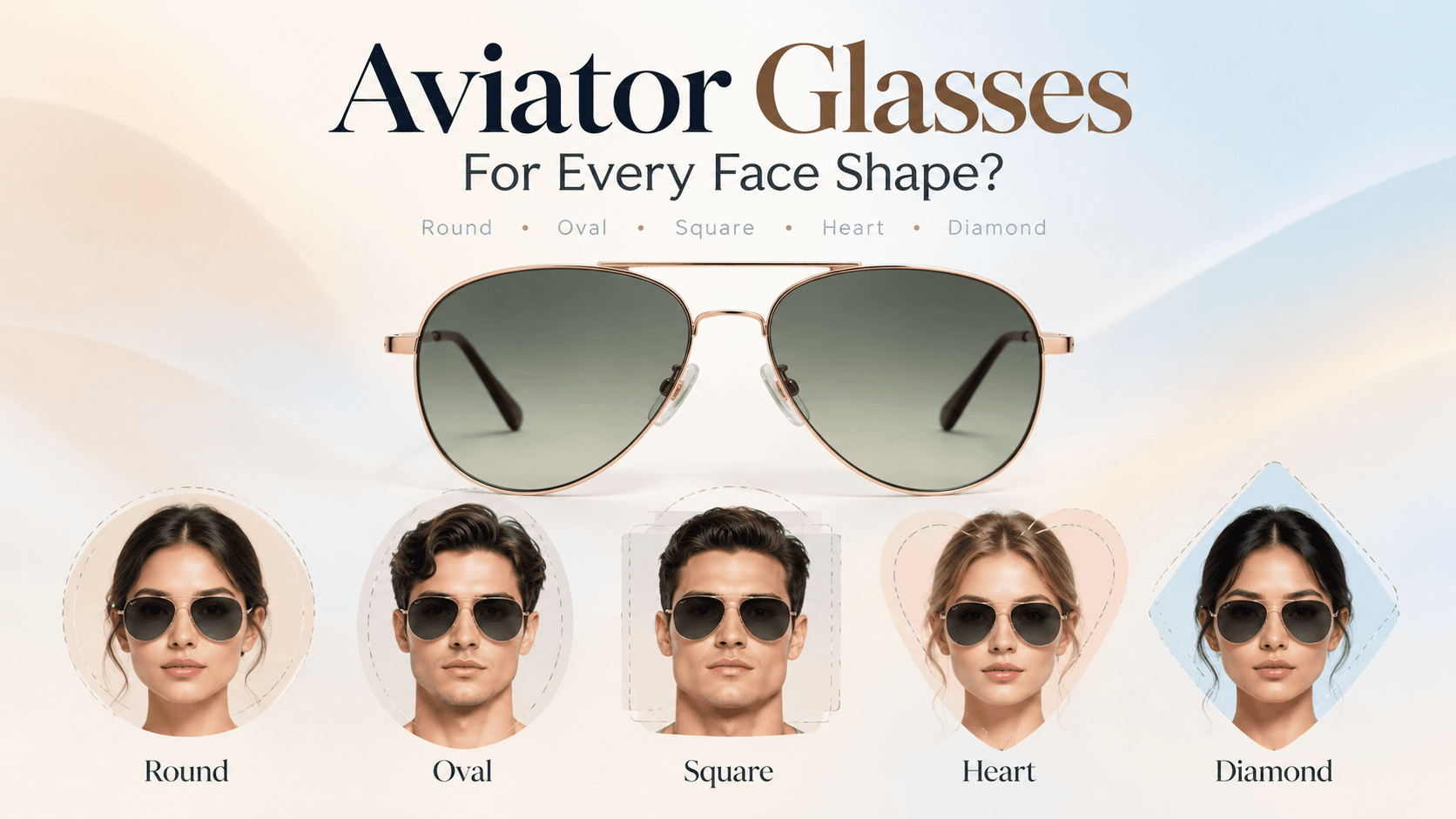
Aviator glasses suit most face shapes, but they look best on oval, oblong, and heart-shaped faces. Their teardrop silhouette and thin metal frames add width at the cheekbones while tapering toward the chin — a balance that works with several face structures. If your face is round or square, a few simple tweaks in fit and proportion can still make aviators work beautifully for you.
What Makes Aviators So Universally Popular?
Originally designed for US Air Force pilots in the 1930s, aviator frames have outlasted every eyewear trend since. Their defining features — a double-bridge, thin metal rims, and a teardrop-shaped lens that is slightly larger at the top — create a bold yet refined look. In India, they remain one of the top-selling frame styles for both prescription glasses and sunglasses, across genders and age groups.
Which Face Shapes Do Aviators Suit Best?
Oval Face
If you have an oval face — gently wider at the forehead, narrowing softly at the jaw — aviators are a near-perfect match. The proportions of a standard aviator frame mirror the balanced curves of an oval face without adding bulk anywhere unwanted.
Oblong or Long Face
An oblong face benefits from wider frames that add visual width. Aviators, especially oversized or wide-set styles, do exactly this. Opt for a pair with slightly larger lenses to break the vertical length of a long face.
Heart-Shaped Face
A heart-shaped face — broad forehead, high cheekbones, and a narrow chin — pairs well with aviators because the wider upper portion of the teardrop lens aligns with your wider forehead, while the taper toward the chin feels natural rather than top-heavy.
Can Round or Square Faces Wear Aviators?
Round faces can wear aviators, but should avoid very large or perfectly round lenses, which can amplify roundness. Instead, look for aviators with a slightly elongated teardrop shape and a low, prominent double bridge — this adds definition and the illusion of length.
Square faces have strong jawlines and angular features. Classic aviators with curved lenses soften those angles effectively. Avoid frames that sit very flat or are too narrow, as they can make a strong jaw appear even wider. A medium-sized aviator with a slight downward curve works well here.
Aviator Glasses vs. Wayfarer Frames: Which Should You Choose?
Both are iconic, but they serve different face-shape needs. Wayfarers are bold and angular, making them a better fit for oval and round faces. Aviators are more versatile across oblong, heart, and oval shapes, and their metal construction keeps them looking lighter and less imposing on the face. If you are between the two, consider your jaw width — a sharper jaw often looks cleaner in an aviator.
Tips for Choosing the Right Aviator Fit
The frame width should match your face width — frames that extend beyond your temples add unwanted width.
The top bar of the frame should sit just below your eyebrows, not cover them.
For prescription wearers, choose a lens height that accommodates your complete prescription without distortion at the edges.
Thin gold or silver metal frames feel classic; black metal or gunmetal reads more contemporary.
Tinted aviator lenses (brown or green) flatter warm skin tones; grey or mirrored lenses suit cooler undertones.
