
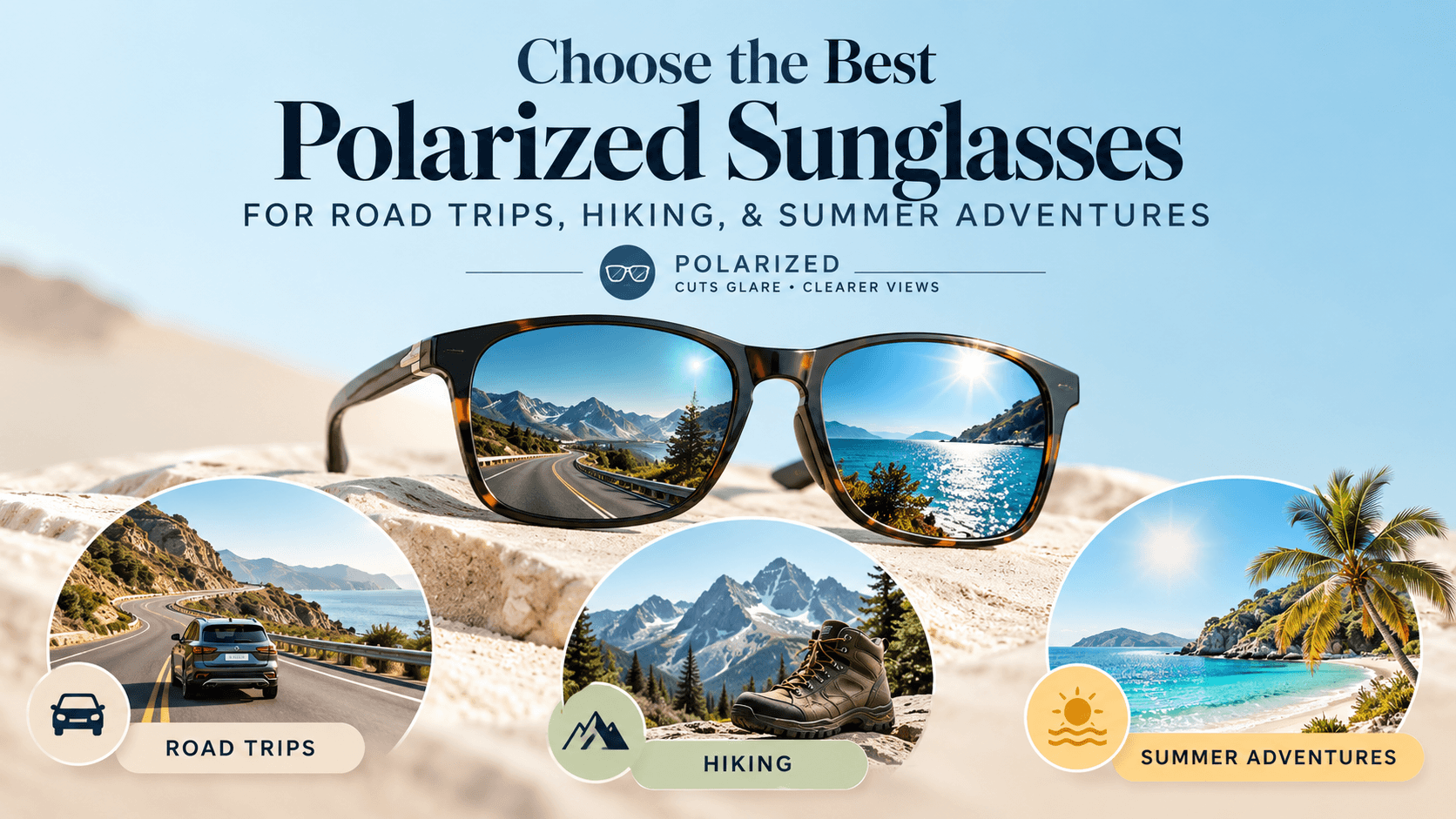
Polarized sunglasses are the single best upgrade you can make before any outdoor adventure. By filtering horizontal glare from roads, water, and open skies, they sharpen your vision, reduce fatigue, and protect your eyes from UV damage — all at once. Whether you're driving through Rajasthan, trekking in Himachal, or lounging on a Goa beach, the right polarized pair makes a measurable difference.
What Makes a Lens Truly Polarized?
A polarized lens contains a chemical filter oriented vertically to block horizontally reflected light — the kind that bounces off wet roads, car bonnets, and water surfaces. This is different from a plain tinted lens, which only reduces overall brightness. Polarization eliminates glare at the source, giving you sharper contrast and truer colour perception without squinting.
Road Trips: What to Look For
Long hours behind the wheel demand lenses that minimise eye strain over time. For driving, prioritise these features:
Grey or green polarized lenses — they maintain natural colour balance, so traffic lights and road signs read true.
Wraparound or semi-rimless frames — they limit peripheral glare from side windows.
Anti-reflective coating on the back surface — stops light bouncing off the inner lens into your eye.
Avoid amber or rose-tinted polarized lenses for night driving or low-light tunnels; stick to those for daytime-only use.
Hiking & Trekking: Durability First
On a trail, your sunglasses take a beating. A frame that snaps on day two of a five-day trek is useless. Look for:
TR-90 or Grilamid frames — lightweight, flexible, and virtually shatterproof.
Polarized lenses with Category 3 or 4 UV protection — essential above 2,000 metres where UV intensity rises sharply.
Rubberised nose pads and temple tips — they grip even when you're sweating.
Polycarbonate lenses — impact-resistant and lighter than glass.
Beach & Water Sports: Go Polarized + UV400
Water reflects up to 25% of UV radiation back at your face — far more than dry land. For beach days, boating, or any water sport, combine polarization with a UV400 rating (which blocks all light wavelengths up to 400 nm). Mirror coatings add an extra layer of reflected-light reduction and give that classic sporty look as a bonus.
Polarized vs. Non-Polarized: Which Should You Choose?
Non-polarized sunglasses reduce brightness uniformly but do nothing about glare. If your adventures involve reflective surfaces — roads, snow, rivers, sandy beaches — polarized lenses are almost always the better choice. The only exception: if you rely on LCD screens (like a GPS device), polarization can make them harder to read at certain angles.
Frame Shapes That Work Best Outdoors
Function should lead, but fit matters too. Wraparound styles suit oval and square faces and offer maximum coverage. Sporty rectangular frames flatter round faces by adding definition. If you have a heart-shaped face, a semi-rimless aviator-style polarized frame balances a broader forehead beautifully. For detailed guidance on matching frames to your face shape, explore Rimloo's Style Guides.
Quick Checklist Before You Buy
Before adding any pair to your cart, run through this checklist to make sure you're getting real value:
Confirm the lens carries a CE or BIS mark for UV protection
Check that polarization is in the lens, not a surface coating that can scratch off
Try the LCD test — look at a phone screen through the lens and tilt it; glare patterns confirm polarization
Ensure the frame sits snugly without pinching — comfort over long hours matters
