
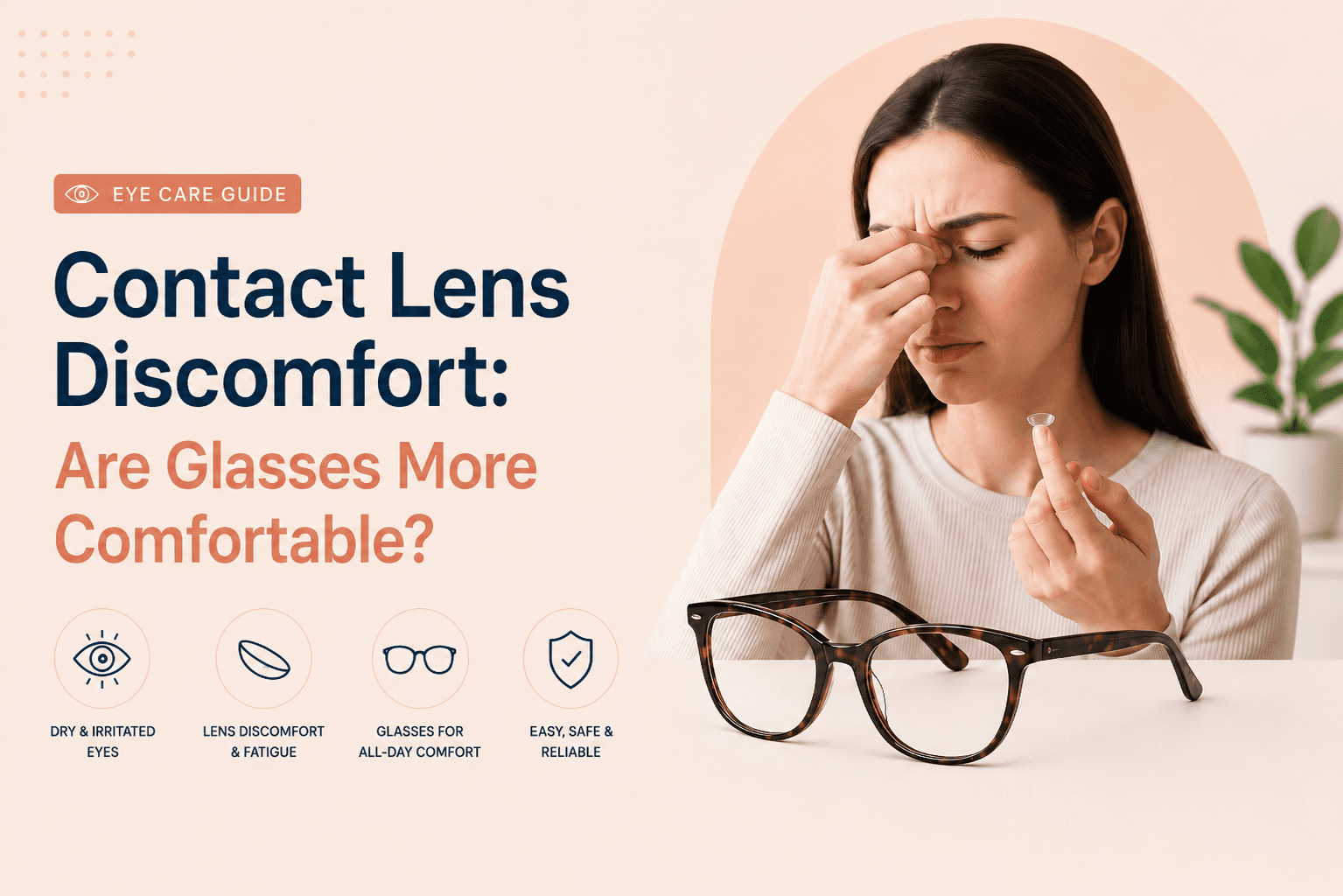
Contact Lens Discomfort: Why Glasses Can Be a More Comfortable Choice
Contact lenses provide clear vision without frames, but they are not comfortable for everyone. Dryness, redness, grittiness, fluctuating vision or discomfort later in the day may make you want to remove your lenses.
Prescription eyeglasses can be a more comfortable everyday option because they correct vision without sitting directly on the eye.
Why Do Contact Lenses Feel Uncomfortable?
Contact lens discomfort can have several causes:
Dry eyes or an unstable tear film
Incorrect lens fit
Wearing lenses longer than recommended
Deposits, makeup or debris on the lens
Sensitivity to contact lens solutions
Wind, smoke, air conditioning or low humidity
Allergies or eyelid inflammation
Reduced blinking during prolonged screen use
Contact lens wear can contribute to dry-eye symptoms, while concentrating on digital screens may reduce blinking and increase surface dryness.
Persistent discomfort should not be ignored. An eye-care professional can check the lens fit, tear film, prescription and overall eye health.
Why Glasses May Feel More Comfortable
Nothing sits directly on the eye
Glasses rest in front of your eyes rather than on the cornea. This avoids the foreign-body sensation, friction and dryness that some contact lens wearers experience.
Better for long screen sessions
People often blink less while concentrating on computers and phones. Because glasses do not depend on the eye’s tear film for comfort, they can be easier to wear during long working, gaming or study sessions.
Less daily maintenance
Contact lenses must be handled, replaced and cleaned according to professional instructions. Glasses mainly require regular lens cleaning and safe storage.
Poor contact lens hygiene, sleeping in lenses when not approved, reusing daily disposable lenses or exposing contacts to water can increase the risk of irritation and infection.
Convenient in dry environments
Wind, smoke, dust, heating, air conditioning and low humidity may make contacts feel uncomfortable. Glasses can be easier to tolerate in these environments, although standard frames do not provide sealed protection against dust or chemicals.
A reliable backup option
Even regular contact lens users should keep an up-to-date pair of prescription glasses. They are useful when the eyes feel tired or irritated, while travelling, during illness or whenever contacts must be removed.
Should You Stop Wearing Contact Lenses?
Occasional dryness does not necessarily mean you must permanently stop wearing contacts. An optometrist or ophthalmologist may recommend:
A different lens material or design
A better-fitting lens
Shorter wearing times
Daily disposable lenses
Improved lens or eyelid care
Lubricating drops suitable for contact lens wear
Do not continue wearing a painful, torn or damaged lens.
Remove your contacts and seek prompt professional advice if you develop eye pain, unusual redness, blurred vision, discharge, excessive tearing or sensitivity to light. These can be warning signs of infection or corneal inflammation.
Glasses vs Contact Lenses: Which Is Better?
Neither option is best for everyone.
Glasses may be preferable when you want:
Simple maintenance
Comfortable all-day wear
Less direct contact with your eyes
An easy break from contact lenses
More frame and style choices
Contact lenses may be preferable for:
Sports and physical activities
Unrestricted peripheral vision
Wearing non-prescription sunglasses
A frame-free appearance
Many people use both—glasses for work, home and rest days, and contacts for selected activities. The right choice depends on your eye health, prescription, lifestyle and professional fitting.
Final Takeaway
Contact lens discomfort is not something you should simply tolerate. Glasses provide clear vision without touching the eye, making them a comfortable, convenient and low-maintenance alternative for daily use or regular contact lens breaks.
Ready to give your eyes a break from contacts? Explore comfortable prescription eyeglasses or learn how to order prescription glasses online.
