
Reading Glasses vs Distance Glasses Explained
You can read your phone clearly, but road signs appear blurry. Or perhaps your distance vision is sharp, yet menus and small print become difficult to focus on.
Both situations may require glasses—but not necessarily the same type.
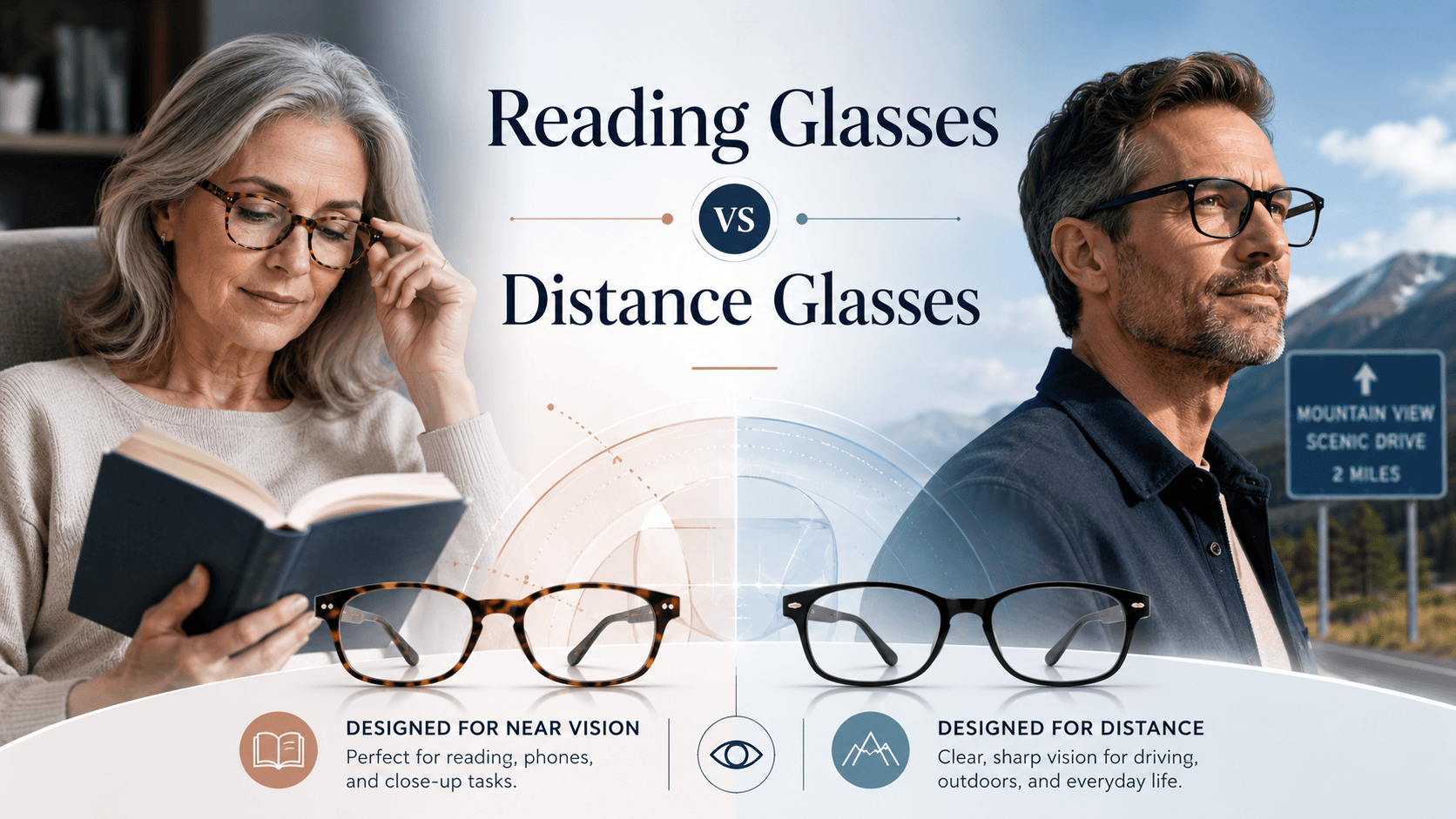
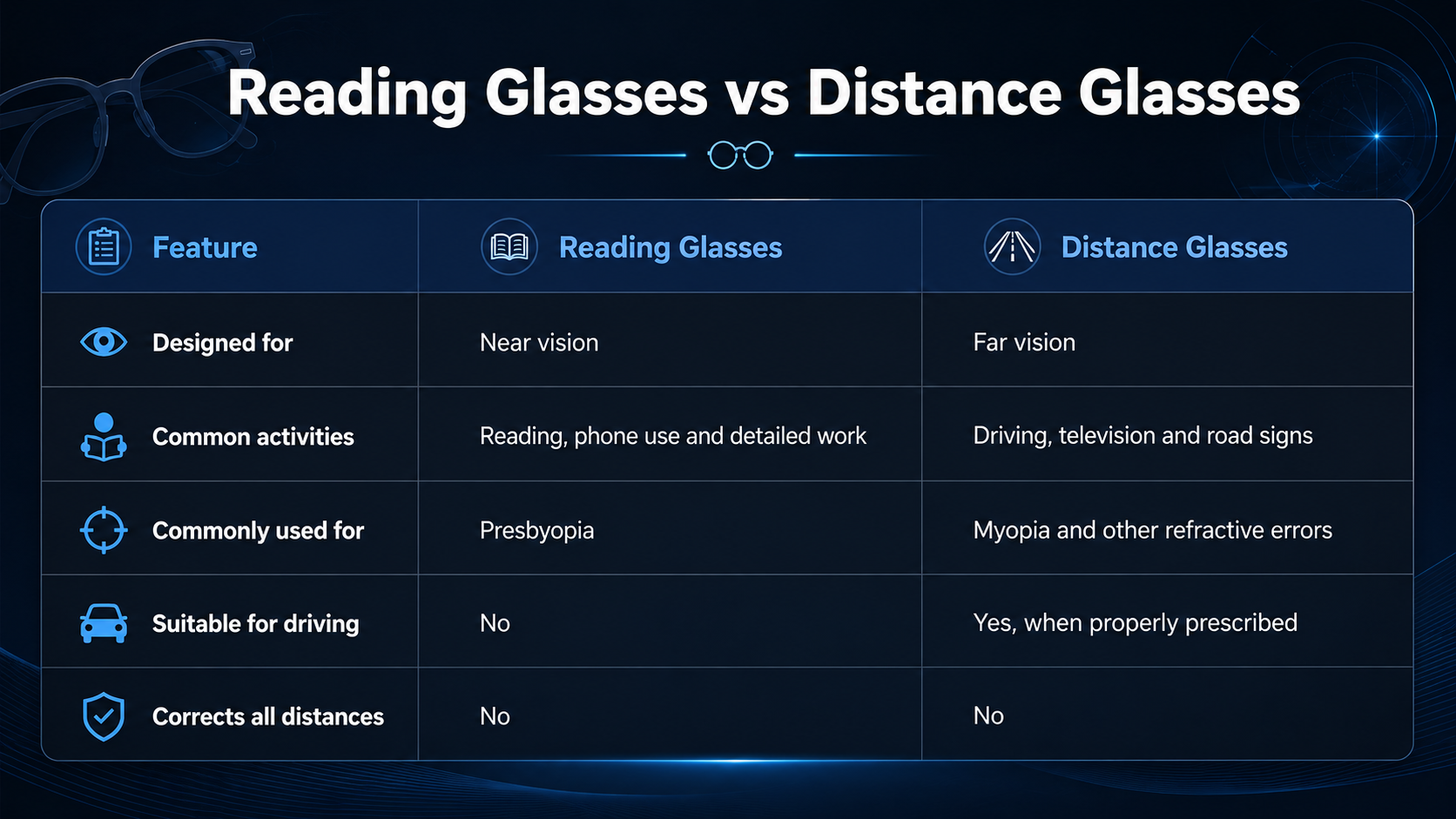
The primary difference between reading glasses and distance glasses is the viewing range they are designed to correct. Reading glasses improve close-up vision, while distance glasses help you see objects farther away.
The correct option depends on your refractive error, age, working distance, lifestyle, and individual prescription. Some people need only one type, while others benefit from bifocal, progressive, or separate pairs of glasses.
What Are Reading Glasses?
Reading glasses are designed to make books, phones, menus, labels and other close-up objects easier to see.
They are commonly used to correct presbyopia, the gradual age-related loss of the eye’s ability to focus on nearby objects. Presbyopia is a normal part of ageing and often becomes noticeable after age 40.
You may need reading glasses when you:
Hold reading material farther away
Struggle with small print
Need brighter light to read
Experience headaches or eye fatigue during close work
See clearly at a distance but not up close
Reading glasses normally contain single-vision lenses designed for near tasks. Some adults can use ready-made readers, but prescription lenses may be more suitable when each eye requires a different power or when astigmatism is present. Regular eye examinations remain important even when over-the-counter readers appear to work.
What Are Distance Glasses?
Distance glasses help make faraway objects clearer. They may be worn for:
Driving
Reading road signs
Watching television
Recognising faces across a room
Viewing classroom boards or presentation screens
Distance glasses are commonly prescribed for myopia, also called nearsightedness. Myopia makes distant objects appear blurry because light does not focus correctly on the retina. Distance prescriptions may also correct hyperopia, astigmatism or differences between the two eyes.
Signs that you may need distance glasses include:
Blurry road signs
Squinting to see far away
Difficulty recognising distant faces
Poor clarity while driving
Headaches during distance-focused activities
What If You Need Both Near and Distance Correction?
People who have difficulty at both distances may choose:
Two separate pairs
One pair is used for reading and another for distance. This provides a wide viewing area but requires switching glasses.
Bifocal glasses
Bifocals normally contain distance correction in the upper section and reading correction in a lower segment separated by a visible line.
Progressive glasses
Progressive lenses provide distance, intermediate and near vision in one lens without a visible dividing line.
Presbyopia and Farsightedness Are Not the Same
Although both can make close-up vision difficult, presbyopia and farsightedness are different.
Presbyopia is an age-related reduction in near focusing ability.
Hyperopia, or farsightedness, is a refractive error caused by how the eye focuses light.
A person can have presbyopia, hyperopia or both. An eye examination is needed to determine the correct cause and lens power.
Which Glasses Do You Need?
You may need reading glasses when nearby text is blurry but your distance vision remains clear.
You may need distance glasses when road signs, television screens or distant faces appear blurry.
You may need bifocal or progressive glasses when both near and distance vision require correction.
Symptoms alone cannot determine the correct prescription. A professional eye examination measures each eye separately and checks for myopia, hyperopia, astigmatism, presbyopia and other possible causes of blurred vision.
Final Takeaway
Reading glasses improve close-up vision, while distance glasses help you see faraway objects clearly. People who need correction at multiple distances may benefit from separate pairs, bifocals or progressive lenses.
The most reliable way to choose the correct glasses is through a professional eye examination rather than selecting lenses based only on age or symptoms.
