
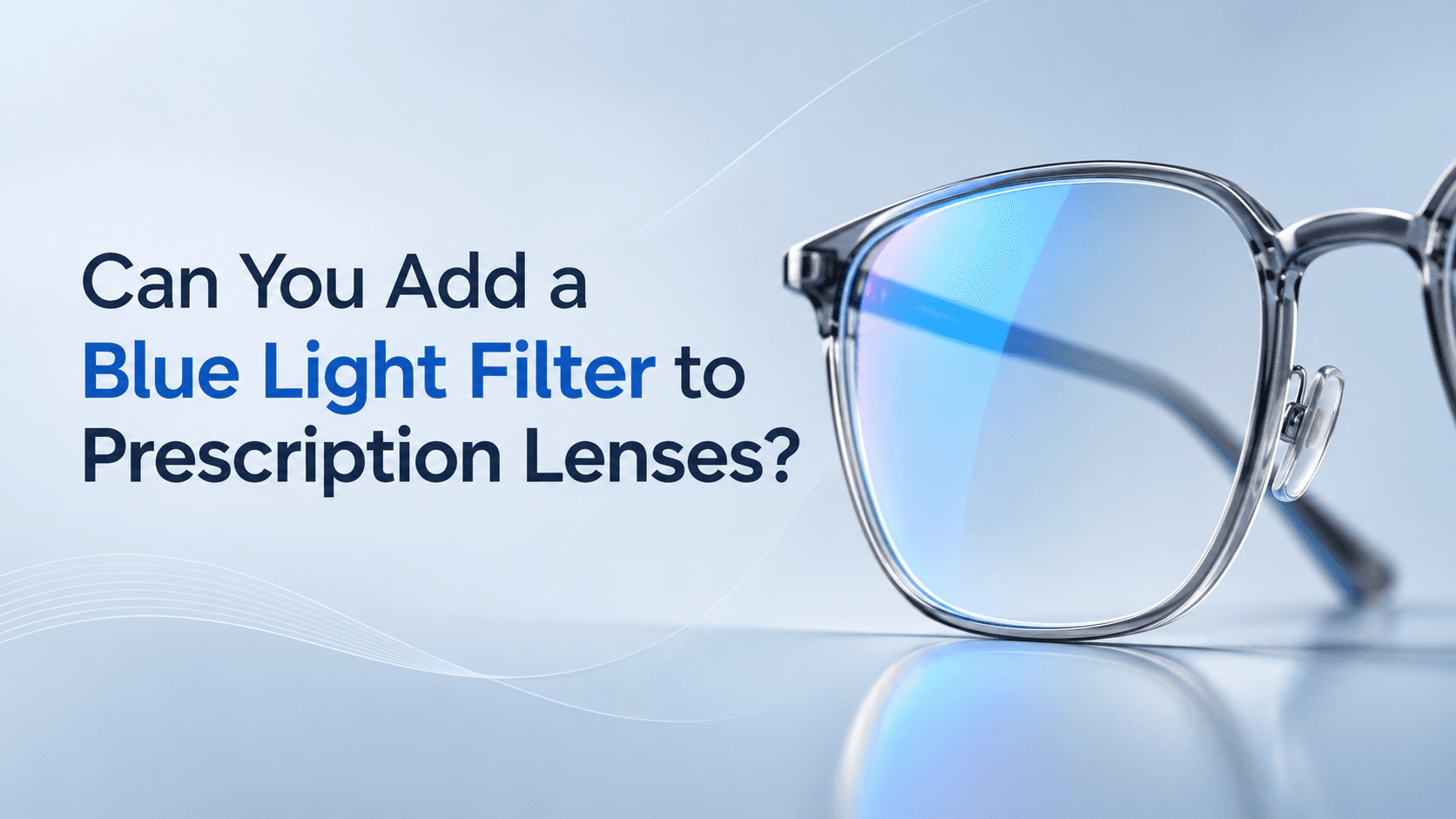
Yes, a blue light filter can be added to prescription lenses, either as a coating applied to the lens surface or built into the lens material itself during manufacturing. Most optical retailers in India, including online ones, offer this as an add-on when you order prescription eyeglasses. It does not affect your prescription power or lens clarity.
What Is a Blue Light Filter, Exactly?
Blue light is a high-energy visible (HEV) light emitted by digital screens, LED lighting, and the sun. A blue light filter — also called an anti-blue light coating or blue light blocking coating — absorbs or reflects a portion of this light before it reaches your eye. On prescription lenses, this filter works alongside your corrective power, so you get vision correction and screen protection in one pair.
There are two main forms the filter can take. The first is a surface coating, similar to an anti-reflective (AR) coating, applied after the lens is made. The second is a tinted lens material that blocks blue light from within the lens itself. The coating version is more common and is what most Indian eyewear brands offer as a standard add-on.
How Is the Filter Added to a Prescription Lens?
When you place an order for prescription glasses, you typically choose your base lens type (single vision, bifocal, or progressive), your lens material (polycarbonate, CR-39, high-index, etc.), and then your coatings. Blue light protection is listed as one of those coating options, often bundled with an AR coating and UV protection into a single premium lens package.
The lab applies the coating in a vacuum deposition chamber after cutting the lens to your frame shape. The process does not change your prescription. What you receive is a lens that corrects your vision and also filters blue light — usually blocking between 20% and 40% of blue light in the 380–500 nm wavelength range, depending on the product.
Who Should Consider Blue Light Filtering Lenses?
Not everyone needs a blue light filter, but certain people benefit more than others. Consider it if any of the following apply to you.
You spend more than four hours a day in front of a screen — laptop, phone, tablet, or television.
You experience digital eye strain symptoms such as dry eyes, headaches, or blurred vision after extended screen use.
You work night shifts or use screens heavily after 9 PM, since blue light in the evening can suppress melatonin and disrupt sleep.
You are a student or professional whose daily routine is screen-heavy.
You already wear prescription glasses and want an easy upgrade without buying a separate pair.
Blue Light Coating vs. Blue Light Blocking Glasses: What Is the Difference?
This is a common point of confusion. Blue light coating on prescription lenses is a thin filter layer added to your existing corrective lenses. Blue light blocking glasses, on the other hand, are often non-prescription frames with heavily tinted yellow or amber lenses that block a much higher percentage of blue light — sometimes 90% or more.
For most people who need vision correction, adding a blue light coating to their prescription lenses is the more practical choice. You are not carrying two pairs of glasses, and you do not have to switch between them. The coating version is subtle enough that there is little to no visible tint, making it suitable for professional settings and everyday wear.
Does a Blue Light Filter Affect Lens Clarity or Colour?
A quality blue light coating adds a very faint yellow or amber tint to the lens, which is usually imperceptible in normal daylight. Some coatings produce a slight blue or purple reflective sheen on the lens surface when viewed at an angle — this is normal and is a sign the coating is working. It does not affect how the world looks to the wearer in any meaningful way during daily use.
If colour accuracy matters to you — for example, if you are a graphic designer or photographer — it is worth asking your optician about the specific percentage of blue light blocked and the colour shift involved before choosing a lens.
How to Care for Prescription Lenses with a Blue Light Coating
A blue light coating is a surface treatment, so it requires the same care as any anti-reflective coating. Rough handling or the wrong cleaning products can degrade it over time.
Use a microfibre cloth to clean your lenses — paper towels and clothing fibres can cause micro-scratches.
Rinse lenses with lukewarm water before wiping to remove dust particles that could scratch the coating.
Use lens cleaning sprays that are specifically formulated for coated lenses. Avoid alcohol-based or solvent-based cleaners.
Store your glasses in a hard case when not in use to protect the coating from impact and dust.
Avoid leaving glasses in a hot car or in direct sunlight for extended periods, as heat can cause coatings to crack or peel.
Is a Blue Light Filter Worth the Extra Cost in India?
Blue light coating in India typically adds anywhere from ₹300 to ₹1,500 to the cost of a lens, depending on the brand and the lens material. When you consider the amount of time most urban Indians spend on screens daily, and the relatively low incremental cost compared to a full frame-and-lens purchase, most eye care professionals consider it a reasonable upgrade.
That said, clinical evidence on blue light and long-term eye damage is still evolving. The more well-established benefit is for sleep quality and short-term eye comfort rather than preventing serious eye disease. If you experience screen fatigue regularly, the investment is likely worthwhile.
When ordering prescription glasses online, look for the blue light coating option in the lens customisation step. At Rimloo, blue light protection can be added directly when you configure your prescription lenses, keeping the process simple and affordable.
