
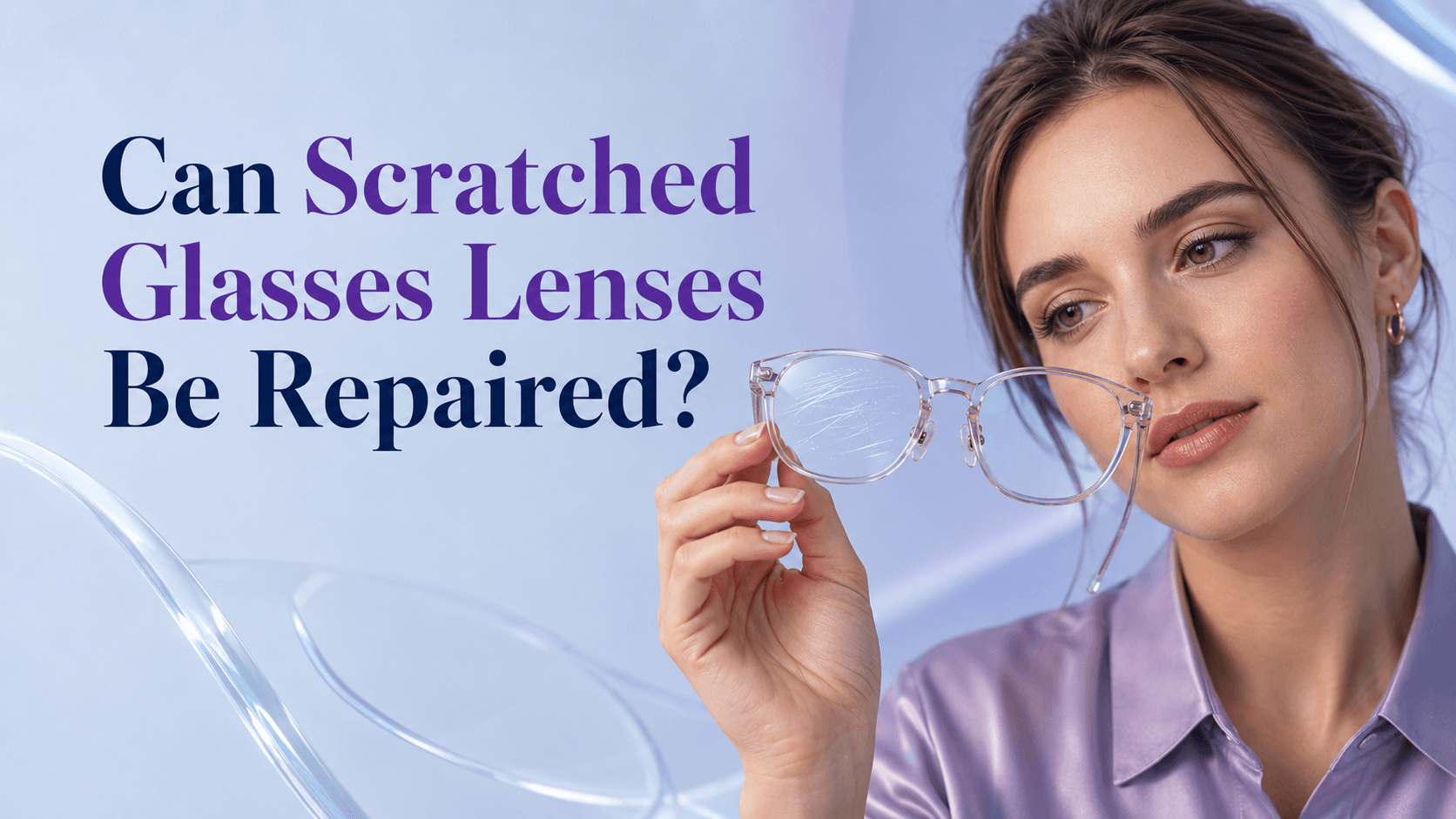
Scratched glasses lenses cannot be truly repaired. Once the lens material or its coating is physically damaged, no home remedy or professional polish can restore the optical clarity to its original state. What you can do is minimise the appearance of very fine surface scratches temporarily — but for anything beyond hairline marks, lens replacement is the only lasting solution.
Why Can't Scratched Lenses Be Fixed Permanently?
Modern prescription lenses are made from materials like polycarbonate, CR-39 plastic, or high-index plastic. Each lens typically carries multiple coatings — anti-reflection (AR), scratch-resistant, UV protection, and sometimes blue-light filtering. When a scratch occurs, it damages one or more of these layers, and often the base lens material itself.
Polishing a scratched lens removes material. That might reduce the look of a surface scratch, but it also strips away protective coatings and, in a prescription lens, can subtly alter the optical power. For a non-prescription sunglass with no coatings, light polishing may offer cosmetic improvement — but the results are rarely impressive and never permanent.
Do DIY Scratch-Removal Methods Actually Work?
You've probably seen home remedies floating around — toothpaste, baking soda paste, furniture polish, even car wax. Here's the honest breakdown:
Toothpaste or baking soda: Mildly abrasive. May reduce the visibility of very fine scratches on uncoated lenses. Likely to damage AR or scratch-resistant coatings further, leaving a hazy, smeared finish.
Car wax or furniture polish: These fill the scratch temporarily with a waxy substance. The scratch returns as soon as the wax wears off, usually within a day or two.
Lens polishing kits: Marketed specifically for glasses, these work on the same abrasive principle as toothpaste. Results on coated prescription lenses are generally disappointing and can void any warranty.
The bottom line: DIY methods may offer a very short-term cosmetic fix on uncoated, non-prescription lenses. On coated or prescription lenses — which is the vast majority of glasses sold in India — they do more harm than good.
When Should You Repair vs. Replace?
This is the most practical question. Here's a simple way to think about it:
Single hairline scratch, no coatings, non-prescription: A gentle polish with a purpose-made kit is low-risk. Manage expectations — results will be modest.
Scratches on AR-coated or blue-light lenses: Do not attempt DIY polishing. The coatings cannot be restored, and abrasives will make the lens hazier overall.
Scratches in the central optical zone: These directly affect your vision. Blurring, glare, or eye strain is a sign you need new lenses immediately.
Deep or multiple scratches: No remedy will help. Replacement is the only option.
Scratches on children's lenses: Kids are more sensitive to visual disturbances. Replace scratched children's lenses promptly.
How Do Scratches Affect Your Eye Health?
Mild scratches in the periphery of a lens may be only a cosmetic annoyance. But scratches in your central vision zone force your eyes to work harder to see clearly, which can cause headaches, eye strain, and fatigue — especially during screen time. Over time, consistently squinting through a damaged lens can worsen visual discomfort. If your scratched lenses are also your blue-light filtering pair, the damaged coating will reduce the effectiveness of that protection too.
How to Prevent Lens Scratches in the First Place
Prevention is genuinely easier and cheaper than any attempted repair. A few habits make a significant difference:
Always store glasses in a hard-shell case when not in use — never face-down on a table.
Clean lenses only with a microfibre cloth. Paper towels, tissues, and clothing fibres are abrasive.
Use a lens cleaning spray or plain water. Avoid household glass cleaners, which can strip coatings.
Rinse lenses under water before wiping to remove grit particles that cause micro-scratches.
Opt for lenses with a quality scratch-resistant coating when buying new glasses — it won't make them scratchproof, but it significantly extends their lifespan.
When It's Time to Replace Your Lenses
If your lenses are scratched beyond the hairline stage, replacing just the lenses (not the entire frame) is often cost-effective — especially if you love your current frame. At Rimloo, you can explore a wide range of prescription lens options, including scratch-resistant coatings, AR coatings, and blue-light filtering lenses, so your next pair is better protected from day one.
If your frame is also worn or outdated, a full replacement is a good opportunity to update your look. Either way, continuing to wear significantly scratched prescription lenses is not worth the visual strain or the long-term impact on your eye comfort.
The Bottom Line
Scratched glasses lenses cannot be repaired in any meaningful, lasting way — especially if they carry anti-reflection, UV, or blue-light coatings, which most modern lenses do. DIY fixes are largely ineffective and often cause additional damage. The smartest move is to invest in preventive habits now, and opt for lens replacement when scratches start affecting your vision or comfort. Your eyes are worth it.
