
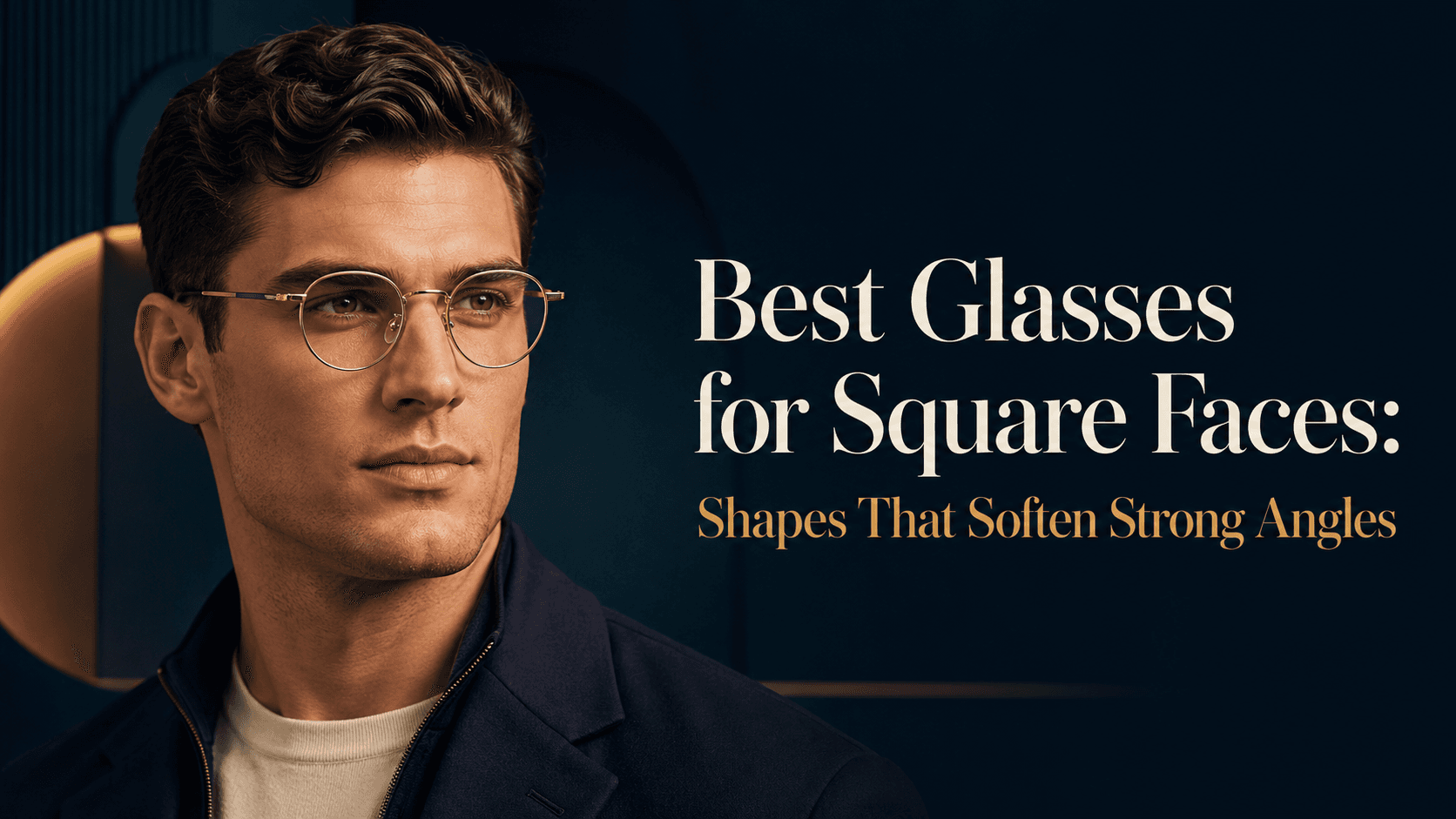
The best glasses for a square face are round, oval, and curved frames that soften the sharp angles of a strong jawline and wide forehead. Styles with thin rims, warm colours, and no harsh geometry create a natural contrast that makes facial features look more balanced. Avoid boxy or angular frames — they echo your face shape and can make features appear heavier than they are.
What Makes a Face Shape 'Square'?
A square face is defined by a jaw width that is roughly equal to the forehead width, combined with a strong, angular jawline and a shorter face length relative to its width. Celebrities like Salman Khan and Deepika Padukone (in certain lighting) are often cited as examples. The goal when choosing frames is to add length and curves where the face naturally has neither.
Which Frame Shapes Work Best for Square Faces?
Round Frames
Round frames are the single most recommended shape for square faces. The circular geometry directly contrasts the straight lines of the jaw and forehead, making the overall face look longer and softer. Thin metal round frames work especially well because they avoid adding extra width. Classic round silhouettes — think John Lennon style — are both timeless and deeply flattering on angular faces.
Oval Frames
Oval frames offer a slightly more subtle softening effect than round frames. They work well for people who want a contemporary look without going fully circular. An oval frame with a low bridge sits higher on the nose, which visually elongates the face — a perfect trick for square face types who want more vertical length.
Browline and Semi-Rimless Frames
Browline frames draw attention upward toward the brow, shifting focus away from the wide jaw. They add structure at the top while leaving the lower face visually open. Semi-rimless versions are even lighter and reduce the visual weight of the frame, which is a good thing when your face already has strong natural lines.
Cat-Eye Frames
Cat-eye frames sweep outward and upward, which introduces diagonal lines that interrupt the horizontal geometry of a square jaw. They are particularly well-suited to women with square faces who want a frame with personality. A subtle cat-eye taper is more versatile; a dramatic flick is a bold, fashion-forward choice.
Aviator Frames
The classic teardrop shape of an aviator is wider at the top and tapers toward the bottom, which mirrors the visual objective of elongating a square face. Aviators work for both prescription eyeglasses and sunglasses, making them one of the most versatile picks in this category. Thin metal or rimless aviators are the most flattering; thick plastic ones can add unwanted bulk at the sides.
Which Frames Should Square Faces Avoid?
Square or rectangular frames repeat the geometry of your face rather than balancing it. Wayfarer-style frames with strong horizontal lines similarly reinforce width. Very small frames can look out of proportion on a wider face, while very oversized square frames risk overwhelming your features entirely. As a general rule: if a frame has sharp corners, step back and try something with a curve instead.
Round vs Oval Frames: Which Is Better for a Square Face?
Round frames create the maximum softening effect and are ideal if your jawline is very prominent or your face is notably wider than it is long. They are a strong choice for a classic, retro, or minimalist aesthetic.
Oval frames are the better pick if you want a more understated, professional look, or if fully round frames feel too costume-like for your personal style. Oval frames still soften angles effectively but keep the overall appearance sleek and modern.
For most square-faced individuals in India, oval frames end up being the daily-wear favourite because they transition easily from office to casual settings.
Frame Size and Fit Tips for Square Faces
Beyond shape, the dimensions of a frame matter significantly. For square faces, consider these fit guidelines:
Choose frames that are slightly wider than your cheekbones — not wider than your jaw — to avoid adding horizontal emphasis at the wrong point.
Opt for frames with a taller lens height (deeper lenses), which adds vertical dimension to the face.
Look for curved or keyhole bridge designs rather than straight flat bridges, which keep the centre of the frame from looking too rigid.
A high-set temple (arm) connection pulls the eye upward and elongates the face visually.
Avoid very thin, small frames that disappear against a strong bone structure — the frame should be proportionate to your face.
Best Frame Colours and Materials for Square Faces
Warm, earthy tones — tortoiseshell, amber, warm brown, rose gold — soften the angular look more effectively than stark black or chrome silver. That said, a thin black metal round frame is a classic exception that works beautifully. Acetate frames in translucent or gradient finishes reduce visual weight compared to solid-coloured thick plastic. Lightweight titanium and beta-titanium frames are excellent for comfort if you wear glasses all day.
Sunglasses for Square Faces
All of the shape principles above apply equally to sunglasses. Round and oval sunglasses are the most flattering. Aviator-style sunglasses with a thin metal frame are a particularly popular and practical choice for Indian summers — they provide wide coverage without adding boxy visual weight. Oversized round sunglasses in a retro style are a fashion-forward option that works surprisingly well on square faces because the large circular shape dramatically contrasts the jaw geometry.
Quick Recap: The Best Frames for Square Faces
Round frames — maximum softening, classic look
Oval frames — versatile, modern, office-friendly
Browline frames — draws focus upward, adds character
Cat-eye frames — adds diagonal lift, great for women
Aviators — works for both glasses and sunglasses
