
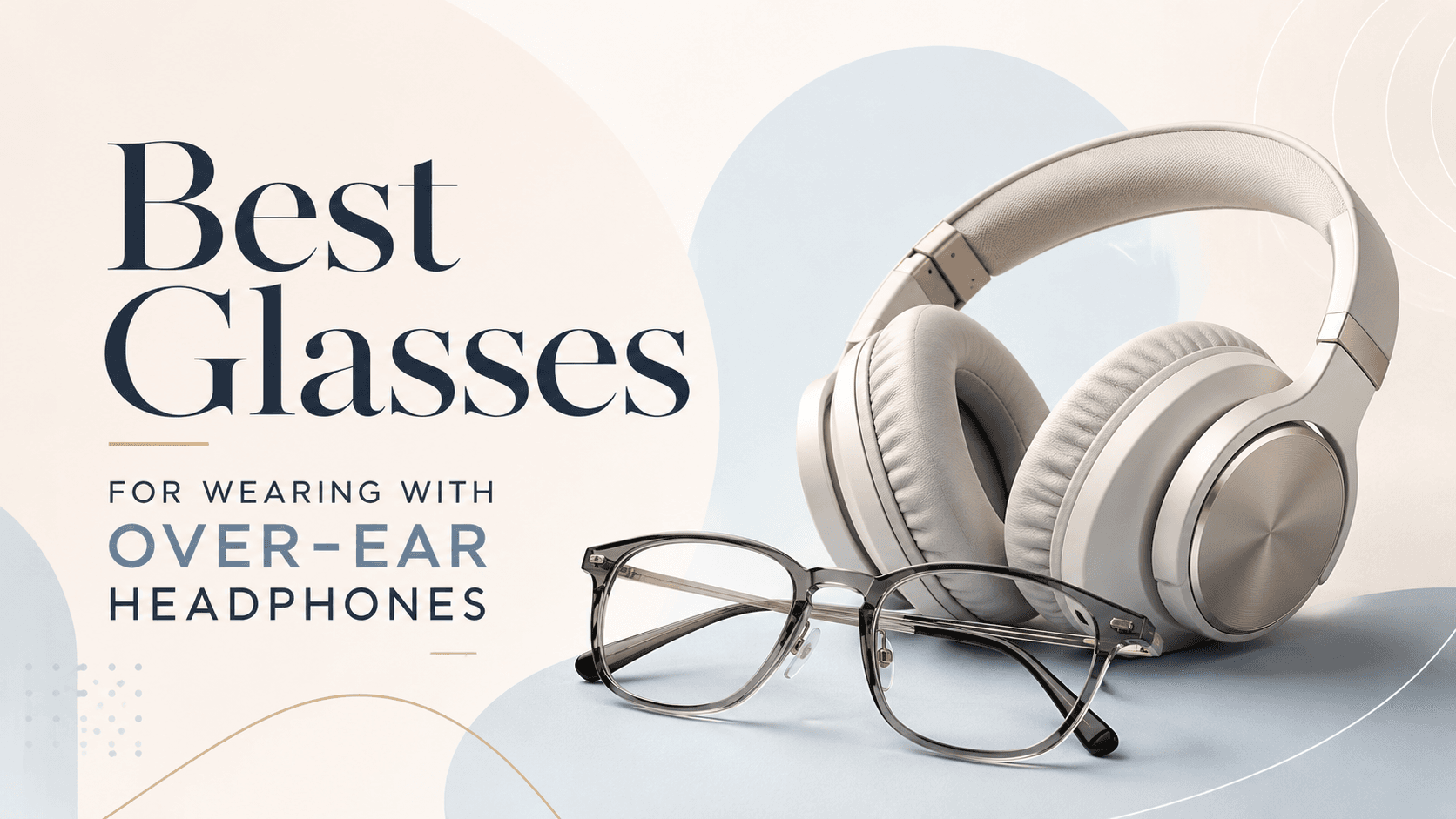
The best glasses for wearing with over-ear headphones have thin, flexible temples, minimal temple padding, and a lightweight frame build. These features reduce the pressure point where the headphone band crosses the temple arm, preventing the headache and ear soreness that many glasses-wearers experience during long listening sessions.
Why Do Glasses and Over-Ear Headphones Clash?
Over-ear headphones press their ear cups against the sides of your head. When a glasses temple sits between the ear cup and your skull, it creates a concentrated pressure point along the temple arm. Over time this causes discomfort, loosens the seal of the headphones (hurting sound quality), and can even bend or warp your frames. Thin and flat temple arms minimise that pressure point dramatically.
Which Frame Styles Work Best?
Thin Metal Frames
Slim metal frames — think classic round or rectangular shapes in stainless steel or titanium — have the thinnest temple arms available. They sit flat against the head, leaving very little material for headphone cushions to press against. Titanium frames are especially useful because they are both lightweight and slightly flexible, absorbing pressure without bending permanently.
Rimless and Semi-Rimless Frames
Rimless and semi-rimless designs tend to use the thinnest possible temples and the lightest overall weight. Less mass on your face means less force amplified at the pressure point. If you spend four or more hours a day wearing headphones, these styles are worth serious consideration.
Frames to Avoid
Thick acetate or chunky plastic frames have wide, often rounded temple arms that dig into the space between the headphone cushion and your head. Wayfarer-style and oversized cat-eye frames, while stylish, often create the worst pressure points for headphone users. Similarly, frames with thick spring hinges add extra bulk at the temple.
Does Frame Size Matter?
Yes. A frame with a shorter temple length (the arm that reaches to your ear) will have less surface area pressing against the headphone cushion. Standard adult temples run between 135 mm and 150 mm. If you are between sizes, the shorter option is usually more comfortable for headphone use. A frame that sits closer to the face — meaning a smaller lens height — also tends to stay stable under headphone pressure.
Tips for Making Any Glasses More Headphone-Friendly
Ask your optician to adjust the temple angle so the arms lie as flat as possible against your head.
Use a headphone stand or neck-band style headphones when you are at your desk and only need glasses for screen work.
Consider memory-titanium or beta-titanium temples — they flex under pressure and spring back to shape.
If your frames slip when you put headphones on, silicone ear hooks (available at most optical stores) add grip without adding bulk.
Take off your headphones by lifting both ear cups simultaneously rather than pulling from one side, which levers against one temple and bends it over time.
Prescription Lenses: Any Special Considerations?
High-index lenses are thinner and lighter than standard plastic lenses, which slightly reduces overall frame weight and can improve comfort when combined with headphones. Anti-reflective coating does not affect headphone comfort directly, but if you use headphones at a monitor, pairing thin frames with blue-light blocking lenses addresses two screen-time problems at once.
Ultimately, the right pairing of frames and headphones comes down to temple thickness and overall frame weight. Prioritise thin metal or rimless styles, get a professional temple adjustment, and your glasses-plus-headphones setup will be comfortable for hours.
