
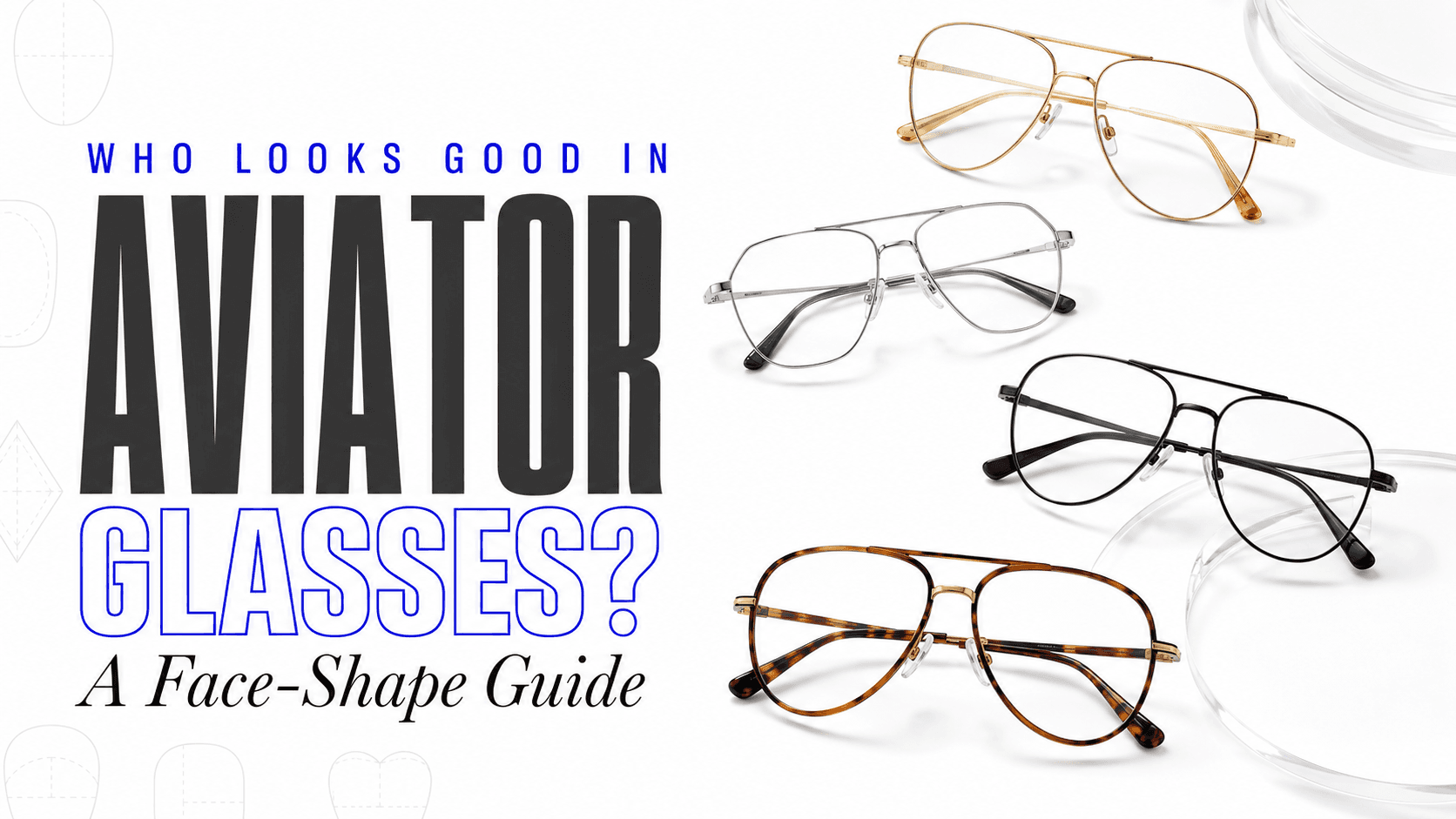
Aviator glasses are recognised by their prominent bridge, thin frame and deep lenses. Although the classic design has a teardrop shape, modern aviator eyeglasses are also available with geometric, square and softly rounded lenses.
So, who looks good in aviator glasses? Almost anyone can wear them. The key is selecting proportions that complement your features instead of assuming one aviator style fits every face.
Which Face Shapes Suit Aviator Glasses?
Oval Faces
Oval faces have naturally balanced proportions and can wear most aviator styles. Classic teardrop, geometric and oversized aviators can all work well. Choose a frame approximately as wide as the broadest part of your face.
Square Faces
The curved lenses of classic aviators can soften a defined jawline and angular forehead. Thin metal frames create contrast without adding excessive structure. Avoid highly boxy aviators if you want a softer appearance.
Heart-Shaped Faces
Heart-shaped faces commonly have a wider forehead and narrower chin. Teardrop lenses introduce visual weight lower on the face, helping create balance. Lightweight metal frames and subtle brow bars are strong choices.
Round Faces
Aviator glasses can suit round faces, especially when the lenses have angular or geometric edges. These shapes introduce definition and contrast with softer facial curves. Avoid frames that are excessively wide or completely circular.
Long or Oblong Faces
Deep lenses and a noticeable double bridge can introduce horizontal emphasis and balance facial length. Choose medium-to-wide aviators with sufficient lens depth rather than small, narrow frames.
Diamond Faces
Diamond faces usually have prominent cheekbones with a narrower forehead and jaw. Slim metal aviators with gently curved lenses can highlight the eyes without competing with the cheekbones. The frame should not extend excessively beyond the temples.
How Should Aviator Glasses Fit?
Face shape is only a starting point. Check these practical fit details:
The frame should align with your face without pressing at the temples.
The bridge should remain secure without pinching or sliding.
Your pupils should sit reasonably close to the centre of each lens.
The lower lenses should not touch your cheeks when you smile.
The temples should rest comfortably without flaring outward.
Large aviator lenses may become thicker or heavier with stronger prescriptions. Ask an optical professional whether the frame is suitable for your prescription, lens material or progressive lenses.
How to Style Aviator Glasses
Gold and tortoiseshell aviators create a warm, classic appearance, while silver, gunmetal and black frames feel modern and understated. Thin metal aviators work well with professional clothing, whereas bold acetate or geometric designs complement casual and fashion-focused outfits.
Choose a colour that coordinates with the clothing and accessories you wear regularly rather than following a temporary trend.
Find Your Aviator Style
The best aviator glasses complement your facial proportions, remain comfortable and support your prescription needs. Explore Rimloo’s aviator eyeglasses to compare classic, geometric and contemporary designs for your face and individual style.
