
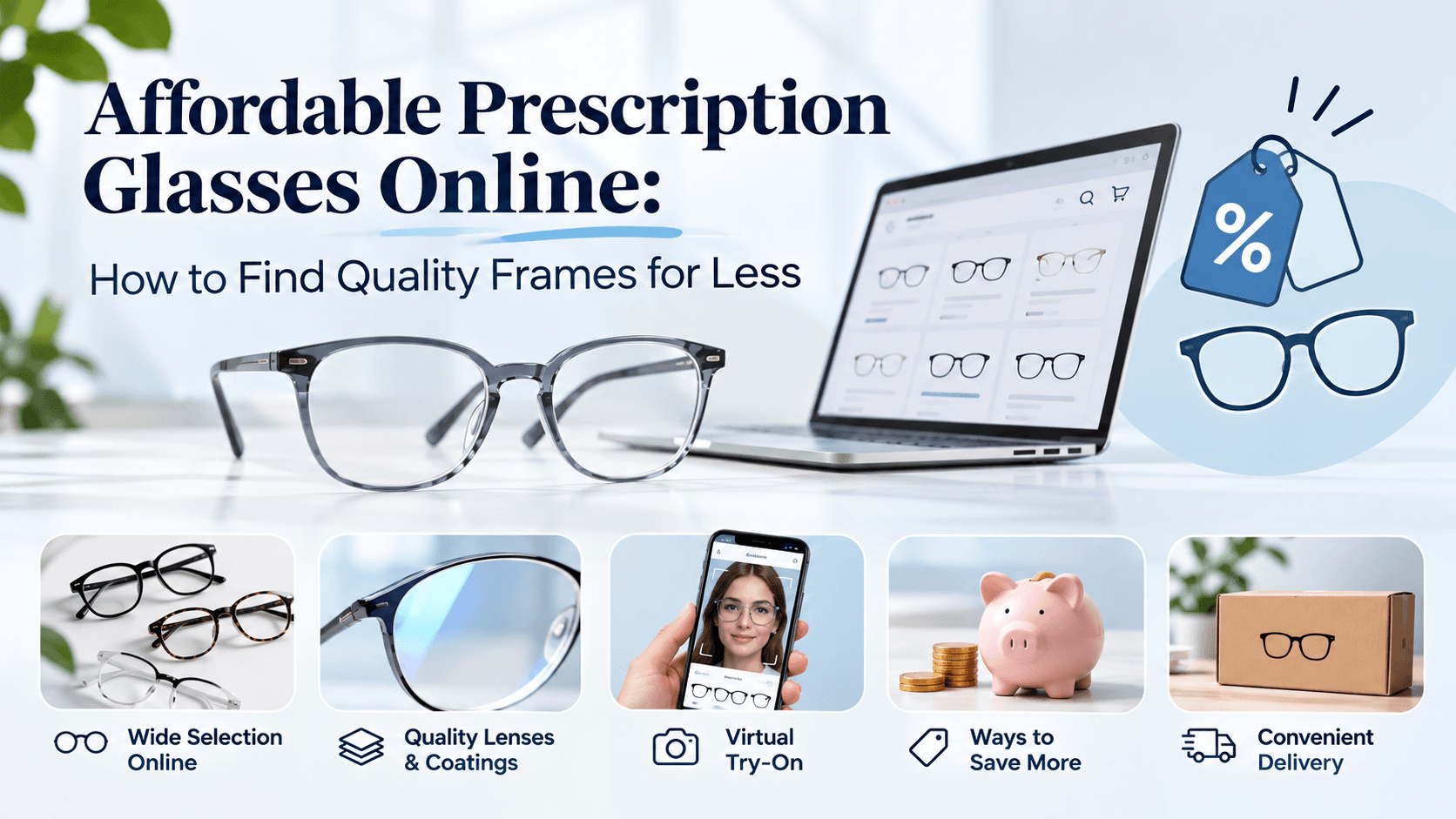
You can buy high-quality prescription glasses online in India for a fraction of what optical stores charge — if you know what to look for. The savings come from cutting out middlemen, not from compromising on lenses or frame durability. At Rimloo, frames start at prices that make regular eyewear upgrades genuinely feasible for most households.
Why Are Prescription Glasses So Expensive at Physical Stores?
Traditional optical retail carries significant overhead: showroom rent, staff salaries, and brand licensing fees. A large portion of the retail price you pay has nothing to do with the glasses themselves. Online retailers eliminate most of these costs, passing the difference directly to you. Rimloo operates on this model — lean infrastructure, direct sourcing, and a curated catalogue that keeps prices honest.
What Should You Actually Check Before Buying Prescription Glasses Online?
The two things that matter most are lens quality and accurate prescription fulfilment. Everything else — packaging, brand name, in-store experience — is peripheral. When evaluating any online eyewear retailer, ask these questions:
Does the retailer use certified optical-grade lens materials (CR-39, polycarbonate, or high-index)?
Is there a clear process for submitting and verifying your prescription?
Are anti-reflective and UV coatings included or available as upgrades?
What is the return or replacement policy if the prescription is incorrect?
Are frame measurements — temple length, bridge width, lens width — clearly listed?
Frame Materials: Where to Spend and Where to Save
Not every affordable frame is a cheap frame. Acetate and TR-90 nylon offer excellent durability at accessible price points. Metal alloy frames are lightweight and long-lasting. What you can safely skip: inflated brand premiums on frames that are functionally identical to unbranded alternatives. At Rimloo, material specifications are listed transparently so you are never guessing what you are paying for.
How to Read Your Prescription Before You Order
Your prescription contains sphere (SPH), cylinder (CYL), axis, and sometimes pupillary distance (PD). The PD — the distance between your pupils — is critical for online orders because it determines how the optical centre of the lens aligns with your eye. If your optometrist did not include PD on your prescription slip, you can measure it at home with a ruler and a mirror, or ask your eye doctor specifically. Rimloo's ordering flow guides you through each field so errors are minimised before the order is placed.
The Rimloo Approach: Quality Without the Premium
Rimloo was built on a straightforward belief: good eyesight should not depend on your budget. Our catalogue spans everyday prescription eyeglasses, blue-light blocking lenses for screen-heavy workdays, and prescription-ready sunglasses — all manufactured to consistent optical standards. We work directly with vetted frame manufacturers and licensed lens labs, which means the quality control happens before the product reaches you, not as an afterthought.
Getting the Right Fit Remotely
Frame fit is the most common concern shoppers raise about buying glasses online. The solution is knowing your measurements. Check the inside arm of any frame you currently own — most frames stamp the lens width, bridge width, and temple length in millimetres. Use those numbers as your baseline when browsing. Rimloo lists full frame dimensions on every product page, and our customer support team can advise on fit before you commit.
Affordable prescription glasses online are not a compromise — they are simply a smarter way to buy. The key is choosing a retailer that is transparent about materials, rigorous about prescriptions, and honest about what you are getting for your money.
