
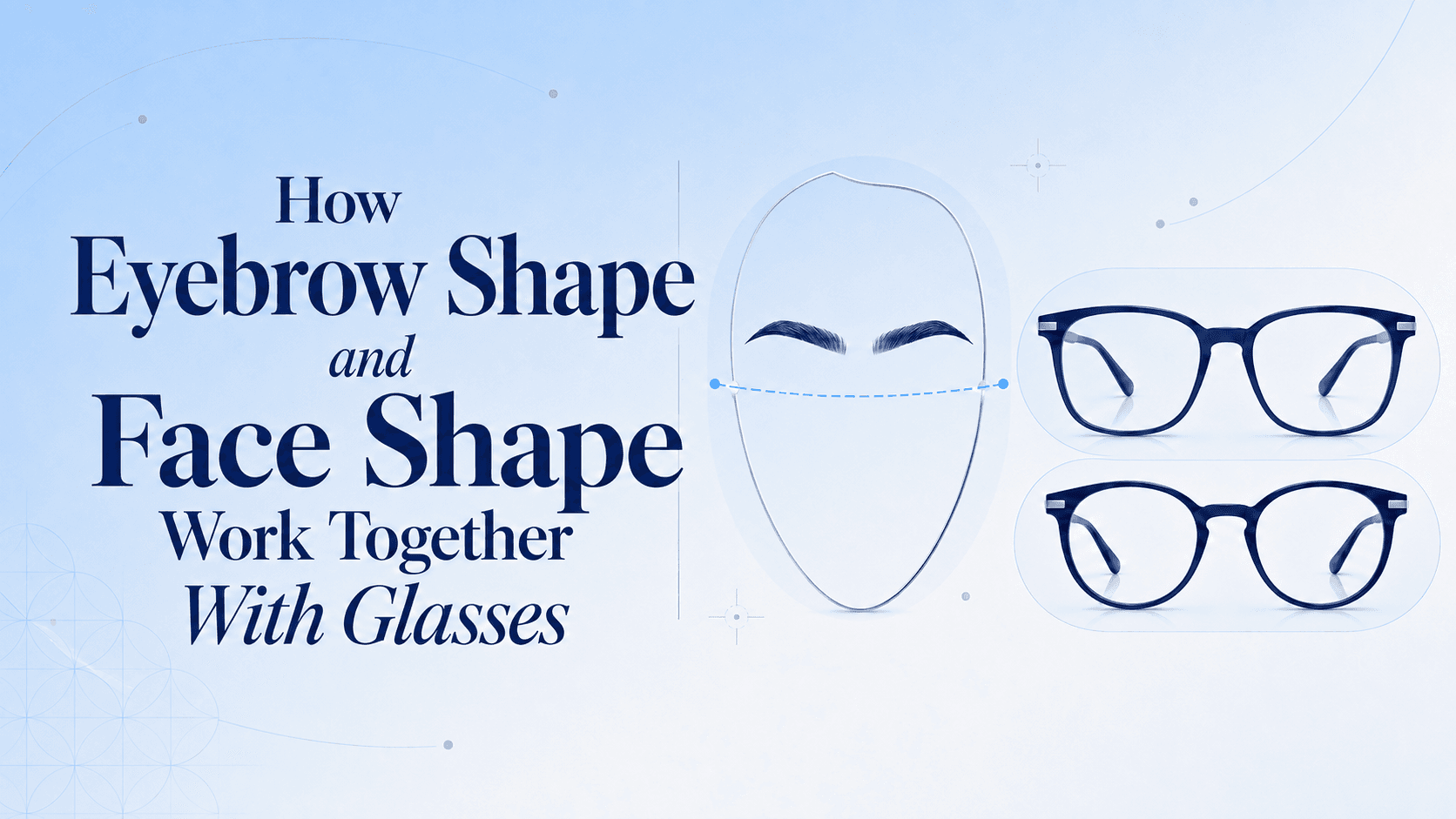
The right glasses frame is decided by three things working together: your face shape, your eyebrow shape, and how the frame interacts with both. A frame that mirrors or complements your brow arch creates a cohesive, balanced look, while a mismatch can make even expensive glasses feel off. Understanding this triangle is the fastest shortcut to flattering eyewear.
Why Eyebrows Matter as Much as Face Shape
Most style guides stop at face shape — oval, round, square, heart, oblong — but eyebrows form a visible line that glasses either echo, interrupt, or fight against. Brows act as a natural frame for your eyes. When your glasses sit just above or along that brow line, the two lines either reinforce each other or create visual clutter. Paying attention to brow thickness, arch height, and angle gives you a second lens (no pun intended) for narrowing down frame choices.
Matching Brow Arch to Frame Shape
A high, pronounced arch pairs beautifully with cat-eye or geometric frames because both share upward-sweeping lines. A flat, straight brow works well with rectangular or browline frames that echo that horizontal emphasis. Soft, gently curved brows suit round or oval frames, which carry a similar easy curve without competing for attention.
The general rule: let the top edge of the frame follow — not cut across — your natural brow shape. Frames that sit too high above the brow leave a visible gap that fragments the face. Frames that sit too low hide the brow entirely and make the eye area look heavy.
Face Shape + Brow Shape: Quick Combinations
Oval Face
Lucky baseline — most frame shapes work. If you have a high-arched brow, lean into cat-eye or angular frames to add definition. A flat brow? Wayfarers or square frames add structure without overdoing it.
Round Face
Angular frames elongate a round face. A naturally arched brow already does some of that lifting work, so a rectangular or browline frame reinforces the effect. Avoid round frames that double up on soft curves.
Square Face
Soften a strong jawline with oval or round frames. A flat, straight brow on a square face can read as very strong, so choose frames with a subtle upward sweep or a thin, light-coloured top bar to reduce visual weight.
Heart Face
Wider forehead, narrower chin. Light, low-set frames balance proportions. A high-arched brow already emphasises the upper face, so opt for frames with minimal top-bar thickness — rimless or semi-rimless styles work especially well here.
Oblong Face
Add width with oversized or deep frames. A flat brow on an oblong face can elongate it further, so choose frames with a slight arch in the top rim to break the vertical emphasis.
Brow Visibility: Should the Frame Cover Your Brows?
Classic styling advice says the frame should follow the brow, not hide it. Browline frames (also called club-master frames) are literally designed around this principle — the bold top bar traces the brow's path. Full-rim frames that sit below the brow can work on faces where the brow is very prominent, but test this in person or via a virtual try-on before committing.
Practical Tips Before You Buy
Stand in natural light and look straight into a mirror. Notice the line your brows draw. Then imagine (or try on) frames whose top edge runs parallel to that line. That parallel relationship, maintained across face shape, brow shape, and frame style, is the visual harmony you're aiming for. Use Rimloo's virtual try-on to test frame-brow alignment from your phone before ordering.
