
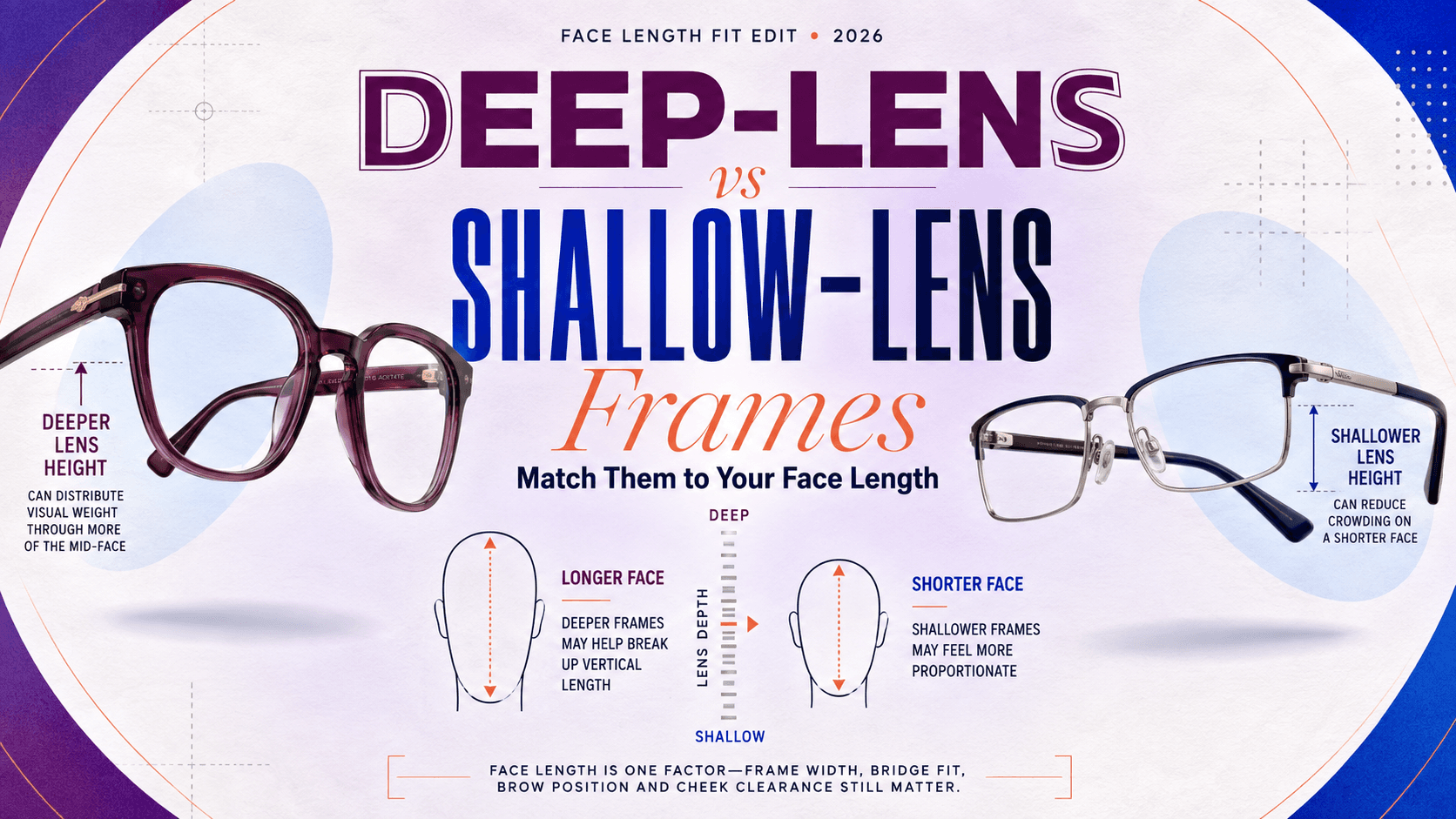
The vertical height of a frame's lens, known as lens depth, is one of the most overlooked factors when buying glasses. A deep lens (tall frame) visually shortens a long face, while a shallow lens (low-profile frame) elongates a short or round face. Getting this one detail right makes your glasses look like they were custom-made for you.
What Are Deep-Lens and Shallow-Lens Frames?
Lens depth is measured in millimetres from the top rim to the bottom rim of the frame. Frames with a lens depth of 36 mm or more are considered deep-lens frames. Frames with a lens depth of 30 mm or less are considered shallow-lens frames. Anything in between is a mid-depth lens, which suits most average face lengths comfortably.
How Does Face Length Affect Which Depth You Need?
Face length is the vertical distance from your hairline to your chin. A longer face has more vertical space to fill, while a shorter or rounder face needs the illusion of added length. Lens depth either compresses or extends the perceived vertical proportion of your face, making it the single most effective fit lever beyond frame width.
Deep-Lens Frames: Best for Long and Oval Faces
If your face is long or oblong, a deep-lens frame draws the eye horizontally and reduces the sense of vertical stretch. Classic styles that work well include oversized square frames, large aviators, and wide round frames. These create a bold, face-filling presence that brings proportions into balance. People with oval faces can also wear deep lenses confidently because the oval's natural symmetry handles extra height without looking overdone.
When to Choose a Deep Lens
Choose a deep-lens frame when your face length is noticeably greater than your face width, when you want a bolder, more expressive look, or when your prescription requires a larger optical zone — high-power lenses often perform better inside a deeper frame because the optician has more lens area to work with.
Shallow-Lens Frames: Best for Round and Short Faces
A round or short face benefits from a shallow lens because the reduced height adds visual length and prevents the frame from overwhelming your features. Rectangular, browline, and slim oval frames with a low lens depth keep proportions clean and structured. These styles also tend to look more professional and minimalist, which suits formal and office settings.
When to Choose a Shallow Lens
Choose a shallow-lens frame when your face length is close to or shorter than your face width, when you prefer a lightweight and understated aesthetic, or when you want your eyes to appear more aloft and defined rather than framed all around.
Quick Comparison: Deep vs Shallow Lenses at a Glance
Deep lenses suit long and oval faces, offer a bold statement look, and give opticians more room for high-power prescriptions. Shallow lenses suit round and short faces, deliver a sleek minimalist appearance, and feel lighter on the nose. Both types are available in prescription and non-prescription variants across Rimloo's eyeglasses collection and the sunglasses range.
One More Tip: Combine Lens Depth With Frame Width
Lens depth works best when paired with the right frame width. Your frame should align with your cheekbone width — neither wider nor narrower by more than a few millimetres. Nail both dimensions and your glasses will look effortlessly proportionate regardless of your face shape.
