
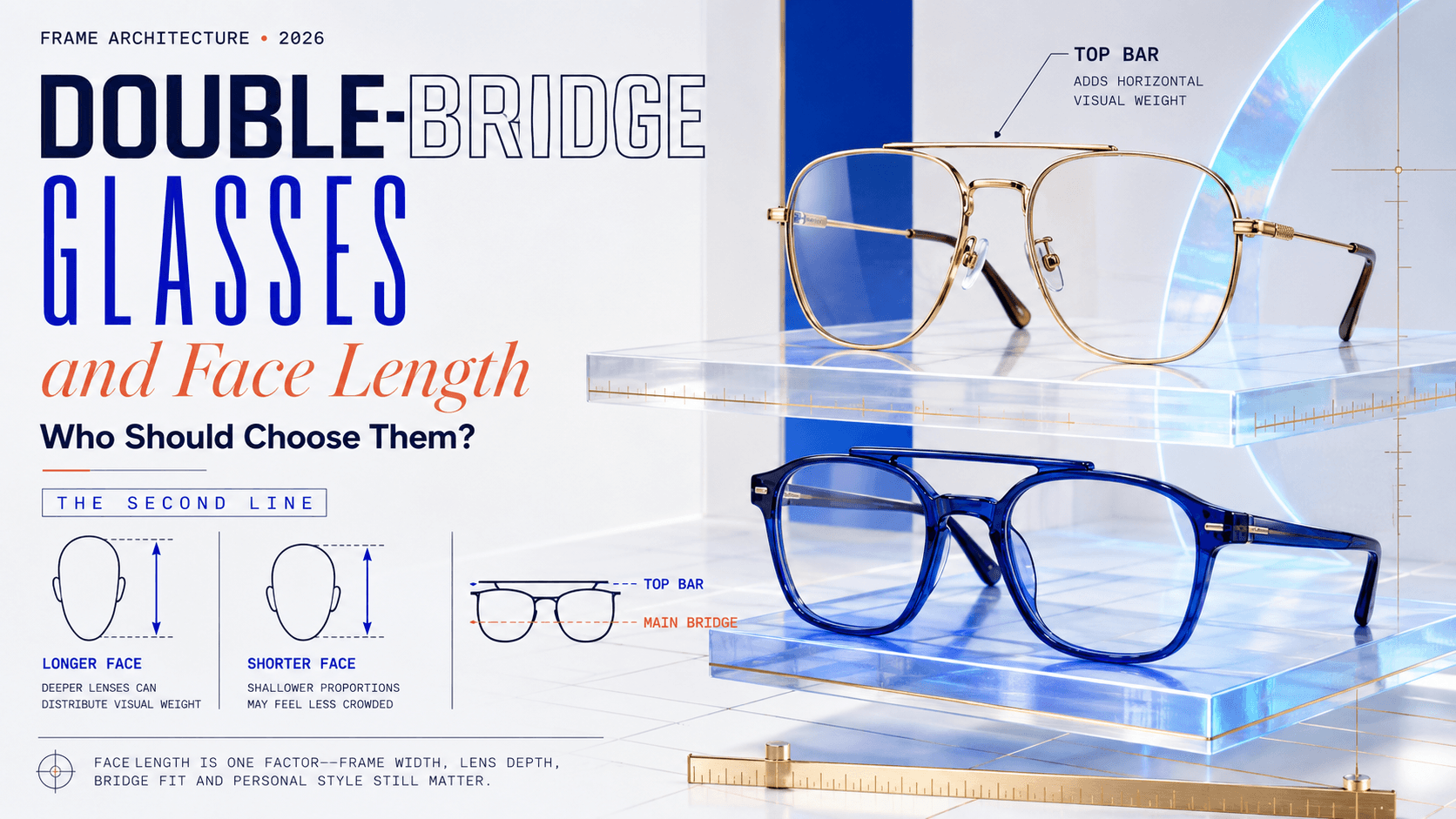
Double-bridge glasses suit people with longer or oval-shaped faces best. The extra horizontal bar across the nose adds visual width and breaks up vertical length, creating a more balanced look. If your face is shorter or already wide, a double bridge can feel overpowering — but for the right face length, it's one of the most flattering frame choices available.
What Exactly Is a Double-Bridge Frame?
A double-bridge frame features two parallel bars connecting the two lenses at the nose, rather than the single slim bridge found on most glasses. Originally popularised by aviator sunglasses, the style has crossed over into prescription eyewear and everyday fashion. The design adds structural detail to the upper portion of the frame, drawing the eye horizontally across the face.
Which Face Lengths Benefit Most?
Long Faces
If your face is noticeably longer than it is wide — a narrow oval, oblong, or rectangular shape — a double bridge is an excellent choice. The extra bar creates a strong horizontal line that visually shortens the face and adds the width your proportions need. Pair this with slightly wider lenses for maximum effect.
Oval Faces
Oval faces are considered the most versatile when it comes to eyewear, and double-bridge frames are no exception. The balanced proportions of an oval face can carry the added detail without the frame dominating the features. Both round and angular double-bridge styles work here.
Who Should Approach Double-Bridge Frames with Caution?
Round and Short Faces
If your face is wider than it is long, or you have a round face with soft, circular curves, a double bridge can make the face appear even wider. In this case, a single-bridge frame with more vertical height will be more flattering. That said, fashion rules are guidelines, not laws — try a pair before you decide.
Heart-Shaped Faces
Heart-shaped faces are wider at the forehead and taper to a narrow chin. A double bridge sitting high on the nose can emphasise forehead width. If you love the double-bridge look, opt for smaller lenses and a lighter metal frame to keep things proportionate.
Double-Bridge Glasses vs. Single-Bridge: When to Choose Which
Choose a double bridge when you have a longer face, want to add visual width, or are aiming for a bold, editorial look with clear structural detail. Choose a single bridge when you want a cleaner, minimalist profile, have a shorter or rounder face, or prefer a frame that recedes into the background.
Frame Materials and Lens Shape Considerations
Double-bridge frames are most commonly found in metal — stainless steel or titanium — which keeps the dual-bar structure lightweight and refined. Aviator-style teardrop lenses and navigator rectangular lenses are the classic pairings. Rounder lenses on a double bridge give a softer, more retro feel, while flat-top rectangular lenses read as sharper and more modern.
How to Try Double-Bridge Frames Online
The best way to test a double-bridge frame for your face is to use a virtual try-on tool that maps your actual face proportions. Look at the frame's listed measurements — specifically the lens width and total frame width — and compare them to your current glasses if they fit well. A frame that is roughly as wide as your cheekbones will almost always look balanced.
