
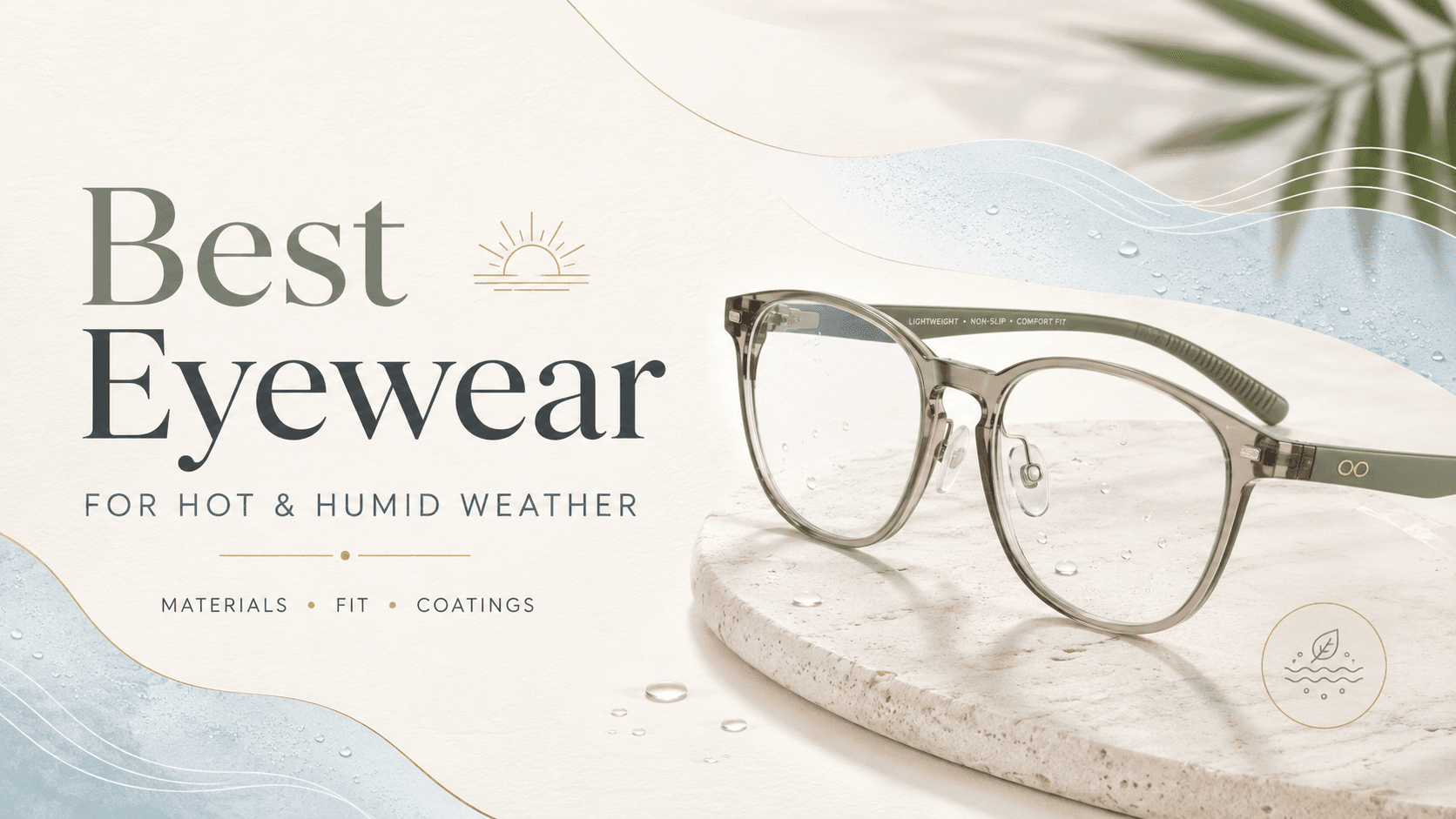
The best eyewear for hot and humid weather uses lightweight, sweat-resistant materials such as TR90 or titanium, a snug temple fit that prevents slipping, and an anti-reflective or hydrophobic lens coating. Together, these three factors ensure your glasses stay in place, resist corrosion, and give you clear vision even when the temperature climbs past 40°C.
Why Does Hot and Humid Weather Affect Your Eyewear?
Heat softens certain plastics, while sweat introduces salt that corrodes metal hardware and degrades lens coatings over time. High humidity also creates the ideal conditions for fogging, smudging and microbial build-up on nose pads. Understanding these stress points helps you make a smarter frame and lens choice before summer peaks.
Which Frame Materials Work Best in the Heat?
TR90: The Sweat-Proof Champion
TR90 is a thermoplastic rubber that is extremely flexible, nearly unbreakable and highly resistant to sweat and UV exposure. It does not warp at typical Indian summer temperatures and is significantly lighter than standard acetate, reducing pressure on the nose bridge during long wear. TR90 is an excellent everyday choice for anyone who leads an active outdoor life.
Titanium: Lightweight and Corrosion-Resistant
Titanium frames are the gold standard for durability in humid climates. The material is hypoallergenic, does not rust, and weighs roughly 45 percent less than standard steel. If you sweat heavily or live near the coast where salt air accelerates corrosion, titanium is worth the premium investment.
Acetate: Stylish but Needs Care
High-quality acetate frames offer rich colour and a classic look, but prolonged heat exposure can cause them to soften and lose shape. If you prefer acetate, store your glasses in a hard case and avoid leaving them on a car dashboard. Regular professional adjustments also help maintain the fit.
Metal Alloy and Stainless Steel: Proceed With Caution
Standard metal alloy frames can corrode where sweat accumulates, especially around the hinges and nose pads. If you choose metal, look for frames with a protective anti-corrosion coating or replaceable silicone nose pads.
What Lens Coatings Are Essential in Humid Conditions?
Anti-reflective (AR) coating reduces glare from intense sunlight and wet road surfaces, making driving and outdoor activity safer. Hydrophobic coating repels water droplets and sweat so they bead off the lens rather than smearing. Anti-fog coating is particularly valuable when moving between air-conditioned interiors and the hot outdoors — a common scenario in Indian cities. UV400 protection is non-negotiable if you spend any time outside, as tropical UV levels are significantly higher than temperate zones.
How Should Your Glasses Fit in Hot Weather?
A secure, well-adjusted fit prevents your glasses from sliding down a sweaty nose. Look for frames with rubberised or silicone nose pads that grip rather than slip. Spring hinges allow the temples to flex outward slightly, reducing the clamp pressure that causes headaches during long days. Wrap-style frames or those with a slight curve at the temple tip also stay on better during physical activity.
Sunglasses vs. Prescription Glasses in Summer
If you wear prescription lenses, consider prescription sunglasses with polarised, hydrophobic-coated lenses for outdoor use. Polarisation eliminates horizontal glare from wet surfaces and water bodies — a real advantage during monsoon season. Alternatively, clip-on or magnetic sunglass attachments work with your existing frames and are a cost-effective middle ground.
Quick Maintenance Tips for Monsoon and Summer
Rinse your frames with plain water after heavy sweating to flush away salt. Use a microfibre cloth rather than a shirt hem to avoid scratching coated lenses. Have your optician re-adjust your frames at the start of each summer, as the nose bridge and temple tips often loosen during the colder months.
