
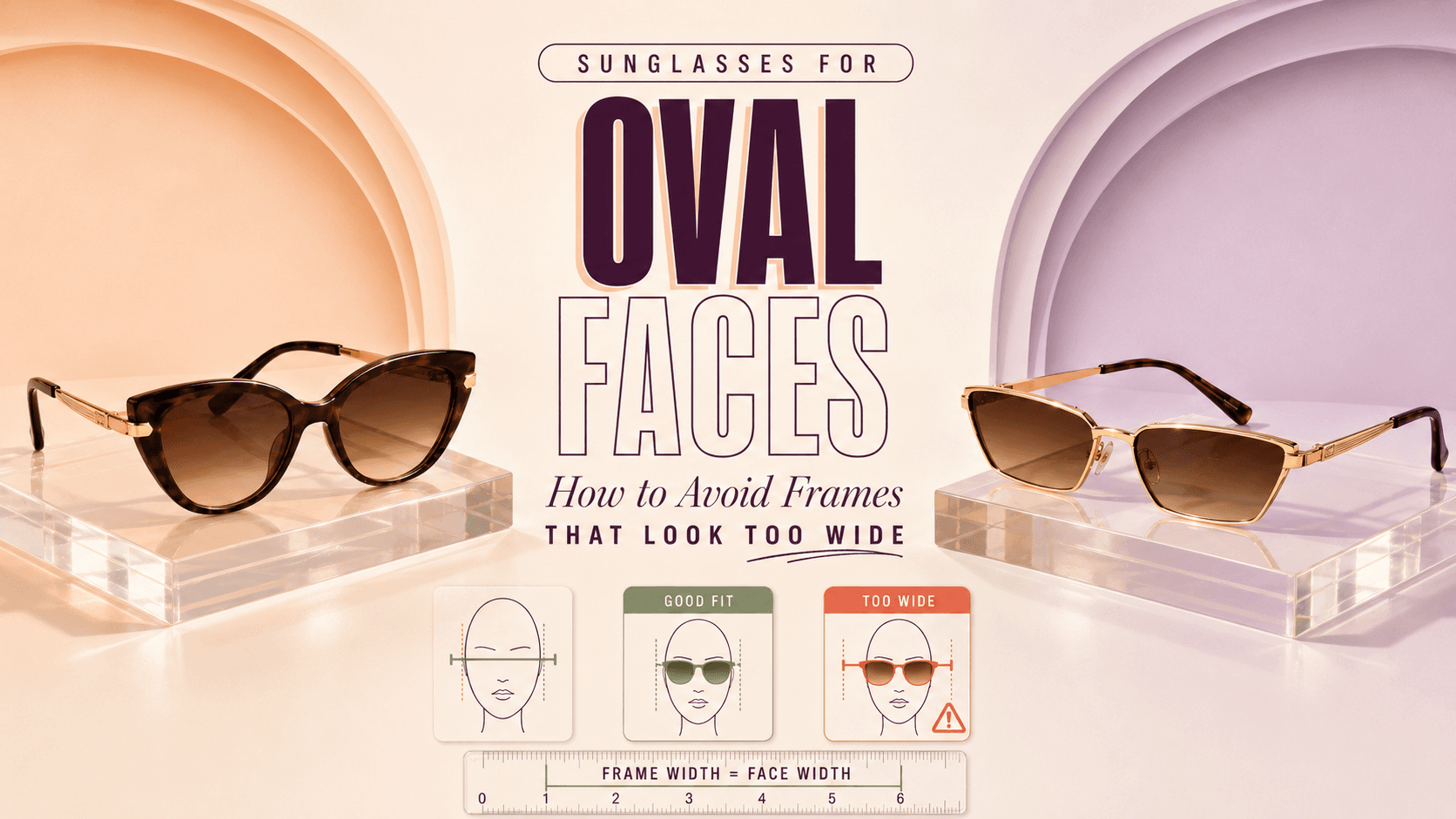
Oval faces are considered the most versatile face shape for eyewear, but that doesn't mean every frame works. The one mistake to avoid: frames that are wider than your cheekbones. When a frame extends too far beyond your face, it disrupts the natural symmetry that makes oval faces so easy to dress. Stick to frames that match or sit just within your cheekbone width, and you'll look sharp every time.
What Makes a Face Shape Oval?
An oval face is longer than it is wide, with a forehead that's slightly broader than the jaw and gently rounded edges. Cheekbones are the widest point, but the overall silhouette tapers softly at both ends. If your face fits this description, you have balanced proportions — and the right sunglasses will preserve that balance rather than fight it.
Why Wide Frames Are the Main Culprit
Wide frames — think oversized wraparounds or broad rectangular styles — extend past the cheekbones and visually widen the face. On an oval face, this creates an unbalanced, top-heavy look. The frame overpowers your features instead of framing them. The fix is straightforward: prioritise frame width that aligns with your natural cheekbone width, not wider.
Best Frame Shapes for Oval Faces
Because oval faces are already well-proportioned, the goal is to maintain that balance. These shapes consistently work well:
Wayfarers and D-frames: The straight top bar adds subtle structure without overwhelming soft features.
Aviators: Teardrop lenses sit within natural face proportions and draw the eye downward in a flattering way.
Round frames: Echo the curved jawline and feel cohesive — provided the diameter doesn't exceed cheekbone width.
Geometric frames (hexagon, octagon): Add visual interest and a modern edge without adding width.
Cat-eye frames: Lift the outer corners upward, flattering the face without horizontal spread.
Frames to Approach with Caution
Not every popular style is a safe bet for oval faces. Be selective with:
Oversized square or rectangular frames: Often too wide and can flatten facial depth.
Wide wraparound sports frames: Built for coverage, not proportion — they can look like a mask on oval faces.
Rimless frames with extreme horizontal span: The lack of visual weight makes the width even more pronounced.
How to Check Fit Before You Buy
When shopping online, the frame width measurement (listed in millimetres) is your most important number. Compare it to a pair of sunglasses you already own and know fits well. As a practical guide: frame width between 130 mm and 145 mm suits most oval faces. Anything above 148 mm risks looking too wide unless your face is on the larger side.
Also pay attention to lens height. Taller lenses (deep frames) add vertical presence, which complements an oval face's natural length. Short, narrow lenses can make the face look longer than it is.
Oval Face vs Other Face Shapes: A Quick Comparison
Unlike round faces, which need angular frames to add definition, or square faces, which benefit from curved frames to soften edges, oval faces need frames that simply don't disturb existing balance. You have more freedom than most — use it to experiment with shapes rather than chasing the widest frame on the shelf.
Explore Rimloo's curated sunglasses collection to find styles sized and shaped for balanced, everyday wear — no guesswork needed.
