
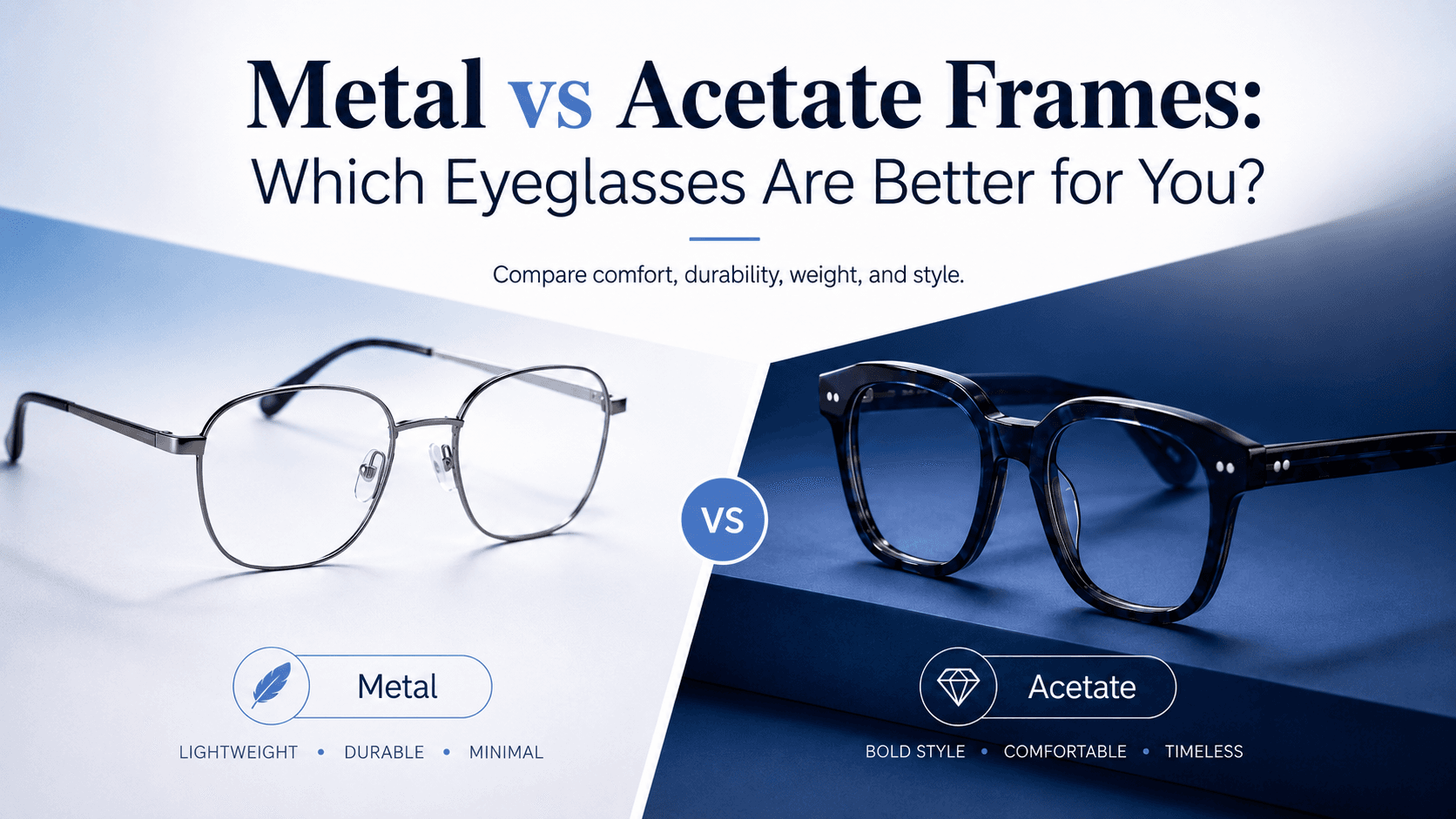
Metal and acetate are the two most popular eyeglass frame materials — and the right choice depends on your face shape, skin sensitivity, daily routine, and personal style. Metal frames tend to be lighter and more adjustable, while acetate frames offer bolder colours, richer textures, and a more substantial feel on the face. Neither is universally superior; both have clear strengths that suit different wearers.
What Are Metal Frames?
Metal frames are constructed from materials such as stainless steel, titanium, monel (a nickel-copper alloy), or aluminium. Stainless steel and titanium are the most common in the Indian market. Titanium frames are exceptionally lightweight — often under 10 grams — and completely corrosion-resistant, making them a favourite for daily wear in humid climates. Stainless steel frames are more affordable while still offering good durability and a sleek, minimalist profile.
One of the biggest practical advantages of metal frames is adjustability. An optician can easily bend the nose pads and temple arms to customise the fit. This is especially useful if your nose bridge is low or your ears are asymmetrical — extremely common concerns among Indian wearers.
What Are Acetate Frames?
Acetate is a plant-derived plastic (cellulose acetate) that is cut and polished from thick sheets, giving it a depth of colour and pattern that injection-moulded plastics simply cannot replicate. Tortoiseshell, translucent pastels, bold solids, and layered two-tone finishes are all hallmarks of quality acetate eyewear. Because the colour runs through the entire material — not just the surface — acetate frames resist fading significantly better than cheaper plastics.
Acetate frames are also hypoallergenic, making them an excellent choice for people who experience skin irritation from nickel, which is present in many metal alloys. The trade-off is that fit adjustments require a heat gun, so a professional re-fit is needed when the frame stretches or warps over time.
Metal vs Acetate: A Direct Comparison
Understanding how these two materials stack up across the most important buying criteria helps you make a faster, more confident decision.
Weight: Metal (especially titanium) wins. Most metal frames feel noticeably lighter on the face, reducing nose and ear fatigue during long screen sessions.
Durability: Both are durable when well-made, but acetate is more prone to snapping under sharp impact, while metal can bend and be straightened.
Colour and style variety: Acetate wins decisively. The range of patterns, finishes, and colour depths available in acetate far exceeds what is achievable in metal.
Adjustability and fit: Metal frames offer superior on-the-spot adjustability via nose pads and temple tweaking — a significant advantage for Indian face profiles that often have a lower nose bridge.
Skin sensitivity: Acetate is the safer choice for anyone allergic to nickel or other metals.
Maintenance: Metal frames can corrode at hinges and nose pads if not cleaned regularly; acetate can warp if left in a hot car or exposed to harsh solvents.
Price range: Both materials span budget to premium, but titanium and high-grade acetate sit at the upper end.
Which Frame Material Suits Your Face Shape?
Frame material interacts closely with frame shape to flatter or clash with different face structures. As a general guide: if you have a round or oval face, the bold, thick rims of acetate frames add definition and visual structure. If you have a strong angular or square jaw, the delicate lines of a thin metal frame soften the overall look without competing with your features. Oval faces are the most versatile and can carry both materials well.
The weight distribution also matters for face shape. Metal frames with adjustable nose pads sit higher or lower on the bridge as needed, which can visually lengthen or shorten the nose — a subtle but meaningful styling tool.
Lifestyle and Practical Considerations
Beyond aesthetics, think about how and where you wear your glasses. If you work outdoors, exercise regularly, or live in a coastal city with high humidity, a titanium or stainless steel frame with plastic nose pads will hold up better over time. If you sit at a desk most of the day and want a pair that makes a style statement in professional settings, a well-crafted acetate frame in a neutral or tortoiseshell tone is hard to beat.
For people who wear progressive lenses or high-index lenses — which are heavier than standard lenses — a lightweight metal frame compensates for the added lens weight and prevents the glasses from sliding down throughout the day.
When to Choose Metal
Metal frames are the better choice when you prioritise a precise, adjustable fit; you need to pair them with heavier prescription lenses; you prefer a minimalist or professional aesthetic; or you have a low nose bridge and need nose pad customisation for comfort.
When to Choose Acetate
Acetate frames are the better choice when you want to express personal style through bold colour or pattern; you have a nickel allergy or sensitive skin; you prefer a substantial, structured feel; or you want a frame that holds its colour and finish over years of daily wear.
Ultimately, the best frame material is the one that fits your face comfortably, suits your day-to-day lifestyle, and makes you feel confident every time you put it on. Many regular eyewear wearers keep one of each — a lightweight metal frame for long workdays and a statement acetate pair for weekends and social occasions.
