
Anti-Glare Lenses for Night Driving: Drive More Comfortably After Dark
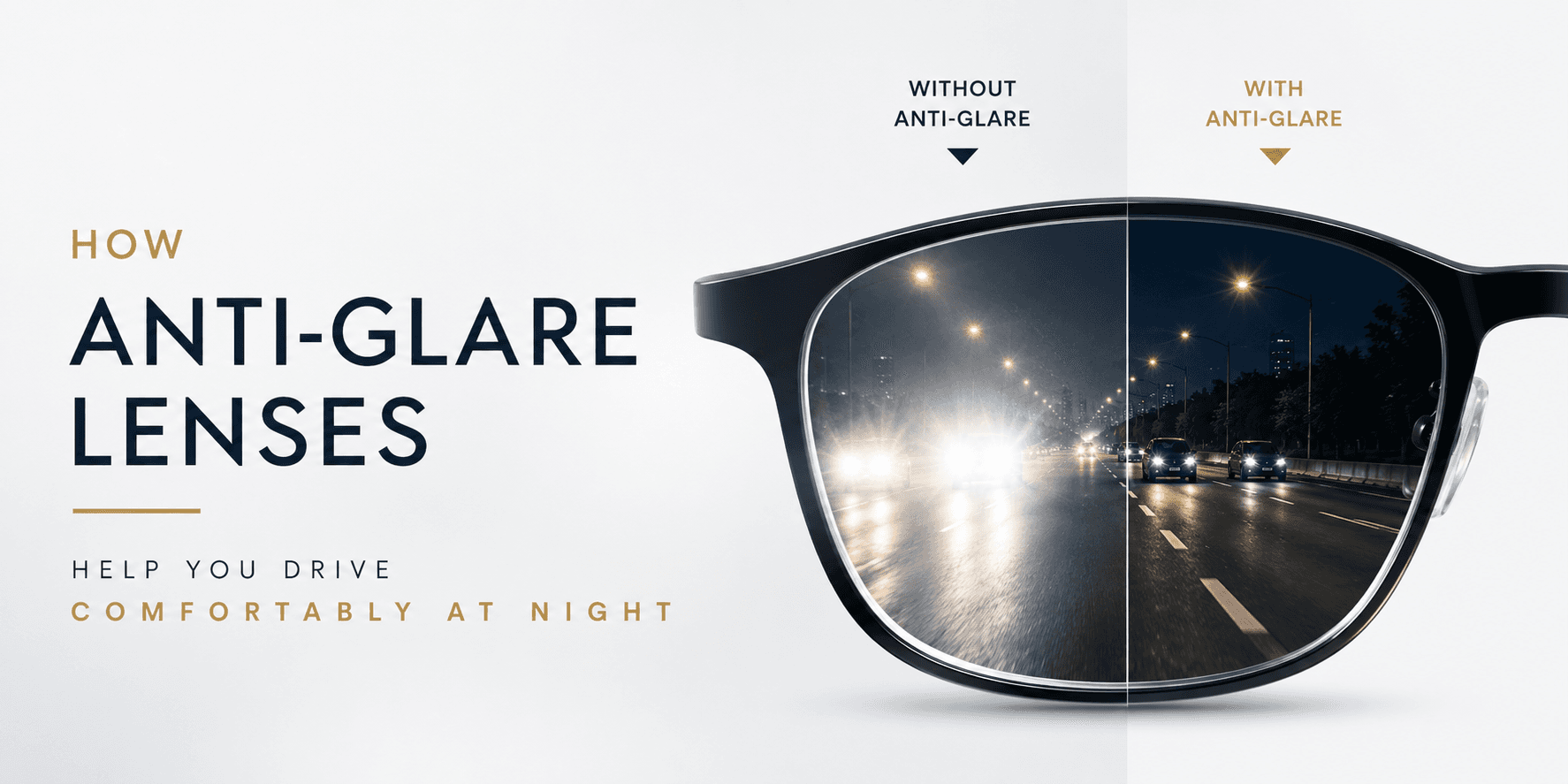
Driving at night can feel completely different from driving during the day. The road looks darker, bright headlights suddenly hit your eyes, streetlights create reflections, and small details like road signs, dividers, and turns can feel harder to notice. For many people, this is one of the most common reasons night driving becomes tiring.
This is where Anti-Glare Lenses can make a real difference.
Anti-glare lenses are designed to reduce unwanted reflections on your eyeglass lenses. They help more light pass clearly through the lens instead of bouncing off the surface. The result is cleaner vision, less distraction, and a more comfortable driving experience at night.
If your eyes feel tired after night driving, if headlights look too sharp, or if your glasses create reflections from every light source, anti-glare lenses may be the upgrade your eyes need.
What Are Anti-Glare Lenses?
Anti-glare lenses are eyeglass lenses with a special coating, often called an anti-reflective coating or AR coating. This coating is applied to the lens surface to reduce reflections from headlights, streetlights, dashboard lights, and digital screens.
Normal lenses can reflect light from both the front and back surfaces. At night, even a small reflection can feel disturbing because your surroundings are already dark. When a bright headlight or streetlamp hits your lenses, the reflection can create glare, halos, and visual discomfort.
Anti-glare lenses help reduce this problem by allowing more light to pass through the lens clearly. This makes your vision feel sharper and more natural, especially in low-light conditions.
In simple words, anti-glare lenses do not “create night vision.” They help you use your existing vision more comfortably by reducing distracting reflections.
Why Night Driving Feels Uncomfortable for Many People
Night driving is challenging because your eyes need to work harder in low light. During the day, there is enough natural light to help your eyes detect contrast, distance, movement, and road details. At night, the eyes rely on limited light, and sudden brightness from headlights can create discomfort.
Some common night driving problems include:
Bright glare from oncoming headlights
Reflections from wet roads
Halos around lights
Eye strain during long drives
Difficulty reading road signs clearly
Reflections on eyeglass lenses
Tired eyes after driving
Trouble adjusting between dark roads and bright lights
Anti-glare lenses are helpful because they target one of the biggest causes of discomfort: unwanted reflections.

How Anti-Glare Lenses Help While Driving at Night
1. They Reduce Headlight Glare
One of the biggest advantages of anti-glare lenses is their ability to reduce the harsh reflections caused by headlights. When another vehicle approaches, the bright light can reflect off your lenses and make your vision feel unclear.
Anti-glare lenses reduce these reflections, so your eyes can focus better on the road instead of fighting the brightness. This can make night driving feel smoother and less stressful.
For people who regularly drive after sunset, this benefit alone can make a noticeable difference.
2. They Improve Visual Comfort
Night driving is not only about seeing clearly. It is also about feeling comfortable while seeing.
Without anti-glare coating, eyeglass lenses may create tiny reflections that distract your eyes again and again. Over time, these reflections can make your eyes feel heavy, dry, or strained.
Anti-glare lenses help reduce that constant visual disturbance. Your eyes do not have to work as hard to ignore reflections, which can make longer drives feel more relaxed.
This is especially useful for office workers, delivery professionals, cab drivers, business travelers, students, and anyone who often travels in the evening.
3. They Help You See Road Details More Clearly
At night, small details matter. A speed breaker, road divider, turn, signboard, pedestrian, or parked vehicle may not be easy to notice in low light.
Anti-glare lenses help by reducing visual noise on your lenses. When glare is lower, your vision can feel cleaner and more focused. This helps you pay attention to real road details instead of being distracted by reflections.
They are especially useful during rainy nights, when wet roads reflect lights and create extra glare.
4. They Reduce Reflections From Your Own Glasses
Many people do not realize that the problem is not only outside the car. Sometimes the reflections come from their own eyeglasses.
Dashboard lights, phone navigation screens, streetlights, and vehicles behind you can reflect on the lens surface. These small reflections can appear as distracting flashes or light spots.
Anti-glare lenses reduce reflections on the lens surface, making your glasses feel more transparent. This gives you a cleaner view while driving.
5. They Make Your Glasses Look Clearer
Anti-glare lenses do not only improve comfort. They also improve appearance.
Because they reduce lens reflections, your glasses look clearer from the outside. This means people can see your eyes better, and your eyewear looks more premium and polished.
For drivers who wear glasses every day, this is a useful benefit both on and off the road.
Anti-Glare Lenses vs Yellow Night Driving Glasses
Many people search for yellow night driving glasses, thinking they will improve night vision. But this is where buyers need to be careful.
Yellow or dark-tinted lenses can reduce the amount of light reaching your eyes. That may feel comfortable for a moment, but at night, your eyes need as much useful light as possible. Reducing light too much can make it harder to see road details clearly.
Clear anti-glare lenses are usually a better everyday option for night driving because they reduce reflections without darkening your view.
So, if your goal is better comfort while driving at night, look for clear lenses with anti-glare or anti-reflective coating instead of simply choosing yellow-tinted glasses.
Who Should Consider Anti-Glare Lenses?
Anti-glare lenses are useful for many people, but they are especially helpful if you:
Wear prescription glasses while driving
Drive frequently at night
Feel uncomfortable with LED headlights
Notice reflections on your lenses
Experience eye strain after driving
Drive on highways or city roads after sunset
Use phone navigation while driving
Work late and commute in the evening
Drive in rainy or foggy conditions
Want clearer-looking eyeglasses
Are Anti-Glare Lenses Good for Daily Use?
Yes. Anti-glare lenses are not only for night driving. They are also useful for daily eyeglass wearers.
You can use them for:
Office work
Laptop and screen use
Video calls
Reading
Daytime driving
Night driving
Indoor lighting
Everyday prescription glasses
Because anti-glare coating reduces reflections from many light sources, it improves comfort in different situations.
If you wear glasses all day, anti-glare lenses are one of the most practical upgrades you can choose.
Can Anti-Glare Lenses Improve Safety?
Anti-glare lenses can support safer driving by improving comfort and reducing distractions from reflections. When your vision feels clearer and your eyes feel less strained, it becomes easier to stay focused on the road.
However, it is important to understand that anti-glare lenses do not replace safe driving habits. You still need a correct prescription, clean lenses, clean windshield, proper mirror adjustment, and regular eye checkups.
If you suddenly notice severe glare, halos, blurry vision, or difficulty driving at night, you should get your eyes checked. Sometimes night glare can be related to prescription changes, dry eyes, cataracts, or other vision conditions.
Anti-glare lenses help reduce lens reflections, but your eye health and prescription also matter.
How to Choose the Best Anti-Glare Lenses for Night Driving
When buying anti-glare lenses, do not choose only by price. Lens quality matters.
Here are a few things to check:
1. Choose Clear Anti-Glare Coating
For night driving, clear anti-glare or anti-reflective coating is usually more practical than dark tinted lenses.
2. Use Your Updated Prescription
Even the best lens coating cannot fix an outdated prescription. If road signs look blurry, update your eye power first.
3. Keep Your Lenses Clean
Dust, fingerprints, and scratches can increase glare. Clean your glasses regularly with a microfiber cloth and lens-safe cleaner.
4. Choose a Reliable Eyewear Brand
Buy from a brand that provides proper lens options, accurate prescription support, and comfortable frames.
5. Select a Comfortable Frame Fit
A frame that sits properly on your face helps your lenses align correctly with your eyes. Poor fit can affect visual comfort.
Why Anti-Glare Lenses Are a Smart Choice for Drivers
Night driving conditions may look different, but glare is a common problem in both places.
Anti-glare lenses help in both environments because they reduce unnecessary reflections and make your glasses feel clearer.
For anyone who drives regularly after sunset, this lens upgrade can make night travel more comfortable and less tiring.
Final Thoughts: Drive With More Comfort, Not More Strain
Night driving does not have to feel stressful every time. If bright headlights, streetlights, and reflections make your eyes tired, Anti-Glare Lenses can help you drive more comfortably.
They reduce distracting reflections, improve visual comfort, make your glasses look clearer, and support a cleaner viewing experience during night drives.
The best part is that anti-glare lenses are useful beyond driving. You can wear them every day for work, screen time, travel, and regular outdoor use.
If you wear premium quality prescription glasses and often drive at night, choosing anti-glare lenses is one of the simplest ways to upgrade your eyewear experience.
