
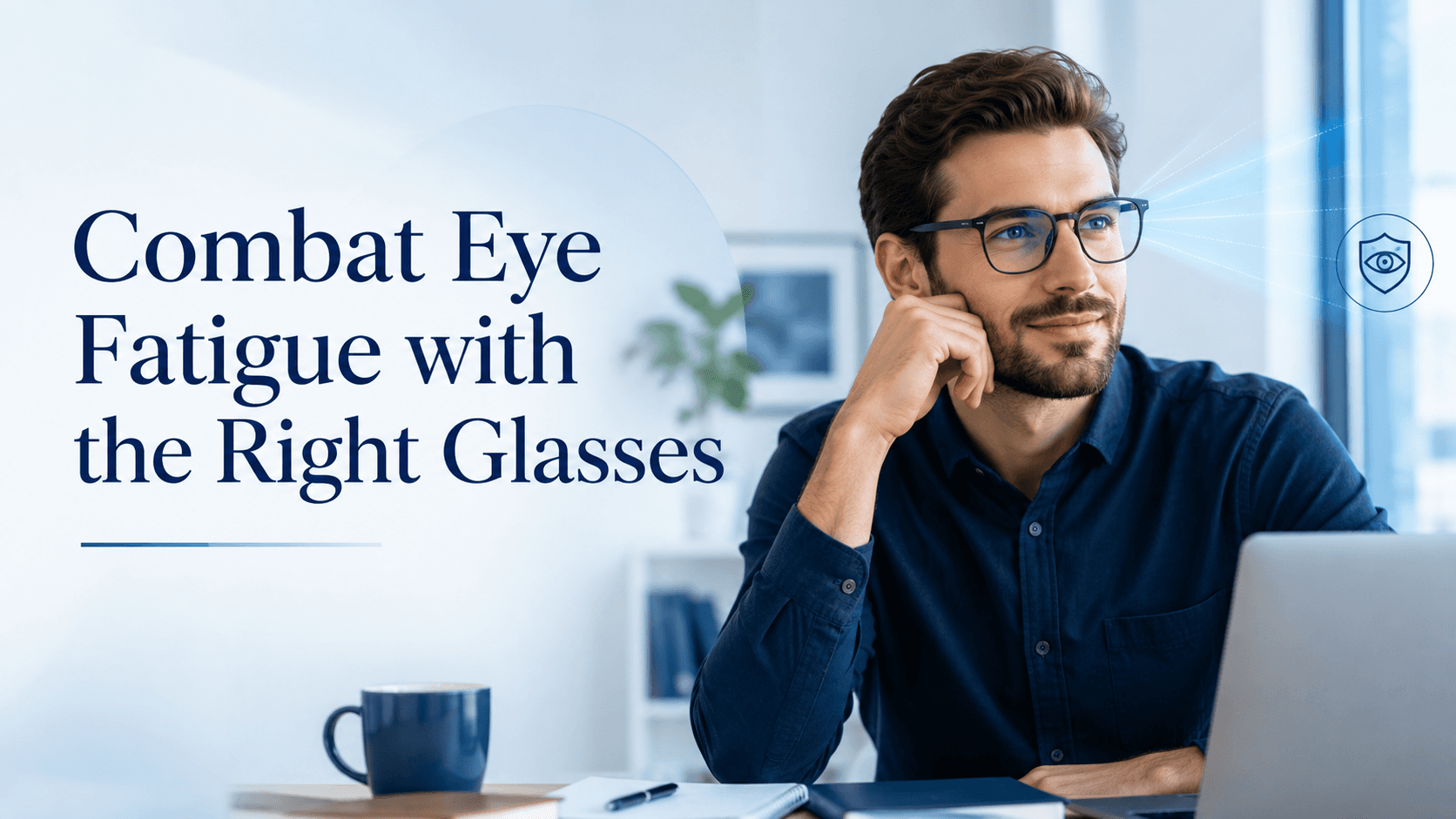
Eye fatigue, or digital eye strain, affects up to 70% of people who regularly use computers and smartphones. The right glasses can significantly reduce symptoms like dry eyes, headaches, and blurred vision by filtering harmful blue light and correcting vision problems that force your eyes to work harder.
What Causes Digital Eye Fatigue?
Digital eye strain occurs when your eyes work overtime to process artificial light and focus on pixelated screens. Common causes include prolonged screen time, poor lighting conditions, incorrect viewing distances, and uncorrected vision problems. Blue light emission from devices disrupts your natural sleep cycle and can contribute to retinal damage over time.
Blinking decreases by up to 60% during screen use, leading to dry eyes and irritation. The constant refocusing between screen and keyboard also strains the ciliary muscles responsible for accommodation.
How Do Blue Light Blocking Glasses Help?
Blue light blocking glasses filter high-energy visible (HEV) light wavelengths between 380-500 nanometers. These lenses reduce glare, improve contrast, and minimize the disruption to your circadian rhythm. Studies show that wearing blue light glasses can reduce eye strain symptoms by 15-20% during extended computer use.
Modern blue light lenses use advanced coatings that selectively filter harmful wavelengths while maintaining color accuracy. This technology is particularly beneficial for professionals spending 6+ hours daily on digital devices.
When Should You Consider Prescription Glasses for Eye Strain?
If you experience persistent headaches, neck strain, or difficulty focusing after screen time, an eye examination may reveal underlying vision problems. Even minor refractive errors like astigmatism or presbyopia can cause significant eye fatigue when left uncorrected.
Computer vision syndrome often develops gradually, making it easy to overlook the need for corrective lenses. Regular eye exams every two years can detect changes in your prescription before symptoms become severe.
Anti-Reflective Coatings vs Blue Light Filters
Anti-reflective (AR) coatings reduce glare from artificial lighting and screen surfaces, while blue light filters specifically target harmful wavelengths. AR coatings are particularly effective in office environments with overhead fluorescent lighting.
Many modern lenses combine both technologies for comprehensive protection. AR coatings typically reduce glare by 8-10%, while blue light filters can block 20-50% of harmful wavelengths depending on the lens technology.
Computer Glasses vs Reading Glasses: Which Do You Need?
Computer glasses are designed for intermediate distances (50-70 cm) and often include slight magnification to reduce accommodation stress. Reading glasses focus on close-up tasks (30-40 cm) and may not provide optimal clarity for screen work.
Progressive lenses offer the most versatile solution, providing clear vision at multiple distances without the need to switch between different pairs of glasses throughout the day.
Additional Features for Maximum Eye Comfort
Modern eyewear includes several features designed to combat eye fatigue. Photochromic lenses automatically adjust to lighting conditions, reducing the strain of moving between bright and dim environments. Moisture chamber frames help retain natural tear film for people with dry eyes.
Proper frame fit is equally important – glasses should sit comfortably without sliding down your nose or creating pressure points behind your ears. The optical center should align with your pupils for optimal visual clarity.
Creating an Eye-Friendly Workspace
Even the best glasses work more effectively when combined with proper ergonomics. Position your screen 50-70 cm away at eye level or slightly below. Use the 20-20-20 rule: every 20 minutes, look at something 20 feet away for 20 seconds.
Ambient lighting should be about half as bright as your screen, and avoid working in complete darkness. Consider using a humidifier in air-conditioned offices to prevent dry eyes, and ensure adequate ventilation to reduce eye irritation from indoor pollutants.
