
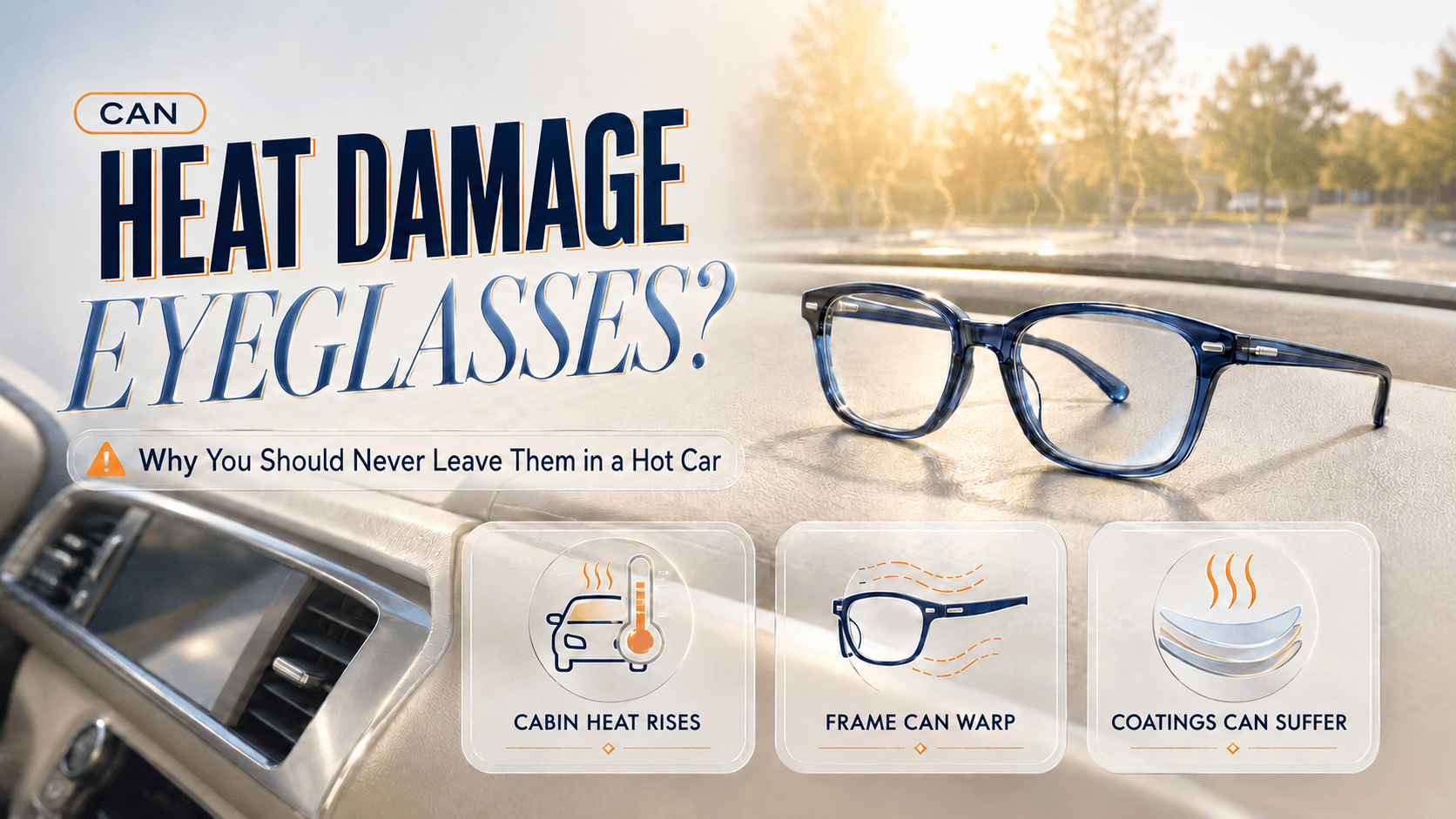
Yes, heat can seriously damage eyeglasses. Temperatures inside a parked car in India can exceed 70°C on a summer afternoon — hot enough to warp plastic frames, delaminate anti-reflective coatings, and cause lens distortion. Whether your glasses cost ₹800 or ₹8,000, leaving them in a hot car is one of the fastest ways to ruin them.
What Happens to Eyeglasses in a Hot Car?
Modern eyeglasses are made from materials engineered for comfort and optical precision — not for extreme heat. When temperatures spike, several things can go wrong simultaneously.
Frame Warping
Acetate and TR-90 plastic frames begin to soften above 60°C. A hot dashboard can push well past that limit. Once warped, frames sit unevenly on your face, which means the optical centres of your lenses no longer align with your pupils. The result is eye strain, headaches, and blurred vision — even though the prescription itself has not changed.
Lens Coating Damage
Anti-reflective (AR) coatings, UV coatings, and blue-light filter coatings are applied in ultra-thin layers. Rapid heat expansion causes these layers to crack or peel in a spiderweb pattern called crazing. Once crazed, a lens cannot be repaired — only replaced. Polarised sunglasses are equally vulnerable; their polarising film can bubble and separate under sustained heat.
Polycarbonate and High-Index Lens Distortion
Polycarbonate lenses are impact-resistant but heat-sensitive. Sustained high temperatures can cause minor optical distortion, subtly altering how light passes through the lens. For high prescriptions, even a small change in lens geometry translates to noticeable vision problems.
Which Frames Are Most Vulnerable?
Not all frames respond to heat the same way. Here is a quick comparison:
Acetate frames — Most vulnerable; soften quickly above 60°C and hold their warped shape as they cool.
TR-90 (nylon) frames — More heat-resistant than acetate but still susceptible to deformation at extreme temperatures.
Metal frames (titanium, stainless steel) — Frames themselves rarely warp, but any plastic nose pads or temple tips can still melt or deform.
Rimless and semi-rimless frames — Heat can loosen the screws and drill mounts holding lenses in place, causing lenses to pop out.
Other Hot Spots to Avoid
A car dashboard is the most common culprit, but it is not the only one. Avoid leaving glasses on a motorcycle seat, near a gas stove, on a sunny windowsill, inside a gym bag left in direct sun, or in checked luggage on a flight (cargo holds can get very warm). Even a few minutes matters when surfaces can hit 80°C or more.
How to Store and Protect Your Glasses
The fix is straightforward: always store your glasses in a hard case when not in use. Keep the case in a bag, a shaded compartment, or take it with you when you leave the car. A microfibre pouch alone offers no thermal protection — use it only for cleaning. If you suspect heat damage, visit an optician to check frame alignment and lens integrity before continuing to wear the pair.
What to Do If Heat Has Already Damaged Your Glasses
If your frames are warped, an optician may be able to gently reshape them using controlled heat — but this only works if the damage is mild. Crazed coatings and distorted lenses cannot be fixed; the lenses need to be replaced. If you need new lenses or a replacement pair, browse Rimloo's full range of prescription eyeglasses to find frames built for everyday Indian conditions.
