


Progressive Eyeglasses
Shop nowWhat are progressive lenses?
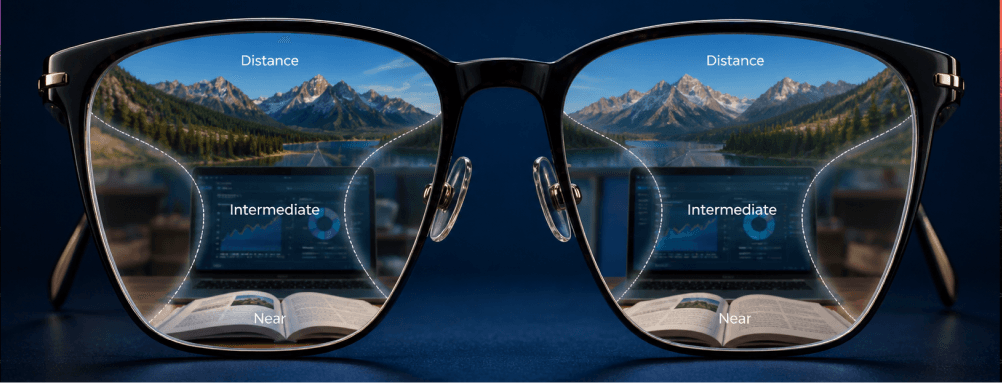
Progressive lenses are lenses that allow you to see clearly at different distances using one pair of glasses. They are designed for distance vision, intermediate vision (like computer use), and near vision (like reading), all in a single lens. Unlike bifocal lenses, progressive lenses do not have visible lines on the lens.
How Vision Works in Progressive Lenses
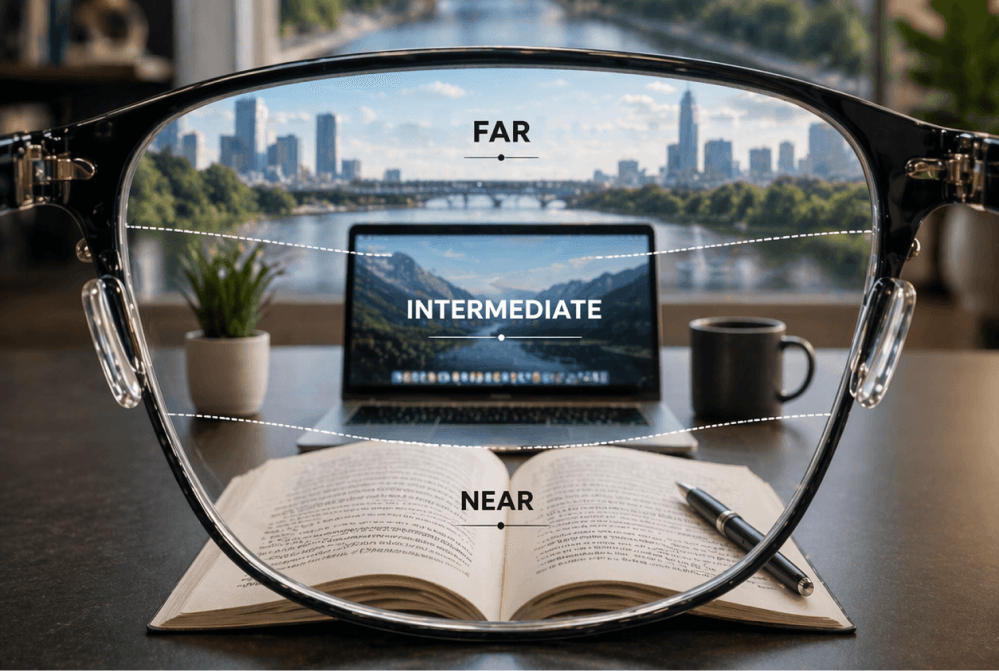
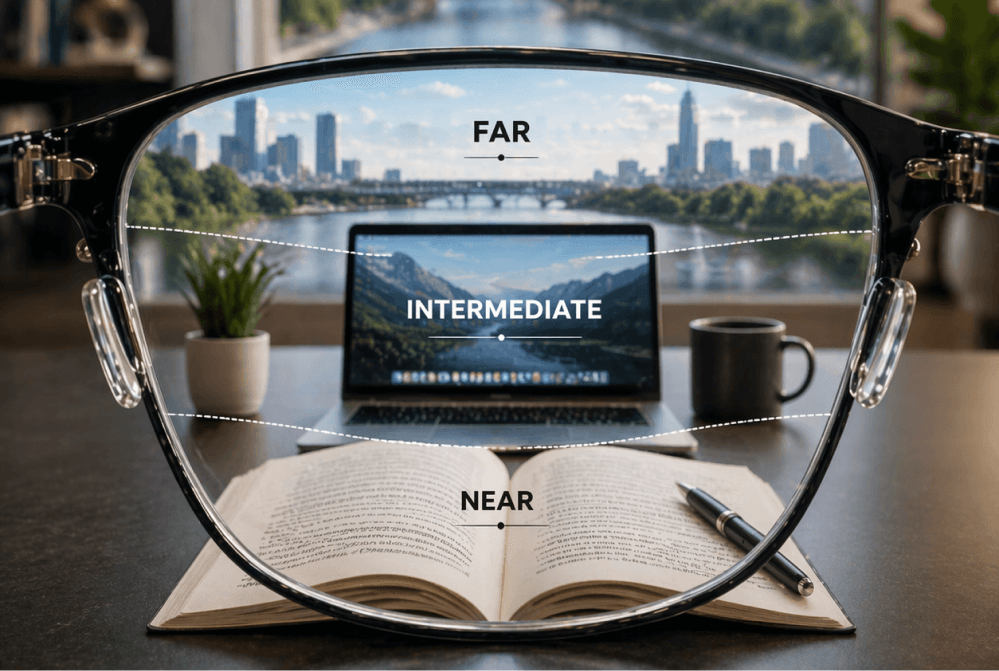
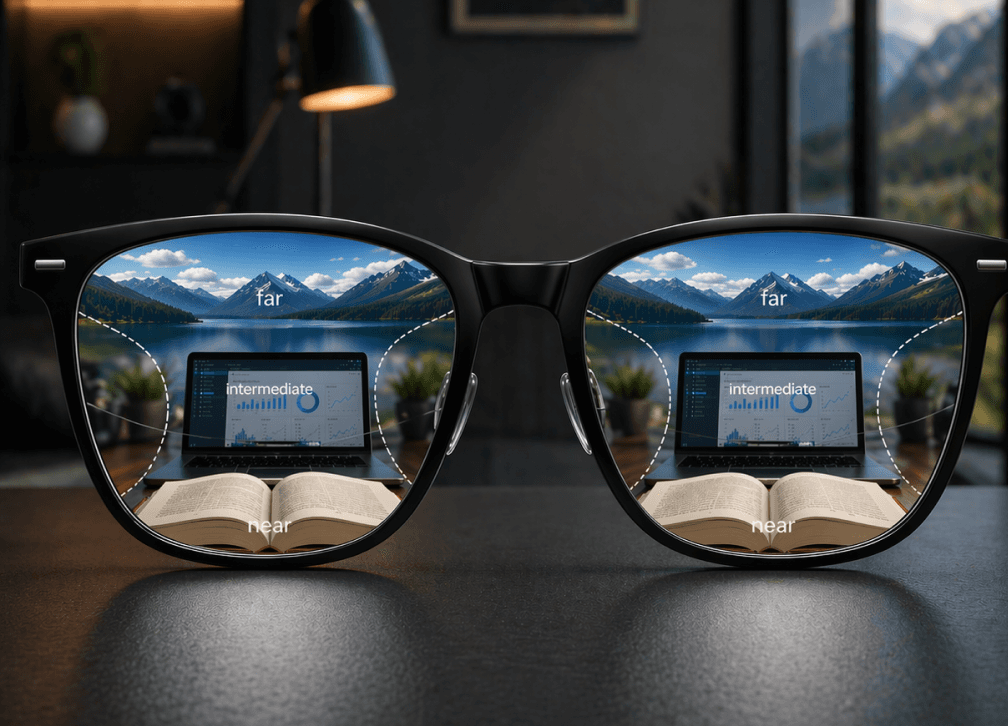
Progressive lenses work by gradually changing the lens power from top to bottom.
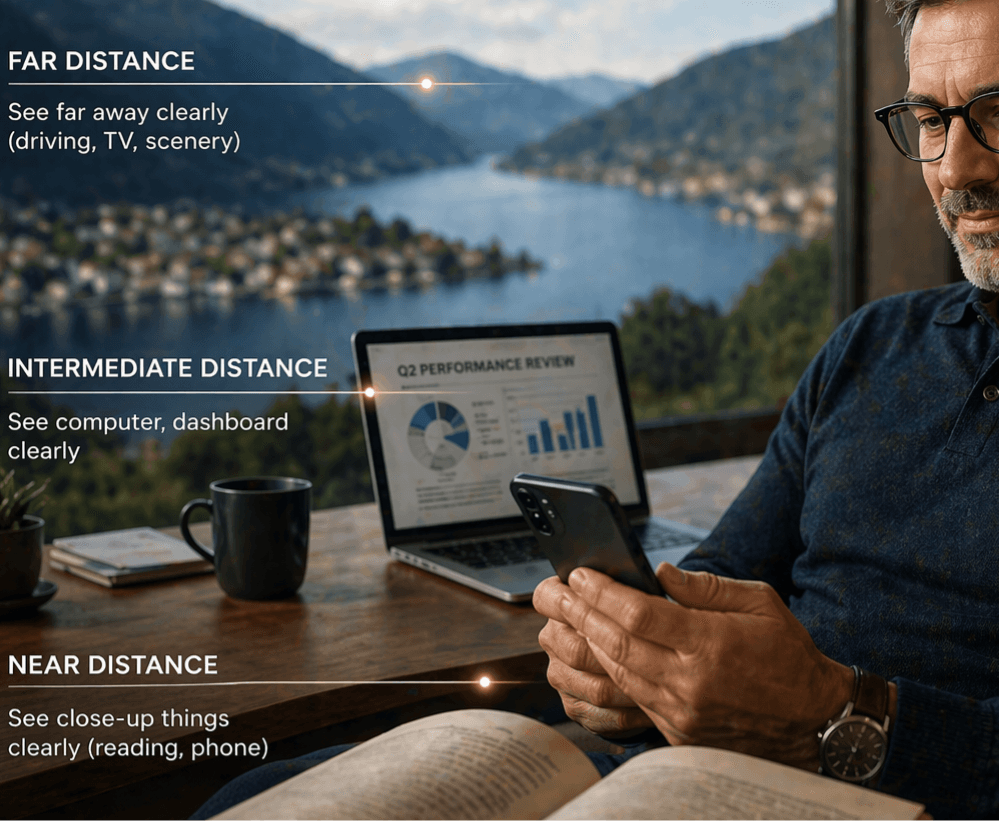
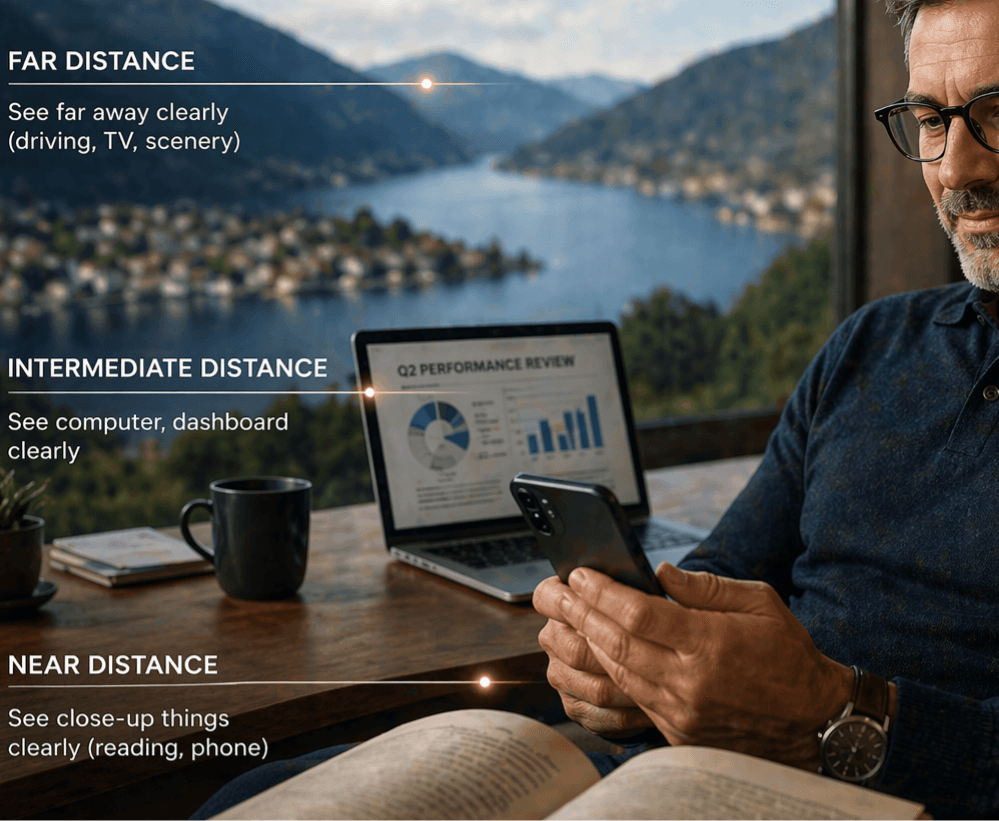
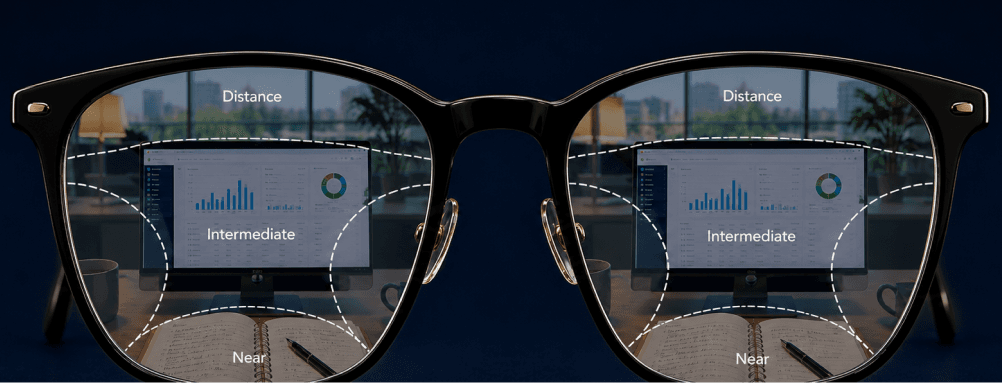
- Top zone — helps you see far away (driving, watching TV, etc.)
- Middle zone — helps with intermediate distance (computer, laptop, dashboard)
- Bottom zone — helps with reading and close-up work
This smooth transition makes vision more natural and comfortable.
Who should use progressive lenses?
Progressive lenses are usually recommended for people who need help seeing both near and far. They are especially useful for people 40+ who need reading support but also want clear distance vision. They're also a good choice if you don't want to switch between multiple pairs of glasses.
If you:
- Struggle to read small text
- Remove glasses to use your phone
- Switch between multiple glasses daily
- Feel eye strain during screen work
…then your eyes need multi-distance support — not just single vision.
Customize Your Progressive Eyeglasses
Build your pair in three simple steps.
Choose your Sunglass Frame
From minimal to bold — find your perfect look
Add Progressive Lenses
Precision-crafted lenses for multi-distance clarity
Enhance with Coatings
Blue Light Filter, Anti-Glare UV Protection
Popular Progressive Lenses
Essential & Standard Progressive Lenses
Designed for everyday use, essential progressive lenses provide smooth vision across distance, intermediate, and near. Perfect for daily tasks like driving, screen use, and reading — all in one lens.
Premium Progressive Lenses
Premium progressive lenses feature a wider viewing area and smoother transitions between distances. They provide a more natural visual experience with reduced distortion, especially for first-time users.
Office Use Progressive Lenses
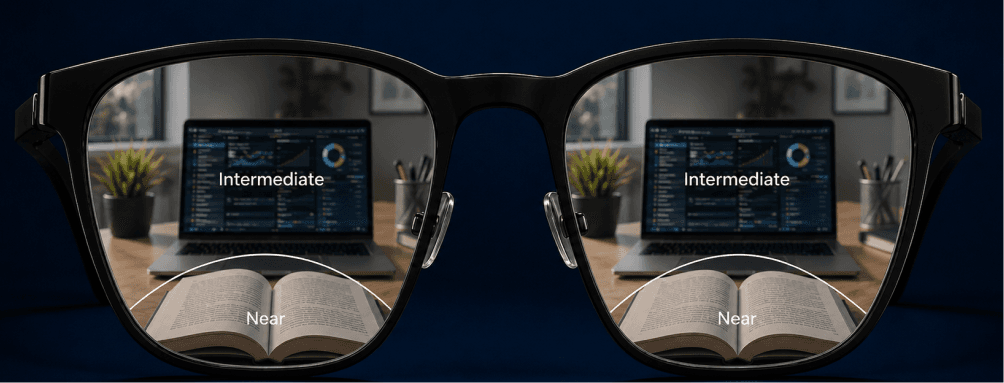
Specially designed for screen-focused environments, these lenses optimize intermediate and near vision. Ideal for computer work, office tasks, and extended screen time with reduced eye strain.
Clear Vision at Every Distance
Experience smooth, natural vision from reading to distance with advanced progressive lens technology.
Affordable Price
Easy Return
Expert Support
Add Prescription
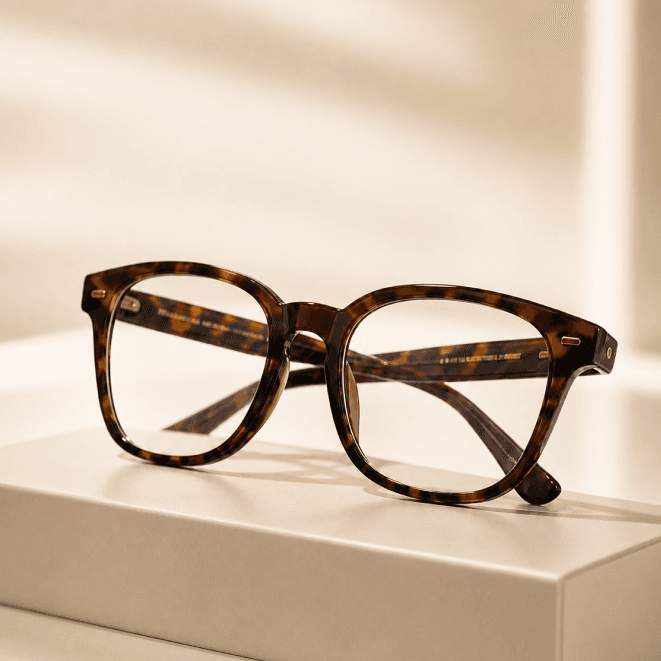
Shop Progressive Eyeglasses




Frequently asked questions
We're happy to answer your questions
Progressive lenses are lenses that allow you to see clearly at different distances using one pair of glasses. They are designed for distance vision, intermediate vision (like computer use), and near vision (like reading), all in a single lens. Unlike bifocal lenses, progressive lenses do not have visible lines on the lens.
Progressive lenses are usually recommended for people who need help seeing both near and far. They are especially useful for people 40+, who need reading support but also want clear distance vision.
Progressive lenses are often more comfortable because they do not have visible lines. They also allow smoother vision when you move from distance to reading. Bifocals only provide two vision areas, while progressive lenses provide multiple vision zones.
Yes — progressive lenses are designed for all-day wear. One pair handles reading, screen work, and driving without switching glasses, which is why most users find them more practical than carrying multiple pairs.
Most people adapt within a few days to a couple of weeks. The brain quickly learns to use the right zone for each distance — slight head movement (rather than just eye movement) makes the transition feel natural faster.
