
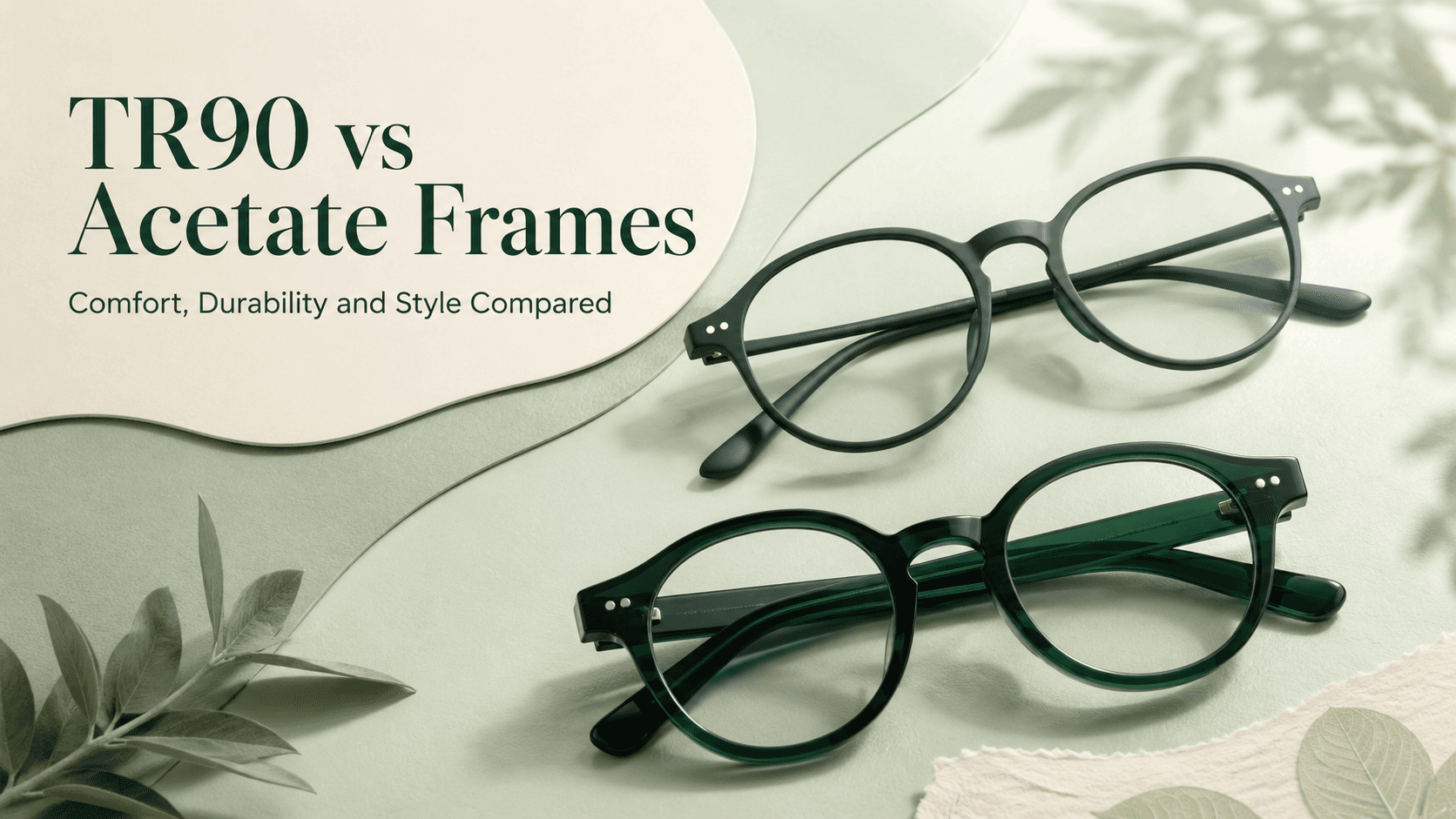
TR90 frames are lighter, more flexible and highly impact-resistant, making them ideal for active lifestyles and sensitive skin. Acetate frames, cut from layered cellulose sheets, offer richer colours, a premium finish and greater style versatility — but they weigh slightly more and require a little more care. Neither material is universally better; the right choice depends on how and where you wear your glasses.
What Is TR90?
TR90 is a thermoplastic polyamide originally developed in Switzerland. It is sometimes called memory plastic because it returns to its original shape after bending. The material is used widely in sports eyewear, children's glasses and lightweight everyday frames because of its resilience and minimal weight — typically 20–30% lighter than acetate of the same thickness.
Key characteristics of TR90 include high resistance to heat, solvents and UV radiation. The frames are hypoallergenic, which makes them a safe choice for people with metal or acetate sensitivities.
What Is Acetate?
Acetate is a plant-derived plastic made from cellulose — often sourced from cotton fibres or wood pulp. Manufacturers layer sheets of acetate in different colours and patterns before cutting and polishing individual frames by hand. This process is what gives acetate glasses their distinctive depth, translucency and visual richness that moulded plastics simply cannot replicate.
Acetate frames are slightly heavier than TR90 but still far lighter than metal. They hold their shape well under normal conditions and can be adjusted by an optician using gentle heat, which makes fitting easier over time.
Comfort: How Do TR90 and Acetate Feel to Wear?
TR90 wins on raw comfort metrics. Its lower weight reduces pressure on the nose bridge and temples over long wearing periods — a meaningful advantage for people who sit at a desk or screen for eight or more hours a day. The flexibility of TR90 also means the frame bends rather than snaps if you roll over on it or drop it, and it springs back without distortion.
Acetate is comfortable for most wearers but can feel slightly heavier by the end of the day, especially in larger frame sizes. The advantage acetate offers is fit: because the material softens with heat, a skilled optician can micro-adjust temple arms and nose pads to your exact facial geometry, delivering a tailored fit that off-the-shelf TR90 frames sometimes cannot match.
Durability: Which Frame Material Lasts Longer?
TR90 is the more durable option in impact and flex tests. It is virtually unbreakable under normal conditions, resists temperature extremes from cold mountain air to a hot car dashboard, and does not absorb sweat or moisture the way some plastics do. For children, sports enthusiasts or anyone who is simply hard on their glasses, TR90 is the practical choice.
Acetate is durable but more brittle under sudden impact. It can crack if dropped at an unlucky angle and may warp if left on a car dashboard in direct sunlight. However, high-quality acetate frames — properly cared for — routinely last five years or more without losing their colour or structural integrity. Minor scratches on acetate can sometimes be buffed out by a professional, extending their life further.
Style: Colour, Pattern and Aesthetic Appeal
This is where acetate has a decisive edge. Because manufacturers laminate multiple colour layers before cutting frames, acetate can achieve effects like tortoiseshell, marbled gradients, translucent tints and multi-tone patterns that are impossible to replicate in TR90. If you care about your frames as a fashion accessory — coordinated with your outfit, your skin tone or a specific aesthetic — acetate gives you far more options.
TR90 frames are most commonly available in solid colours: matte black, navy, burgundy, grey and similar contemporary tones. They look clean and modern, but the palette and visual texture are more limited. For minimalist or sporty styles, this is perfectly adequate. For expressive or fashion-forward looks, acetate is the stronger contender.
TR90 vs Acetate: Best For Whom?
Use the comparison below to match your lifestyle to the right material.
Active lifestyle or sport use: TR90 — its flex and impact resistance protect the frame during physical activity.
Children's eyewear: TR90 — virtually unbreakable and hypoallergenic, it handles the rough treatment that kids give their glasses.
Long screen hours or desk work: TR90 — lower weight reduces fatigue on the nose and temples during extended wear.
Fashion-conscious or style-driven buyers: Acetate — richer colours, patterns and premium finishes make acetate the expressive choice.
Sensitive skin or allergies: TR90 — its hypoallergenic properties reduce the risk of skin reactions at contact points.
Premium or professional look: Acetate — the handcrafted depth and polish of acetate reads as more luxurious and refined.
Budget-conscious shoppers: TR90 frames tend to be more affordable at equivalent quality tiers, though prices vary widely across brands.
Care and Maintenance
Both materials benefit from the same basic habits: store frames in a hard case when not in use, clean lenses with a microfibre cloth rather than a shirt hem, and avoid leaving glasses in direct sunlight or a hot car. Acetate requires one additional precaution — prolonged exposure to heat above 60°C can cause warping, so never rest acetate frames near a stovetop or leave them in a closed car in summer.
For TR90, the main maintenance concern is keeping hinge screws tight. Because the frame flexes constantly, screws can work loose over time. A small eyewear screwdriver kit — or a quick visit to any optician — keeps this in check.
Which Should You Buy?
If your priority is lightweight comfort, resilience and an active or practical lifestyle, TR90 is the smarter pick. If you want frames that function as a style statement — with the colour depth and premium feel that make people ask where did you get those? — acetate is worth every rupee. Many eyewear enthusiasts own both: a TR90 pair for everyday or sport use and an acetate pair for work or social occasions.
