
The Short Answer: Triangle Face Shapes Need Top-Heavy Frames
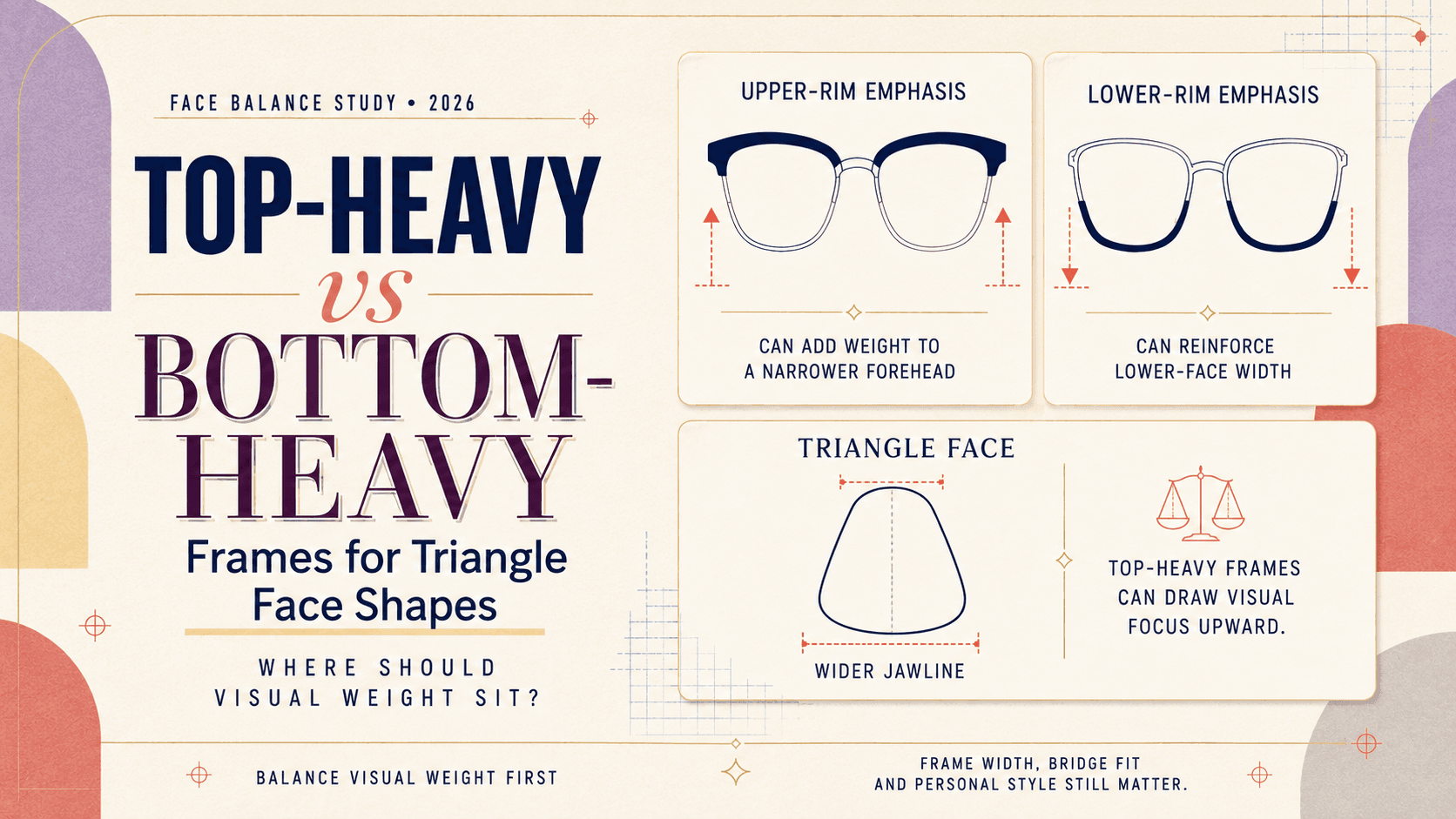
If you have a triangle face shape — wider jaw, narrower forehead — top-heavy frames are your best friend. Styles with bold, thick upper rims or cat-eye silhouettes draw the eye upward, visually widening your forehead and balancing the stronger jaw below. Bottom-heavy frames, by contrast, tend to amplify the width you already have at the jaw, making the face appear more bottom-loaded.
What Exactly Is a Triangle Face Shape?
A triangle (or pear-shaped) face is characterised by a jawline that is noticeably wider than the cheekbones and forehead. The forehead tapers to a narrower width, creating a pyramid-like silhouette. This is one of the most common face shapes among Indian consumers, partly owing to broader cheekbone-to-jaw ratios seen across South Asian facial structures.
Why Top-Heavy Frames Work So Well
The core principle of eyewear styling is visual balance. Top-heavy frames achieve this for triangle faces in three ways:
Bold upper rims add optical weight to the upper third of your face, broadening the perceived forehead width.
Cat-eye and semi-cat-eye shapes sweep upward at the outer edges, lifting attention toward the temples.
Browline or clubmaster styles mimic the look of prominent brows, which naturally anchors the face higher up.
When Do Bottom-Heavy Frames Fail a Triangle Face?
Bottom-heavy frames — those with thicker lower rims, heavy base-down geometric shapes, or wide oval silhouettes — concentrate visual mass near your jaw. For triangle faces, this reinforces the very imbalance you want to correct. The result can make the lower face look heavier and the forehead appear even narrower. It is best to avoid thick rectangular frames that sit low on the face or rimless styles with heavy base curves.
Top-Heavy Frame Styles to Look For
Cat-eye frames with lifted outer corners
Browline or clubmaster frames with a bold acetate top bar
Semi-rimless frames where the upper rim is thick and the lower is thin or absent
Round or oval frames positioned high on the nose bridge
Wayfarers with a subtle flare at the top edge
Colour and Material Tips for Triangle Faces
Beyond shape, colour placement matters. Choose frames where the upper portion features bold or contrasting colours — tortoiseshell, deep navy, or rich burgundy across the top — while the lower rim stays neutral or transparent. This colour gradient naturally draws the gaze upward. Lightweight acetate or metal frames work well; avoid heavily embellished lower corners that add unwanted visual weight to the jaw area.
Sunglasses for Triangle Face Shapes
The same logic applies to sunglasses. Aviator-style sunglasses, which taper slightly at the top and widen below, may not be the most flattering pick. Instead, opt for oversized cat-eye sunglasses or shield-style frames that sit high and broad across the brow. These styles protect your eyes effectively while keeping your look proportionate and on-trend.
A Quick Comparison: Top-Heavy vs Bottom-Heavy
Top-heavy frames: broaden the forehead, balance a wide jaw, ideal for triangle faces
Bottom-heavy frames: add width near the jaw, suitable for heart or inverted-triangle faces
Neutral frames (round, oval): moderate effect, work as a middle-ground option
Cat-eye: the single most recommended shape for triangle face types
Browline: strong second choice, especially for a classic or professional look
