
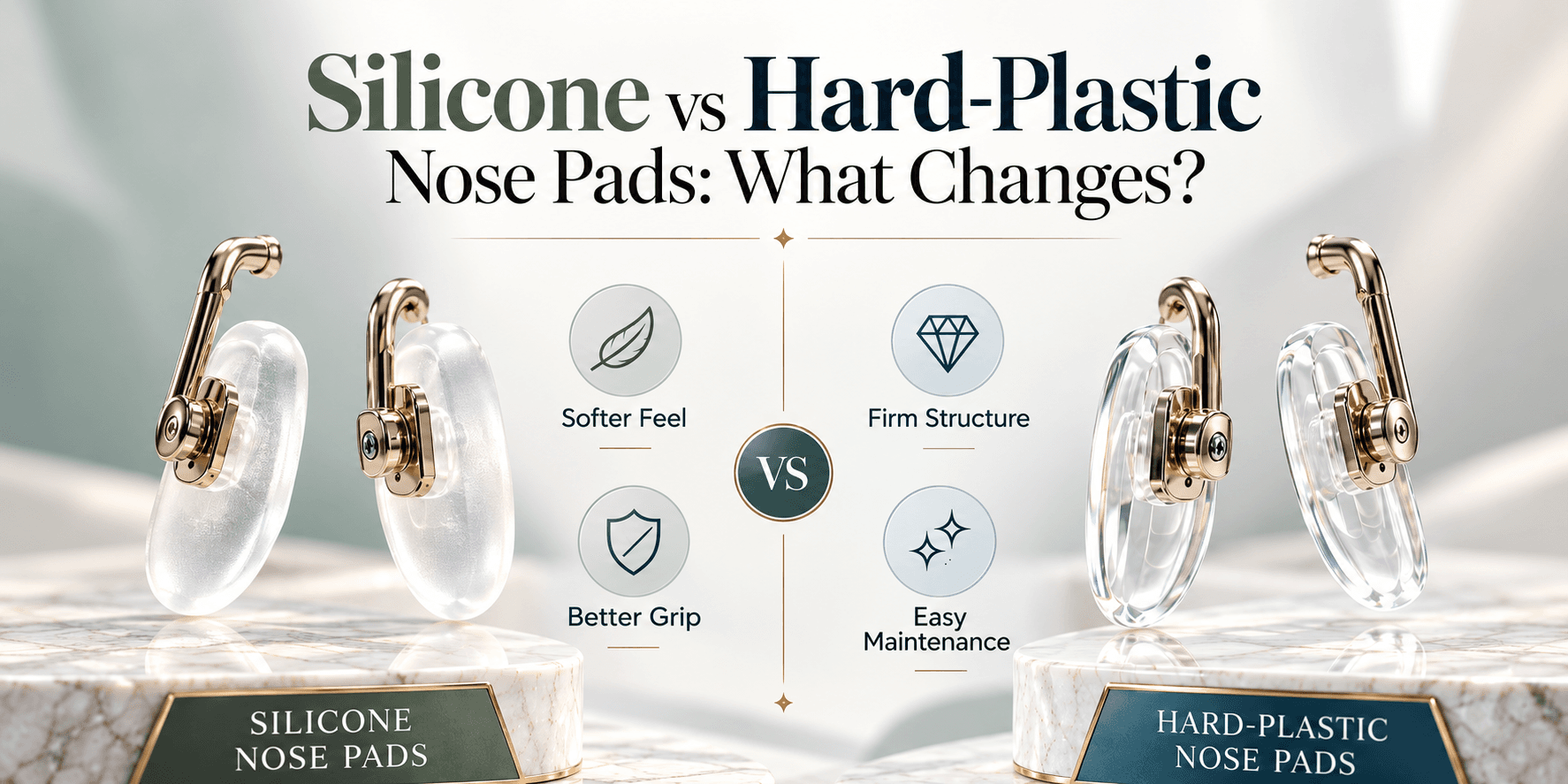
Silicone nose pads are softer, more grippy, and gentler on sensitive skin, making them the better choice for most everyday eyeglass wearers. Hard-plastic or acetate nose pads are moulded directly into the frame, offer a cleaner aesthetic, and suit wearers whose face shape provides a natural, stable resting point for the frame. The difference sounds small but directly shapes how comfortable your glasses feel across a full day of wear.
What Are Silicone Nose Pads?
Silicone nose pads are small, replaceable cushions attached to adjustable metal arms on the bridge of a frame. You will find them most commonly on metal frames, rimless glasses, and many TR90 frames. The material is hypoallergenic, flexible, and grippy enough to keep frames from sliding down your nose even when you sweat or move quickly.
Soft texture reduces pressure marks on the nose bridge
Adjustable arms let an optician customise the fit precisely
Easy to replace when they yellow or wear out
Available in different sizes and shapes to suit various nose profiles
What Are Hard-Plastic Nose Pads?
Hard-plastic nose pads — often called integrated or moulded nose pads — are built directly into the frame itself, typically seen on acetate and some injection-moulded plastic frames. Because they are part of the frame structure, they cannot be adjusted independently. Fit depends entirely on the frame shape matching your facial anatomy.
Seamless look with no visible metal arms or extra components
Sturdier construction with fewer parts that can break or go missing
Zero maintenance — nothing to replace separately
Common in fashion-forward acetate and full-rim plastic frames
Silicone vs Hard-Plastic: The Key Differences at a Glance
Choosing between the two often comes down to your skin type, nose bridge shape, and how much you value adjustability versus aesthetics.
Comfort: Silicone wins for sensitive skin and narrow or low nose bridges. The soft material distributes pressure more evenly and minimises the red marks that many wearers experience after long hours of use.
Grip: Silicone provides noticeably better grip, which matters if you work out, sweat, or spend time outdoors. Hard-plastic pads can feel slippery in humid conditions.
Adjustability: Silicone pads sit on adjustable arms, so an optician can angle them to match your exact nose contour. Hard-plastic pads offer no such customisation — if the fit is off, you would need to select a different frame entirely.
Maintenance: Silicone pads attract oils and can yellow over time, usually needing replacement every 12 to 18 months. Hard-plastic pads require no separate upkeep but cannot be replaced if they crack or wear down.
Aesthetics: Hard-plastic pads give acetate frames their clean, jewellery-like finish. Silicone pads suit a more functional, technical look common in metal and lightweight frames.
Who Should Choose Which?
If you have a low or flat nose bridge, oily skin, or if your glasses tend to slide, silicone nose pads are the practical choice. If you prefer bold acetate frames, value a minimalist design, or have a prominent nose bridge that gives the frame a natural resting point, hard-plastic integrated pads will serve you well. Many wearers own one of each style — a silicone-pad metal frame for daily use and an acetate frame for occasions.
Can You Upgrade or Replace Nose Pads?
If your current frames use silicone pads, replacement is straightforward and inexpensive — most optical shops stock universal pad sizes. Hard-plastic integrated pads cannot be swapped for silicone pads without structural modification to the frame, so the choice is largely made at the time of purchase.
