
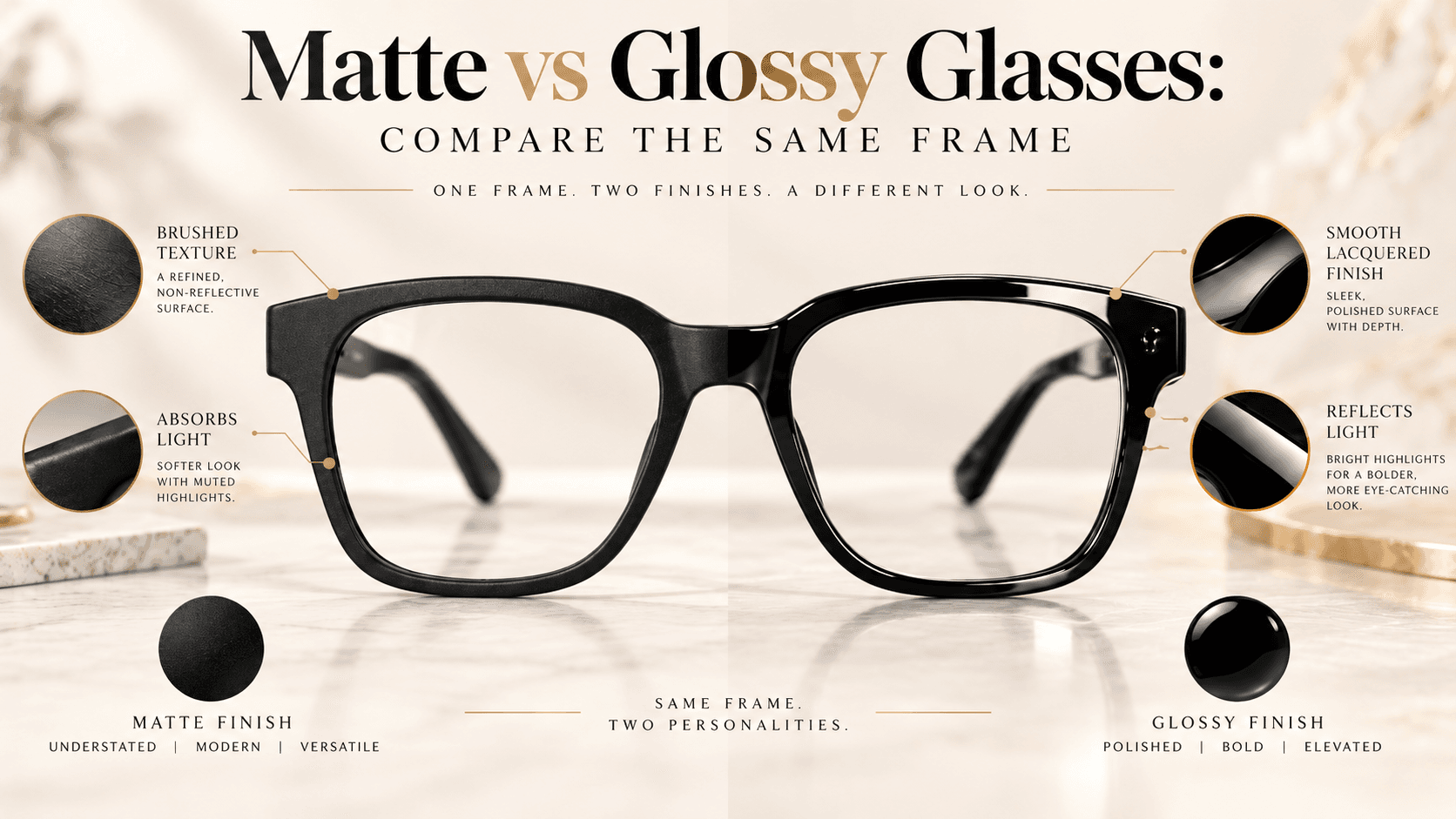
If you are comparing the same frame in matte and glossy finishes, the short answer is: glossy frames are more reflective, easier to clean and look dressier, while matte frames are subtler, hide fingerprints better and suit a modern minimal aesthetic. The underlying frame material and fit are identical — only the surface treatment differs, so your choice comes down to lifestyle, personal style and how much upkeep you want.
What Is the Difference Between Matte and Glossy Finishes?
A glossy finish is achieved by polishing the frame surface until it reflects light evenly, giving it a mirror-like sheen. A matte finish is created by sanding or chemically treating that same surface to scatter light, producing a flat, non-reflective look. On acetate frames, both finishes start from the same acetate sheet; on metal or TR90 frames, the finish is applied as a coating or achieved during the moulding process.
Matte vs Glossy: Side-by-Side Comparison
Appearance and Style
Glossy frames catch the light and have a classic, polished look that pairs well with formal and professional outfits. Matte frames read as understated and contemporary — they have dominated runway eyewear and street-style looks for the past several seasons, making them a strong pick if you follow current fashion trends.
Durability and Scratch Resistance
This is where the two finishes diverge most practically. Glossy surfaces show fine scratches more visibly because any disruption to the reflective layer catches the eye immediately. Matte surfaces, because they already scatter light, tend to disguise minor surface scratches and scuffs far more effectively. For active users or anyone who tends to be rough with their frames, matte is often the more forgiving choice.
Fingerprints and Smudges
Glossy frames attract and display fingerprints prominently — the same way a glossy phone screen does. Matte frames resist visible smudging because the diffused surface texture breaks up oil deposits. If you frequently adjust your frames or handle them throughout the day, matte will stay looking cleaner between wipes.
Maintenance and Cleaning
Both finishes should be cleaned with a microfibre cloth and lens-safe solution. However, glossy frames need more frequent polishing to maintain their shine, while matte frames are more forgiving if you skip a cleaning session. Avoid abrasive cloths on either finish, but take extra care with glossy frames since scratches are harder to disguise.
Skin Tone and Face Shape Compatibility
Glossy frames create a bolder visual frame around the face, which can complement strong jaw lines and high cheekbones. Matte frames soften the overall look, making them versatile across most face shapes. Neither finish inherently suits a specific skin tone, but lighter matte colours and darker glossy tones are popular style choices across a wide range of complexions in India.
When Should You Choose Glossy?
Choose glossy if you prefer a classic, polished aesthetic, wear your glasses primarily in office or formal settings, and do not mind wiping them down regularly to keep them looking sharp.
When Should You Choose Matte?
Choose matte if you want a low-maintenance, on-trend frame that hides everyday wear, suits casual and creative environments, and does not demand constant upkeep.
Final Verdict
Both finishes deliver the same optical performance and structural durability from an identical frame. Your decision should rest on aesthetic preference, lifestyle and maintenance habits rather than any quality difference. When in doubt, matte is the safer everyday bet; glossy is the better dressy statement.
