
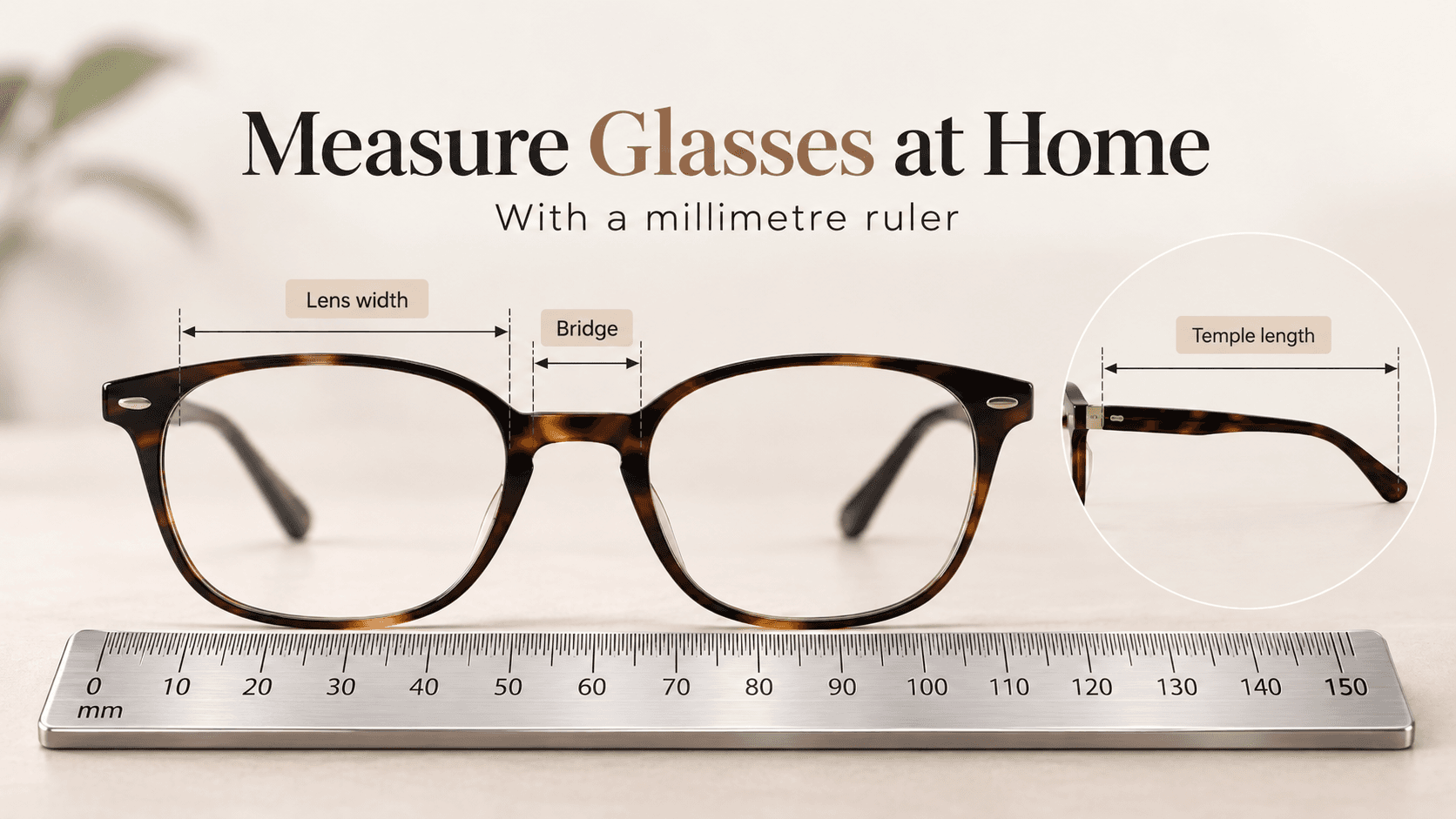
You can measure your glasses at home in under five minutes using a flat millimetre ruler. Lay your current pair face-down on a hard surface, then measure three numbers: the lens width, the bridge width, and the temple arm length. These three figures — usually printed inside the temple arm as something like 52-18-140 — are all you need to find a frame that fits correctly when shopping online.
Why Frame Measurements Matter When Buying Glasses Online
An ill-fitting frame sits too tight on your temples, slides down your nose, or distorts your vision because the optical centre of the lens no longer lines up with your pupil. Getting your measurements right before you order prevents returns and means your new glasses feel comfortable from day one.
What Are the Three Key Measurements on a Frame?
Lens width is the horizontal diameter of one lens, measured at its widest point. Common sizes range from 44 mm to 58 mm. Bridge width is the gap between the two lenses that sits over your nose — typically 14 mm to 24 mm. Temple length is the arm that reaches from the front of the frame to behind your ear, usually 135 mm to 145 mm for adults.
Step-by-Step: How to Measure Your Glasses With a Ruler
Step 1 — Measure the Lens Width
Place the ruler horizontally across one lens on the outside of the frame. Measure from the inner edge of the rim on one side to the inner edge on the other side. Record this number in millimetres.
Step 2 — Measure the Bridge Width
Position the ruler across the bridge — the small piece connecting both lenses at the nose. Measure the gap between the two lenses. This is your bridge width.
Step 3 — Measure the Temple Length
Open one temple arm fully so it is straight. Measure from the hinge screw at the front all the way to the tip that hooks behind your ear. Include any bend in the arm by measuring along the arm itself, not in a straight line through the air.
Step 4 — Check the Printed Size
Most frames have these three numbers stamped on the inside of the temple arm separated by dashes or squares. Cross-check your ruler measurements against the printed numbers. If they match, you have confirmed your frame size with confidence.
Total Frame Width: An Optional But Useful Check
For an extra sanity check, measure the full width of the frame from the outer edge of one lens rim to the outer edge of the other. This total width should roughly match the widest point of your face. A frame that is 5 mm to 10 mm narrower or wider than your face width will typically look and feel off.
Where to Find Your Measurements on a Rimloo Frame
Every product listing on Rimloo includes the lens width, bridge width, and temple length in the product specifications. Once you have measured your existing pair, simply filter or compare those numbers when browsing prescription eyeglasses or sunglasses to find frames that will fit just right.
When Should You Measure Again?
Measure each time you buy a new style, especially if you are switching from a round frame to a rectangular one or trying a different brand. Frame sizing is not fully standardised across manufacturers, so your measurements are always more reliable than assuming the same size will work.
