
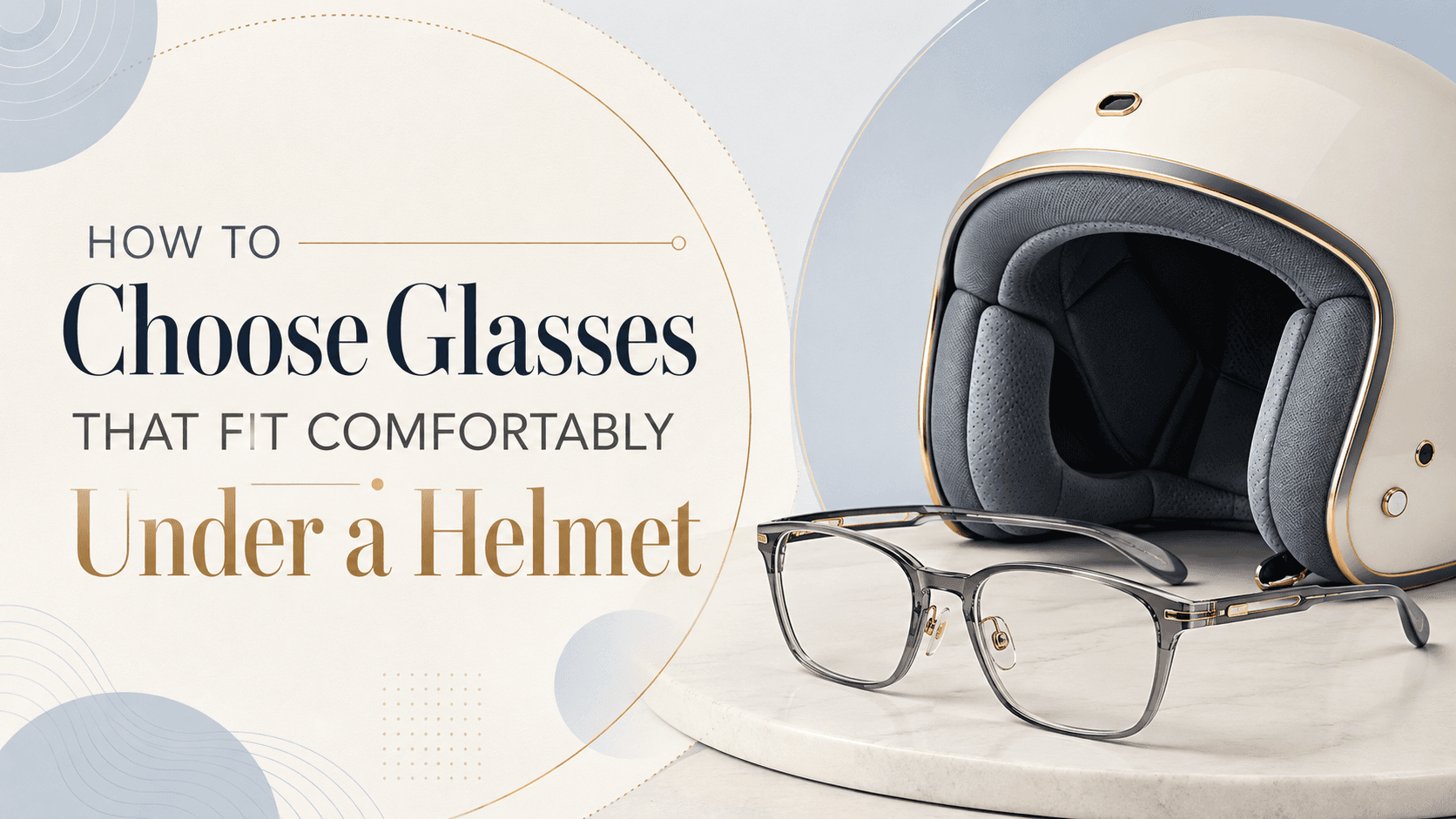
The right glasses for helmet use have slim, flexible temples, a low-profile bridge, and lenses sized to avoid contact with the helmet's inner padding. Frames with these three qualities eliminate the pinching and shifting that make helmet wear miserable for glasses users. Whether you ride a motorcycle, cycle daily, or play cricket, the fix is almost always the same: go narrower, go lighter, go flexible.
Why Do Regular Glasses Feel Uncomfortable Under a Helmet?
Standard glasses are designed for open-air wear. Their temples run straight back and sit wide enough to rest on the ears — which works perfectly until a helmet's inner shell compresses them inward. The result is pressure on your temples, the frames dig into your nose, and the helmet no longer sits level on your head. Heavier frames and thick acetate temples make this worse.
What Frame Shape Works Best Under a Helmet?
Narrow-to-medium rectangular or oval frames are your best friends here. Wide frames push outward against the helmet padding before you even tighten the chin strap. A frame width of 125–135 mm suits most adult faces and clears most helmet interiors comfortably. Avoid oversized or wraparound styles for this purpose — they are built for open-face wear, not confined spaces.
Frame Width vs. Your Helmet Type
Full-face motorcycle helmets have the tightest interior and demand the slimmest frames — ideally under 130 mm wide with temples thinner than 4 mm. Open-face and half-helmets allow slightly wider choices. Cycling helmets vary by brand, but since they do not enclose the ears, temple flexibility matters more than raw width. Cricket and sports helmets with face guards need frames that sit close to the face so the guard clears the lens edge.
Which Materials Handle Helmet Pressure Best?
Titanium and stainless-steel frames flex slightly under pressure and spring back without distorting. Thin acetate can crack or permanently bend when compressed repeatedly. Flexible TR-90 nylon frames are an excellent budget-friendly option — they are almost unbreakable and ultra-light, reducing the combined weight on your nose during long rides. Memory-metal (nickel-titanium) temples are the gold standard if you wear a helmet every day.
Temple Style: Straight vs. Keyhole vs. Spring Hinge
Look for thin, straight temples rather than the padded or angled styles found on fashion frames. Spring-hinge temples self-adjust to the compression a helmet applies and then return to their original shape — a genuinely useful feature, not just a selling point. Avoid temples with thick end-pieces or decorative hardware near the hinge; those create hard pressure points against your skull.
Nose Pad Fit Matters More Than You Think
When a helmet pushes your frames down, an adjustable nose pad is what keeps the optical centre of your lens aligned with your pupil. Metal frames with individual silicone nose pads let an optician fine-tune the angle so the frame rides higher on your nose, reducing the chance of the helmet forcing the frame down. Fixed-bridge plastic frames give you no such adjustment — a real disadvantage for prescription wearers who need precise alignment.
Practical Tips Before You Buy
Bring your helmet to the store and try the combination before purchasing
Measure your current frame width at the widest point and compare it with your helmet's interior width
Choose lenses no taller than 36 mm to stay clear of cheek padding
Anti-scratch and anti-reflective coatings are worth adding — helmet vibration causes micro-movement that wears uncoated lenses faster
If you ride at night, ask about anti-reflective lenses to cut glare from oncoming headlights
For sports helmets, consider a prescription insert rather than full-size glasses
Finding the right pair takes one careful measurement session and a clear brief to your eyewear retailer. Get that right once and every ride becomes significantly more comfortable.
