
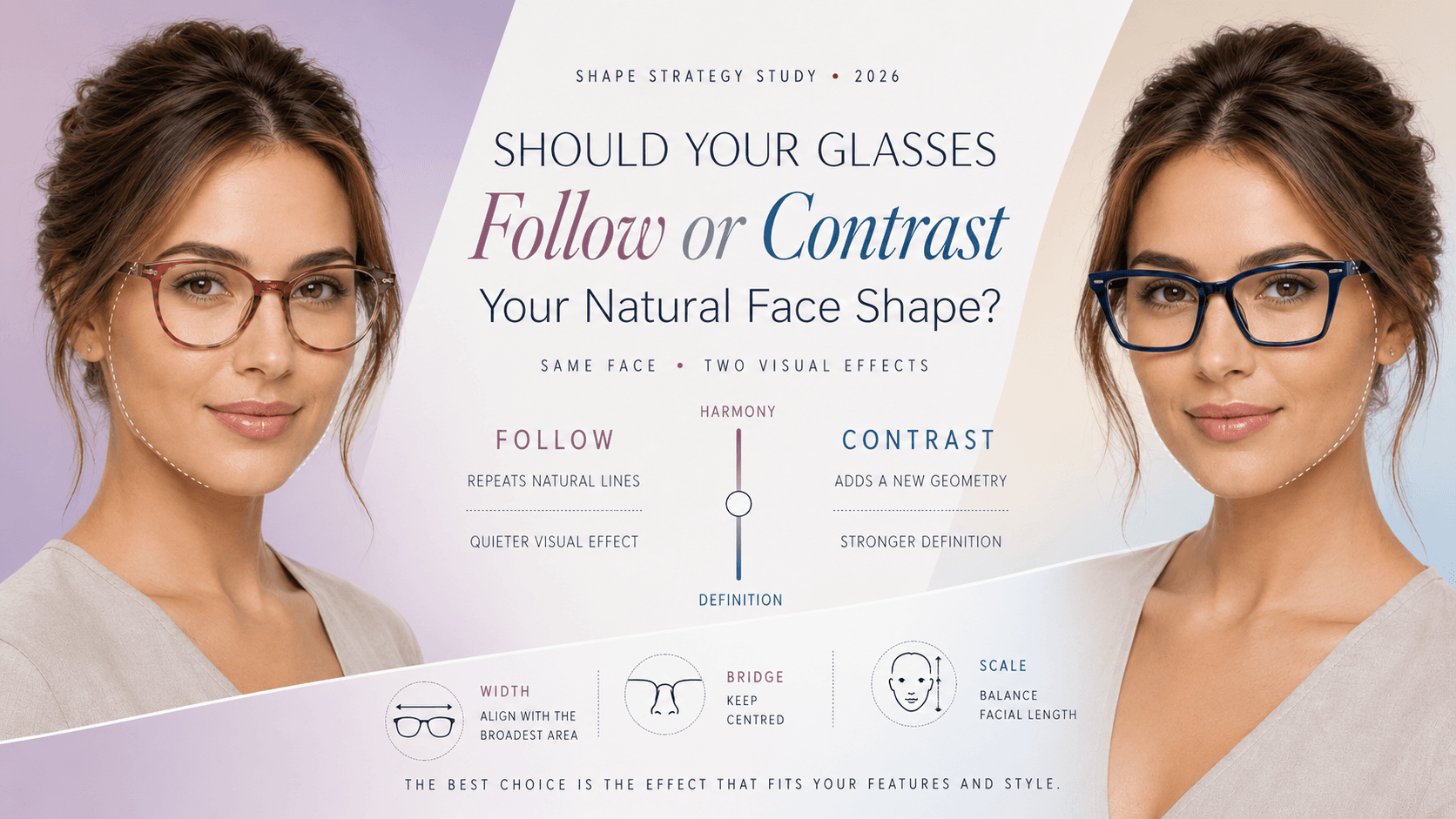
The classic eyewear guideline is simple: choose frames that contrast your face shape. Round faces suit angular frames, square faces suit round ones. That rule is a solid starting point, but it is not the whole story. Whether you follow or contrast your natural face shape depends on your personal style, the statement you want to make, and the proportions of your specific features.
What Does "Contrast Your Face Shape" Actually Mean?
Contrasting means picking a frame geometry that balances your dominant facial lines. The logic is straightforward — if your face already has strong angles (think a square jaw or wide forehead), a softer, rounder frame draws the eye inward and creates visual harmony. If your face is very round or oval, a rectangular or geometric frame adds definition and structure.
Square face: oval, round, or browline frames soften a strong jaw
Round face: rectangular, wayfarers, or angular frames add length and definition
Heart face: bottom-heavy frames or aviators balance a wider forehead
Oval face: almost any shape works — lucky you
Oblong face: oversized or tall frames reduce the appearance of length
When Should You Follow Your Face Shape Instead?
Following your face shape — choosing frames that echo rather than oppose your natural lines — is a deliberate style choice, not a mistake. Round frames on a round face, for instance, create a soft, retro aesthetic that has been consistently on-trend. Square frames on a square face project a bold, architectural look. The key is intent. If you know the effect you are going for, leaning into your face shape can look striking and confident.
This approach works especially well when the frame is oversized, coloured, or has an unusual texture — the design detail itself becomes the focal point, and the shape harmony feels intentional rather than accidental.
Contrast vs. Follow: Which Is Better for You?
Think of contrast as the safe, universally flattering route and following as the expressive, fashion-forward route. Neither is wrong. A useful way to decide: if your primary goal is to look polished and put-together with minimum effort, contrast your face shape. If you want your glasses to be a style statement — something people notice and comment on — echoing your face shape with a distinctive frame can pay off beautifully.
Other Factors That Matter as Much as Face Shape
Face shape is one input, not the only one. Pay equal attention to these:
Frame width should roughly match the widest part of your face for balanced proportions
Bridge fit affects where the glasses sit — a high bridge works differently on a low nose bridge
Skin tone and frame colour — warm skin tones (golden, olive) suit tortoiseshell, gold, and earthy hues; cool skin tones suit silver, black, and jewel tones
Lens prescription strength — high prescriptions can distort thick frames; thinner frames or high-index lenses help
Lifestyle — a lightweight, minimalist frame suits an active professional; a bold statement frame suits a creative
The Rimloo Approach: Try Before You Commit
The best way to settle the follow-or-contrast debate is to try both. Rimloo's virtual try-on tool lets you upload a photo and see exactly how different frame shapes sit on your actual face — not a generic model's face. Browse the full eyeglasses collection or explore sunglasses to find frames across every shape category and test the contrast and follow options side by side before you buy.
