
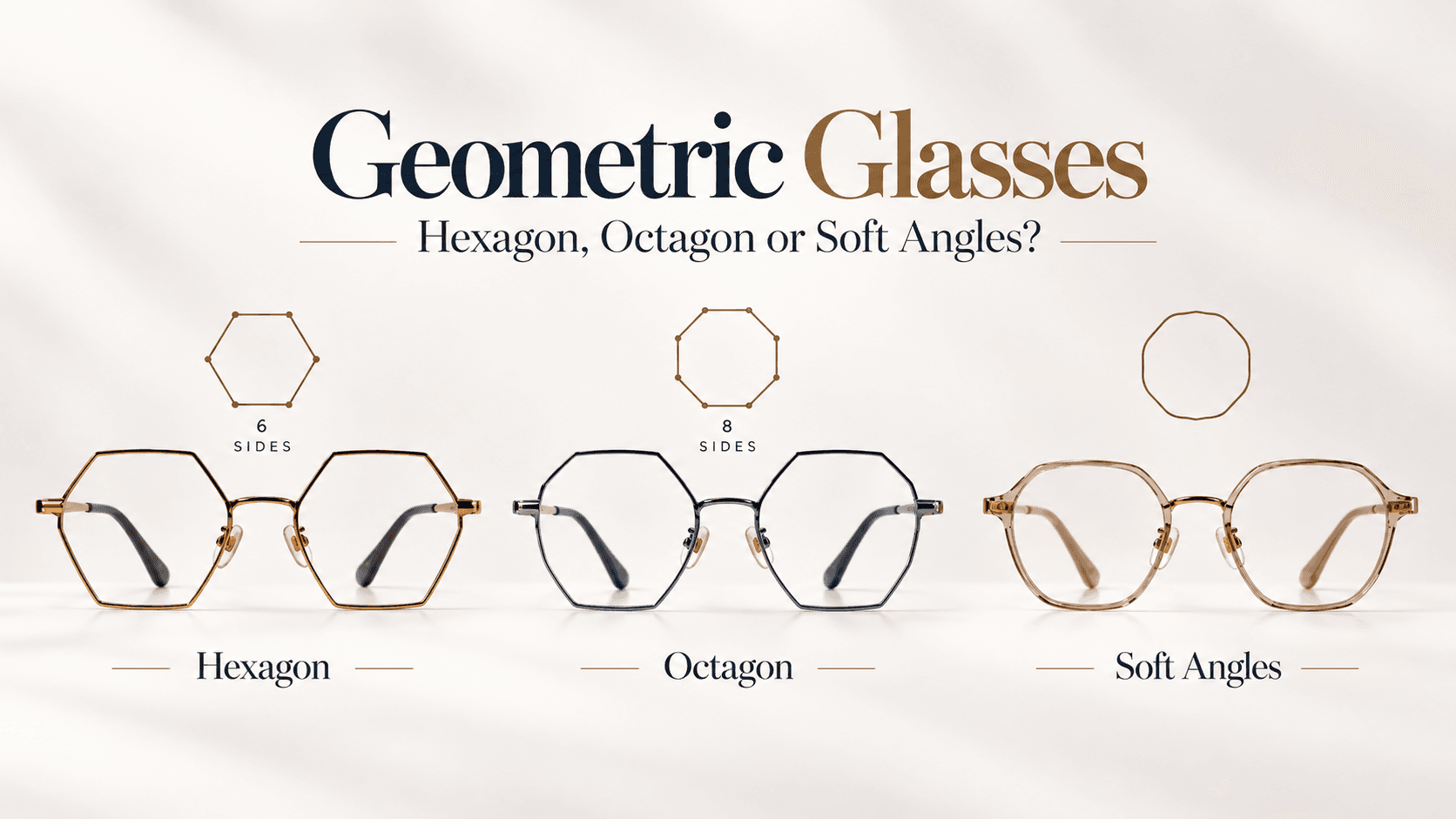
Geometric glasses are bold, architectural, and unmistakably modern. The right angular frame — whether a sharp hexagon, a striking octagon, or a gently angled soft-geometric — can define your entire look. The key is matching the degree of angularity to your face shape and personal style, not just picking what looks coolest on the shelf.
What Makes a Frame 'Geometric'?
Geometric frames step outside the classic round, oval, rectangle, or square silhouettes. They feature three or more distinct flat or faceted edges — think hexagons with six sides, octagons with eight, or hybrid shapes that soften sharp corners into subtle angles. The result is a frame that reads as intentional and fashion-forward rather than conventional.
Hexagon Frames: Sharp, Sculptural, Statement-Making
A hexagonal frame has six sides and typically sits wider than it is tall, giving it a horizontal emphasis. This makes it ideal for faces that carry more vertical length — oblong and diamond face shapes especially benefit from the width a hexagon adds across the mid-face. The crisp corners create strong contrast against soft, rounded facial features, which is why they work beautifully on round and heart-shaped faces too.
Style note: Hexagons lean editorial. They pair naturally with minimalist outfits, monochrome palettes, and structured silhouettes. In India's fashion scene, they've become a go-to frame for architects, designers, and anyone who wants their glasses to be a genuine accessory rather than an afterthought.
Octagon Frames: Retro Geometry with Modern Appeal
The octagon is the most symmetrical of the geometric family — eight equal sides create a near-circular outline with subtle flat edges. This balance means octagons are surprisingly versatile. They soften the angularity that can feel overwhelming on some faces while still reading as distinctly geometric. Oval and oblong faces handle octagons particularly well, but the shape is forgiving enough to suit most face types.
Think of octagons as the bridge between a round frame and a true angular shape. They carry vintage energy — reminiscent of Art Deco jewellery — while feeling completely current. Thin metal versions in gold or gunmetal are especially wearable for daily office use.
Soft-Angle Frames: The Accessible Entry Point into Geometric Eyewear
Soft-angle frames borrow the multi-sided structure of true geometric shapes but round off the corners so the transitions feel gradual rather than sharp. The effect is a frame that has character and geometry without the full drama of a hexagon or octagon. If you love the trend but worry that hard angles might feel too severe for your lifestyle or face, a soft-angle frame is your answer.
These work especially well on square and rectangular faces, where the softened edges echo facial structure without amplifying it further. They also translate seamlessly from workwear to weekend looks.
How to Choose: A Quick Comparison
Hexagon: Best for round, heart, and oblong faces. High visual impact. Suits bold, creative personal styles.
Octagon: Best for oval and oblong faces. Retro-modern balance. Works in both casual and professional settings.
Soft-Angle: Best for square and rectangular faces. Subtle geometry. The most versatile option for everyday wear.
Frame Material Matters Too
Geometric frames in thin acetate or lightweight metal feel refined and wearable. Thick acetate amplifies the drama — great as a fashion piece, potentially overwhelming for daily prescription wear. If you need a full prescription lens, discuss lens thickness with your optician, as highly angled frames can sometimes affect how high-index lenses sit at the edges.
Final Thought
Geometric glasses reward confidence. Start with the shape that complements your face, then choose your degree of angularity based on how much of a statement you want to make. Whether you go full hexagon or ease in with soft angles, the geometry does the work for you.
