
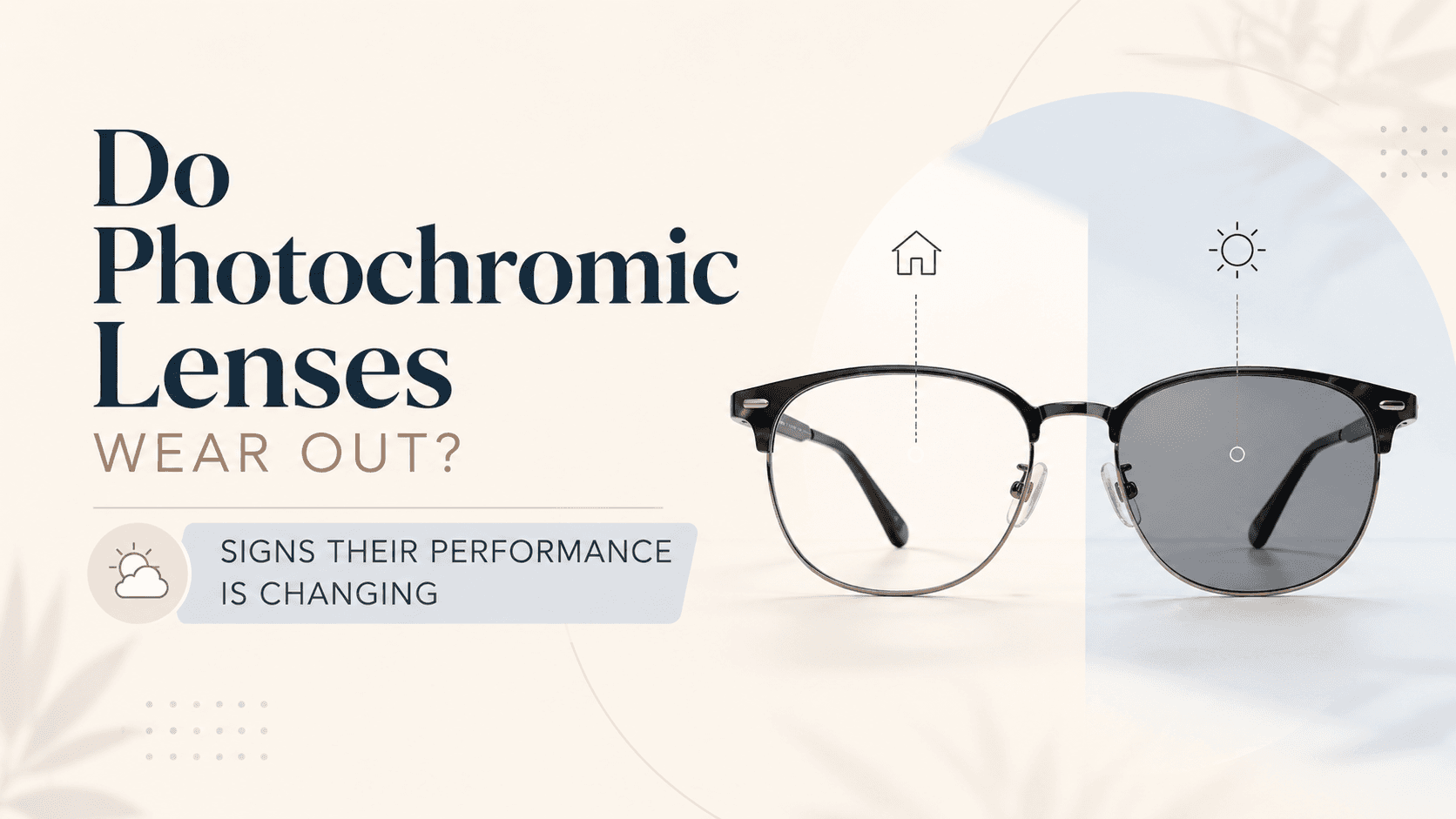
Yes, photochromic lenses wear out. Most quality photochromic lenses perform well for 2–3 years before the dye molecules responsible for darkening begin to break down. After that point, you may notice they no longer darken as deeply outdoors or take much longer to clear indoors. Recognising the early signs of degradation helps you replace them before your eye comfort and UV protection are compromised.
How Do Photochromic Lenses Actually Work?
Photochromic lenses contain silver halide or organic dye molecules embedded in or coated onto the lens. When exposed to ultraviolet (UV) light, these molecules change shape and absorb visible light, causing the lens to darken. Once UV exposure stops, the molecules revert and the lens clears. This chemical reaction is repeatable — but not infinitely so. Each cycle causes minor molecular fatigue, and years of daily use gradually reduce the lens's responsiveness.
What Are the Signs Your Photochromic Lenses Are Wearing Out?
They No Longer Darken Fully Outdoors
A healthy photochromic lens should reach a deep tint — typically Category 2 or 3 darkness — within about 30 seconds of UV exposure. If yours are settling at a noticeably lighter shade than they used to, the reactive molecules are depleted. This means reduced glare control and less UV protection, even on bright days.
They Take Much Longer to Clear Indoors
New photochromic lenses clear to near-transparent within 2–5 minutes of moving indoors. Ageing lenses often linger at a grey or brown tint for 10–15 minutes or more, which makes activities like reading or using a screen uncomfortable and can strain your eyes in lower light.
One Lens Darkens More Than the Other
Uneven darkening is a reliable red flag. It usually means one lens has had more direct UV exposure — common if you drive with one side facing a window — accelerating its degradation faster than the other. If the difference is visible, replacement is overdue.
A Permanent Faint Tint Remains
When lenses never fully return to clear even after extended time indoors, the reactive dye has partially locked into its darkened state. This residual tint reduces contrast in dim environments and is a strong signal that the lenses have reached the end of their effective lifespan.
Visible Yellowing or Haziness
UV exposure and cleaning wear can cause the lens surface or coating to yellow or develop a hazy film. This affects optical clarity independently of the photochromic function and is another reason to consider replacement.
What Speeds Up Photochromic Lens Degradation?
Several factors accelerate wear beyond the average 2–3 year window. High UV climates — relevant across most of India — put extra stress on the reactive molecules. Heat is equally damaging; leaving glasses on a dashboard or in direct sunlight shortens lifespan significantly. Harsh lens cleaners, abrasive cloths, and improper storage all contribute to coating breakdown that compounds photochromic fade.
Photochromic Lenses vs Separate Prescription Sunglasses: When to Switch
If your lenses are older than three years and showing two or more of the signs above, replacing them with fresh photochromic lenses is usually more practical than repair. However, if you spend long hours driving — where windshields block UV and photochromic lenses barely activate — a dedicated pair of prescription sunglasses may serve you better as a primary outdoor solution.
How to Slow Down the Ageing Process
Store your glasses in a hard case away from heat. Clean lenses with a microfibre cloth and a lens-safe solution — never paper towels or clothing fabric. Avoid leaving frames in parked cars. These habits alone can meaningfully extend performance beyond the average lifespan.
