
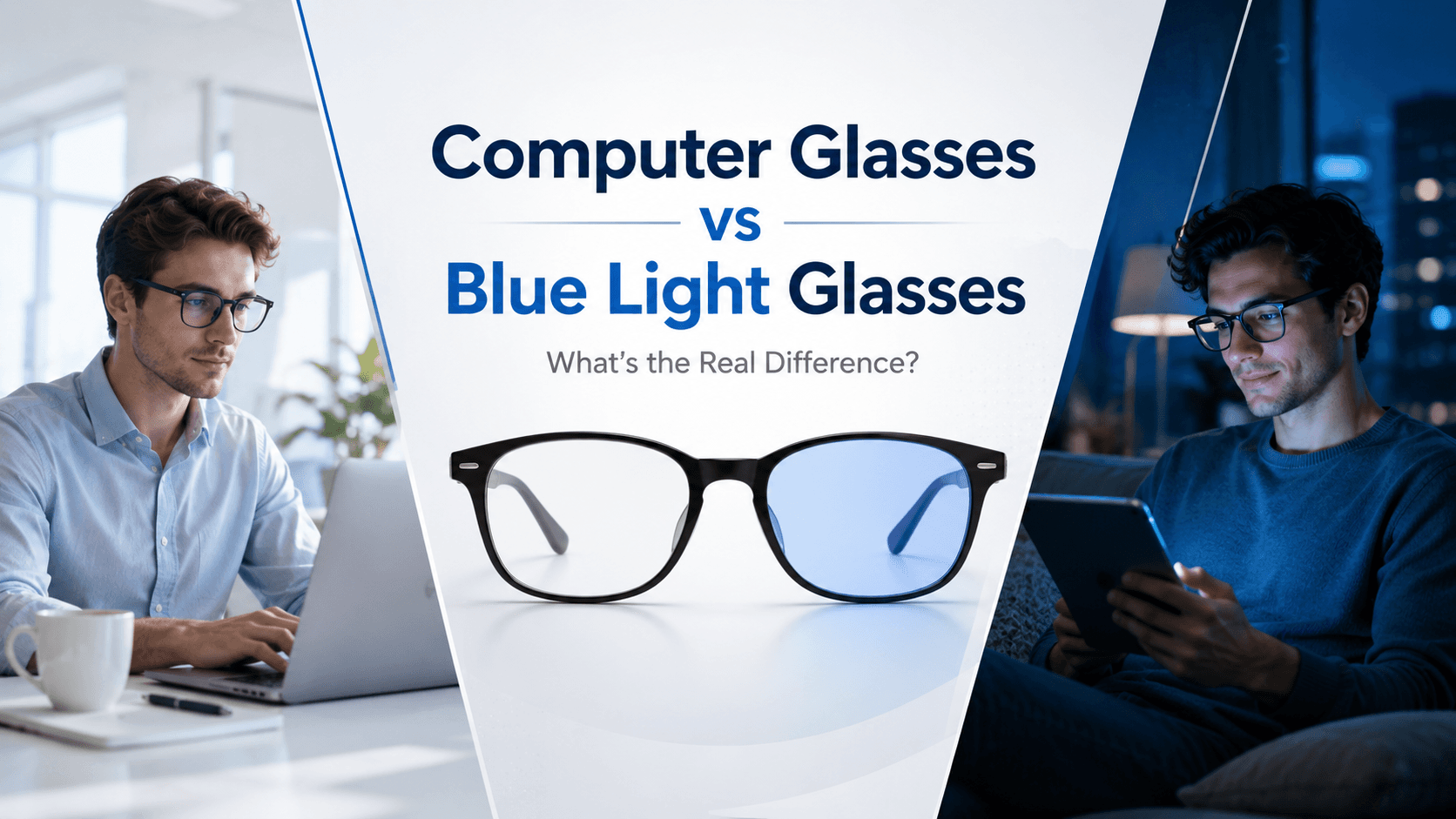
Computer glasses and blue light glasses are related but distinct products. Computer glasses are prescription or non-prescription lenses optimised for the 50–70 cm viewing distance of a monitor, often incorporating a mild magnification and anti-reflective coating. Blue light glasses carry a filter—coating or tint—that blocks a portion of high-energy visible (HEV) blue light emitted by screens. A single pair can do both jobs, but buying one does not automatically mean you have the other.
What Are Computer Glasses?
Computer glasses are engineered around a specific focal distance. Unlike standard reading glasses (optimised for ~35 cm) or distance glasses, they place the sharpest focus right at screen distance. Key optical features typically include:
An intermediate-zone prescription tailored to arm's-length viewing
Anti-reflective (AR) coating to cut glare from screen backlighting and overhead fluorescents
A wider intermediate zone in progressive lenses for multi-monitor setups
Optional slight tint to reduce contrast fatigue over long sessions
If you already wear prescription glasses and find yourself tilting your head back to read your monitor through the lower segment of your progressives, a dedicated computer prescription could genuinely improve your posture and reduce eye strain.
What Are Blue Light Glasses?
Blue light glasses use either a surface coating or a lens material infused with a blue-light-absorbing pigment. They target wavelengths roughly between 400 nm and 450 nm—the band most associated with disrupted melatonin production and, in some research, retinal stress from prolonged exposure.
It is worth being precise here: the scientific consensus on blue light and eye damage from consumer screens is still evolving. The American Academy of Ophthalmology notes that current evidence does not confirm screens cause permanent retinal harm. However, blue light's role in suppressing melatonin and delaying sleep is better established—making evening use of a blue light filter a reasonable, evidence-supported habit.
Computer Glasses vs Blue Light Glasses: Side-by-Side
The simplest way to understand the difference is to compare what problem each product is solving:
Primary purpose: Computer glasses fix focus and reduce glare. Blue light glasses filter a specific wavelength range.
Who needs them: Computer glasses benefit anyone—especially those over 35—whose eyes struggle to maintain comfortable focus at screen distance. Blue light glasses benefit heavy screen users, particularly those who use devices in the two hours before bedtime.
Prescription requirement: Computer glasses often carry a prescription or at least an intermediate-zone optimisation. Blue light glasses are available in both plano (zero power) and prescription versions.
Lens appearance: Computer glasses typically look clear with a subtle AR sheen. Blue light glasses may have a faint yellow or amber tint (stronger in higher-percentage filters) or appear virtually clear with a reflective blue sheen on the back surface.
Effect on colour accuracy: Computer glasses preserve colour neutrally. Strong blue light tints can shift colour perception—relevant if you do photo editing or design work.
Can One Pair Do Both?
Yes, and this is the most practical option for most users. Many modern lenses combine an intermediate-distance prescription with an integrated blue light filter and AR coating in a single lens. When shopping, look for lenses described as digital protection or screen lenses with a blue light filter percentage stated (commonly 20%–40% for clear lenses, up to 90% for amber-tinted versions).
When to Choose Computer Glasses Only
Opt for purpose-built computer glasses without a blue light filter if you do colour-critical work at a monitor all day and cannot afford any tint-induced colour shift. A strong AR coating will address glare, and keeping screen brightness calibrated will limit direct blue light exposure without affecting your colour judgement.
When to Choose Blue Light Glasses Only
If your near vision is perfectly comfortable and you have no refractive error, a plano blue light lens worn during evening screen sessions or before bed can help maintain your natural sleep cycle. These are also a low-cost entry point for parents buying for children who use tablets heavily in the evening.
How to Care for Your Computer or Blue Light Lenses
Because both lens types almost always carry an AR coating—which is more delicate than a standard hardcoat—proper lens care matters more than with ordinary lenses:
Always rinse lenses under lukewarm water before wiping to dislodge abrasive dust particles
Use only a microfibre cloth; paper towels and clothing fibres scratch AR coatings
Apply a dedicated lens cleaning spray rather than household glass cleaner, which contains ammonia that degrades coatings
Store glasses in a hard case when not in use to prevent micro-scratches that scatter light and increase glare
Avoid leaving glasses on a car dashboard—sustained heat above 60°C can cause AR coatings to craze
Maintaining your lenses properly extends the life of the filter and ensures you are getting the optical performance you paid for. A scratched blue light coating passes unfiltered wavelengths through the damaged areas, defeating its purpose.
The Bottom Line
Computer glasses correct your focal distance for screen use; blue light glasses filter HEV wavelengths. The best pair for most Indian screen workers combines both in a single lens—an intermediate prescription (even a mild one) with a built-in blue light filter and a quality AR coating. If you spend more than four hours a day in front of a screen, this combination is one of the more evidence-backed investments you can make in your daily visual comfort.
