
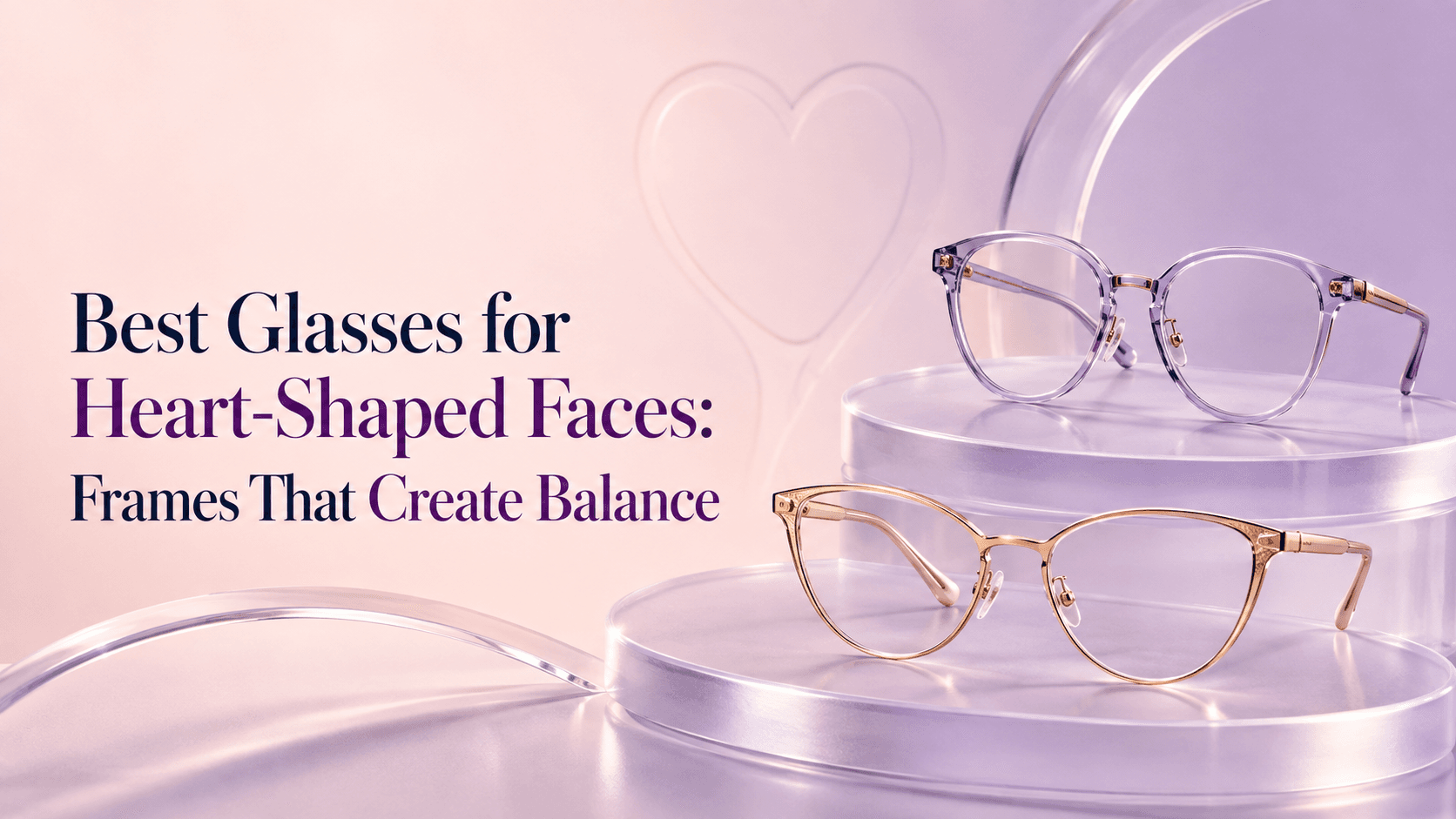
Heart-shaped faces feature a broad forehead and high cheekbones that narrow toward a delicate, pointed chin. The goal when choosing frames is simple: add visual weight to the lower half of your face and soften the width at the top. Rimless, bottom-heavy, or wider-at-the-base frames do this beautifully — and the right pair can feel like it was made specifically for you.
How to Identify a Heart-Shaped Face
Before shopping for frames, confirm your face shape. Heart-shaped faces share three defining traits: the forehead is the widest part of the face, the cheekbones are prominent, and the chin is narrow and often pointed. You may also have a widow's peak hairline. If your face tapers noticeably from the temples to the chin, you almost certainly have a heart-shaped face.
What Frame Styles Work Best for Heart-Shaped Faces?
The most flattering frames for heart-shaped faces share one quality — they are wider at the bottom than the top, or at least equal in width throughout. This counters the natural top-heaviness of the face shape and brings the eye downward toward the chin.
Aviator Frames
Aviators are arguably the single best frame style for heart-shaped faces. Their teardrop silhouette is wider at the bottom, which perfectly counterbalances a broad forehead. The thin metal bridge and delicate frame structure keep the overall look light and elegant rather than boxy. Aviators work equally well as prescription eyeglasses and sunglasses.
Round Frames
Round frames soften angular features — particularly the wide forehead — and add gentle width near the lower face. They suit heart-shaped faces that lean toward sharper, more angular features at the top. A round frame in a warm acetate or tortoiseshell finish looks especially refined on this face shape.
Bottom-Heavy or D-Frame Styles
D-frames, sometimes called modified rectangle frames, have a flat top edge and a gently curved bottom. The deliberate visual weight at the lower rim draws attention to your jaw area rather than your forehead. These frames work brilliantly in a bold colour or patterned acetate to further anchor the lower face.
Light-Coloured or Rimless Frames
Rimless and semi-rimless frames reduce visual bulk around the eyes and forehead — an excellent strategy when you want to make the upper half of your face appear less dominant. Pair them with tinted or gradient lenses for a stylish, airy effect.
Oval Frames
Classic oval frames sit between round and rectangular, offering a versatile middle ground. They add subtle width to the lower face without being as dramatic as a full round frame. If you prefer understated, everyday eyewear, oval frames are a reliable and elegant choice.
Which Frame Styles Should Heart-Shaped Faces Avoid?
Certain frame shapes amplify the width at the top of the face rather than reducing it, which is the opposite of what this face shape needs.
Cat-eye frames flare upward and outward, emphasising the already-wide forehead and temples. They are best avoided unless the flare is very subtle.
Browline or club-master frames place heavy visual weight along the top rim, which highlights the widest part of the face.
Very wide rectangular frames can exaggerate the forehead-to-chin disproportion if they extend far beyond the temples.
Heavily decorated top bars or ornate temples draw the eye upward — the exact direction you want to avoid.
Aviators vs Round Frames: Which Is Better for a Heart-Shaped Face?
Aviators are the stronger structural choice because their bottom-heavy teardrop shape is engineered to balance a wide forehead. They also transition seamlessly from prescription glasses to sunglasses. Round frames, however, offer a softer, more artistic aesthetic and suit those who want to underplay sharp facial angles. If you are choosing one frame for daily wear, try aviators first. If you already own aviators and want a second pair with a different mood, round frames are the natural next step.
Does Frame Size Matter for Heart-Shaped Faces?
Yes — and the rule is straightforward. Choose a frame width that is close to or slightly wider than your jawline, not your forehead. A frame that matches your forehead width will make your face look even wider at the top. Opt for medium-to-large frames with a lens width between 48 mm and 54 mm. Check the frame measurements printed on the temple arm and use Rimloo's virtual try-on tool to see the fit on your actual face before ordering.
Best Frame Materials and Colours for Heart-Shaped Faces
Frame material influences how heavy a frame looks on your face. Lightweight titanium or beta-titanium metal frames keep the upper face visually uncluttered. Acetate frames in warm tones — tortoiseshell, honey, nude, or blush — complement the soft contours of a heart-shaped face without overwhelming it. Darker colours like black or navy in large acetate frames can add desirable weight to the lower face. Avoid very thick, dark frames that sit high on the bridge, as these visually widen the forehead further.
Tips for Choosing the Right Fit
Frame dimensions matter as much as style. Keep these practical guidelines in mind when shopping:
The frame width should not extend significantly beyond the width of your temples.
Look for a low-set nose bridge — it lowers the optical centre of the lens and elongates the upper face.
Avoid frames with decorative detailing on the top corners of the rims.
Thin or wire temples keep the focus on your features rather than the frame.
Use your pupillary distance (PD) measurement to ensure lenses are centred correctly — misaligned lenses can distort how the frame sits on your face.
