
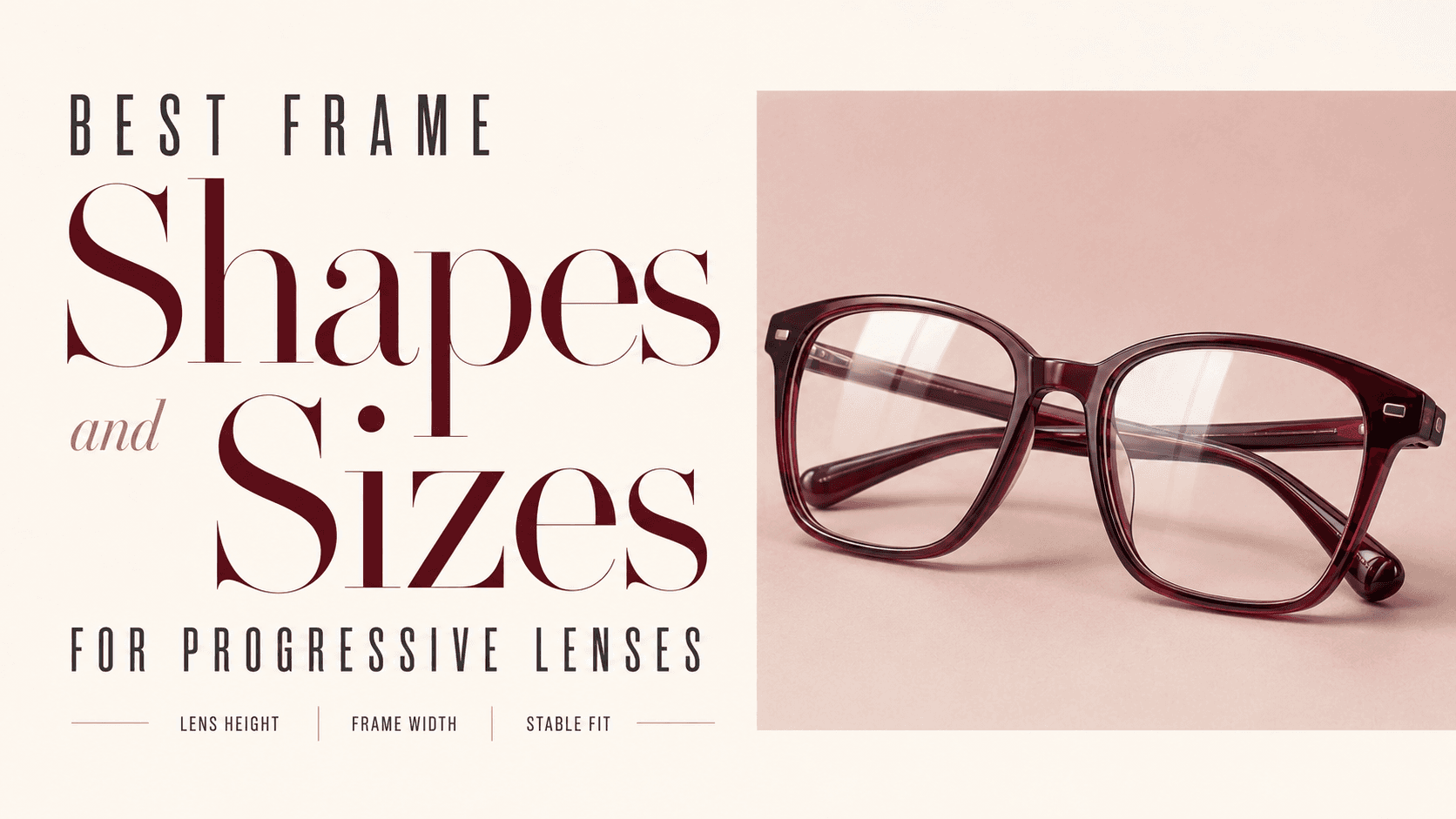
The best frames for progressive lenses are large, full-rim styles with a minimum lens height of 28–30 mm and a relatively wide lens width. Rectangular, oval, and round shapes typically work well because they give the lens lab enough vertical space to fit all three vision zones — distance, intermediate, and near — without cutting off the reading corridor at the bottom.
Why Frame Size Matters More Than Anything Else
Progressive lenses have three distinct optical zones stacked vertically. If the lens height is too short, the near-vision zone gets cropped during the edging process, leaving you with a narrow or unusable reading area. Most opticians recommend a minimum B-measurement (vertical lens height) of 28 mm, and 30 mm or more is ideal for first-time progressive wearers who are still adapting.
A wider frame also helps. A lens width of at least 50 mm gives the lab enough horizontal space to centre the optical corridor correctly for your pupillary distance (PD).
Which Frame Shapes Work Best?
Rectangle
The most popular choice for progressives. A classic rectangular frame offers generous height, keeps the distance zone wide and unobstructed, and suits nearly all face shapes. Look for frames where the top of the frame sits at or just above the brow line.
Round and Oval
Both shapes naturally offer good vertical depth, making them a safe bet for progressives. They also soften angular face shapes and are currently on-trend for Indian consumers looking for a vintage aesthetic.
Square
Square frames can work if the lens height meets the 28 mm threshold, but check the measurements carefully — some fashion-forward square frames are cut quite shallow and will restrict the near-vision zone.
Frame Shapes to Avoid or Approach With Caution
Rimless and semi-rimless frames are not automatically ruled out, but they limit how the lens can be edged and may restrict the reading corridor. Narrow cat-eye frames with a dramatic upward sweep at the outer corners can also distort the intermediate zone. If you love cat-eye styles, choose a soft cat-eye with sufficient vertical height rather than an extreme silhouette.
Full-Rim vs Semi-Rim vs Rimless for Progressives
Full-rim frames are the safest and most durable option. The rim protects the lens edge and holds the progressive zones in the exact position your optician has calibrated. Semi-rimless frames can work for experienced progressive wearers with mild prescriptions. Rimless frames are best avoided for high-add progressive prescriptions because any minor lens movement shifts the optical zones away from your pupils.
Does Face Shape Change the Recommendation?
Face shape influences which frame looks best, but the size rules for progressives override aesthetics. A person with a round face might normally choose angular frames, but if those frames are too shallow, vision will suffer. Prioritise the 28–30 mm lens height first, then refine the shape to complement your face. An oval or rectangle frame flatters most face shapes and still meets the optical requirements.
Fit and Adjustment Are Just as Important
Even a perfectly sized frame will underperform if it is not fitted correctly. The fitting height — the distance from the centre of your pupil to the bottom of the lens — must be measured accurately and marked on the lens before glazing. Make sure your optician or the Rimloo team takes a proper PD and fitting height measurement, especially if you are ordering online. A frame that slips down your nose will shift the optical zones and cause eye strain.
