
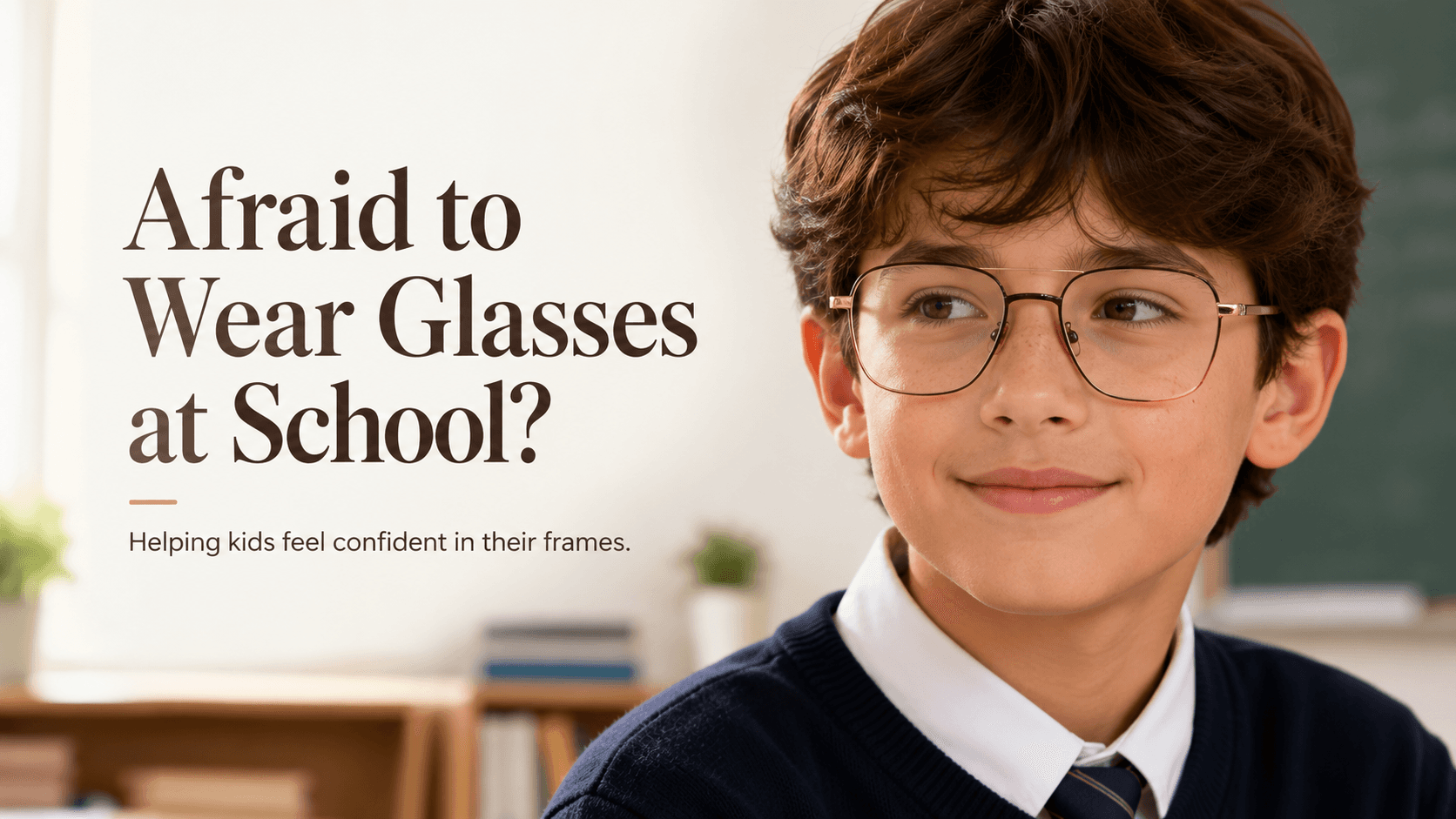
Wearing glasses at school can feel like a big change for a child. One day, they are sitting in class like everyone else. The next day, they are walking in with something new on their face, wondering if friends will notice, ask questions, or make comments.
That fear is real.
Many students feel nervous before wearing glasses to school for the first time. Some worry they will look different. Some feel shy during assembly, class photos, or sports periods. Others simply do not know which frames will suit their face.
But glasses are not something to hide anymore. Today, the right pair of school glasses can make a child look smart, stylish, confident, and comfortable. The secret is choosing frames that feel natural, fit well, and match the student’s everyday school life.
At Rimloo, we believe kids should not just “manage” with glasses. They should feel good wearing them.
Why Do Kids Feel Shy About Wearing Glasses at School?
Most children do not feel nervous because of the glasses themselves. They feel nervous because glasses create a visible change.
A student may think:
“Will my friends laugh?”
“Will I look too serious?”
“Will I look different in photos?”
“What if the frame does not suit my face?”
“What if everyone keeps asking about it?”
These thoughts are common, especially for kids and teenagers who are already sensitive about how they look. School is a social space. A small change can feel much bigger when classmates are around all day.
The good news is that confidence grows quickly when the glasses look good, feel comfortable, and become part of the child’s personal style.
That is why choosing the right frame matters.
The Right Frame Can Change Everything
A child may dislike wearing glasses if the frame feels heavy, keeps slipping, pinches behind the ears, or looks too bold for their comfort level. On the other hand, a well-fitted frame can make glasses feel almost effortless.
For school students, the best eyeglasses are usually:
Lightweight enough for all-day wear
Comfortable around the nose and ears
Durable for daily school movement
Stylish without looking too loud
Easy to match with uniforms and casual outfits
If your child is wearing glasses for the first time, start with a frame that feels balanced. A clean rectangle, soft square, round, or lightweight metal frame can work beautifully for school.
You can explore Rimloo’s latest school-friendly styles here: Shop Eyeglasses
How Do You Choose Glasses That Actually Suit Your Kid Face?
One of the biggest reasons kids feel unsure about glasses is simple: they may not have found the right shape yet.
The frame should balance the face instead of overpowering it. Here is a quick breakdown:
Round face: Go for angular or rectangular frames. They add definition and lengthen the face.
Square face: Round or oval frames soften strong jawlines and balanced proportions beautifully.
Oval face: Almost any frame shape works. Oval faces are considered the most versatile — try bold or geometric styles.
Heart-shaped face: Frames that are wider at the bottom, like aviators or light-coloured acetate styles, balance a broader forehead.
Oblong face: Oversized or deep frames with decorative temples add width and break up length.
If you are unsure of your face shape, take a selfie straight-on, trace your face outline on the photo, and compare it to these categories. Many students find that once they pick the right shape, they stop noticing the glasses and start noticing how good they look.
What Frame Styles Are Most Popular for School?
School glasses need to look good, but they also need to survive real school life: classrooms, backpacks, lunch breaks, tuition, travel, games, and long study hours.
Here are some practical frame styles that work well for students.
1. Rectangle Frames
Rectangle frames are one of the safest and most popular choices for school. They look neat, smart, and balanced with uniforms. They also suit many face shapes and feel easy to wear every day.
2. Round Frames
Round frames give a softer, creative, and thoughtful look. They are especially loved by students who want something stylish but not too sharp.
3. Lightweight Metal Frames
Thin metal frames are a great choice for kids who do not want their glasses to look too heavy. They feel minimal, clean, and modern.
4. Rimless or Semi-Rimless Frames
For students who feel very conscious about wearing glasses, rimless or semi-rimless frames can be a gentle first option. They give vision correction without making the face look too different.
Explore lightweight styles: Rimless Eyeglasses
5. Flexible Frames
For active kids, flexible and durable frames are important. If your child plays, runs, or often removes glasses during the day, choose a frame that can handle movement better.
Does Frame Colour Matter for School?
Yes, frame colour matters more than many parents realise.
For school, neutral colours are usually the easiest choice because they match uniforms and daily outfits. Black, brown, gold, silver, navy, transparent, and tortoiseshell frames are safe and stylish options.
A shy child may feel more comfortable starting with a subtle frame colour. A confident or expressive student may enjoy a slightly bolder frame like blue, green, transparent, or warm brown.
The frame should match the child’s comfort level. If the colour feels too loud, the child may avoid wearing it. If it feels too boring, they may not feel excited about it.
The best choice is the one the child is happy to wear every day.
How Parents Can Help Kids Feel Confident in Glasses
Parents play a big role in how children feel about their glasses.
Instead of saying, “You have to wear them,” try saying, “This frame really suits you,” or “You look smart in these.” Small words can make a big difference.
Let the child be part of the selection process. When kids help choose their own frame, they feel more ownership and less resistance.
You can also help them adjust gradually:
Let them wear the glasses at home first.
Take a few photos so they get used to their new look.
Ask them which frame feels most comfortable.
Avoid forcing a style they clearly dislike.
Teach them how to clean and store their glasses properly.
Confidence does not come from the frame alone. It comes from feeling supported while wearing it.
Should You Choose Glasses With Blue-Light Protection for School?
Many school students now spend long hours on screens. Online classes, tablets, mobile phones, smartboards, tuition videos, and exam preparation can all add to eye fatigue.
If your child studies on screens for long periods, blue-light protection can be a useful lens upgrade. It does not change the frame style, but it can make screen time feel more comfortable.
Blue-light glasses for students may help during long study sessions, especially when the child complains about tired eyes, screen discomfort, or headaches after using digital devices.
Explore Rimloo’s screen-friendly options here: Blue Light Glasses
One Pair or Backup Pair?
For school students, a backup pair is always a smart idea.
Kids can drop glasses, scratch lenses, misplace frames, or damage them during sports and travel. A second pair keeps them safe from last-minute stress before exams or school days.
One pair can be used for daily classroom wear, while another can be kept at home or used during travel, tuition, or outdoor activities.
If your child depends on glasses to read the board or study clearly, a backup pair is not a luxury. It is practical.
Final Thoughts
Feeling afraid to wear glasses at school is normal, especially in the beginning. But with the right frame, proper fit, and a little encouragement, that fear can quickly turn into confidence.
Choose glasses that suit the child’s face, match their routine, feel comfortable all day, and make them proud to wear them.
At Rimloo, you can explore stylish, lightweight, and school-friendly eyeglasses designed for everyday comfort.
Ready to find the perfect pair?
