
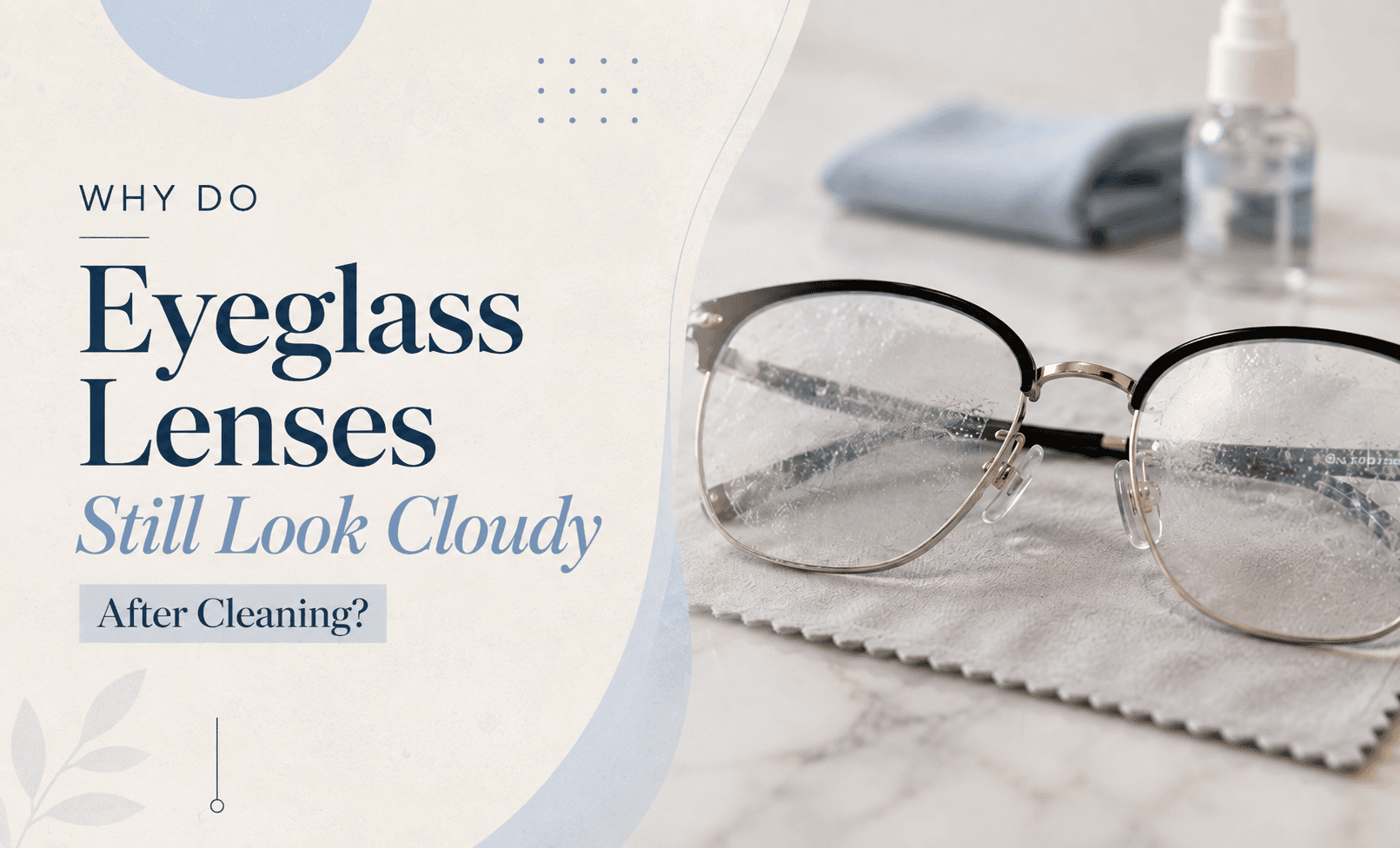
Cloudy lenses after cleaning are almost always caused by one of four things: using the wrong cleaning material, leaving behind soap or cleaning-fluid residue, a deteriorating anti-reflective or hydrophobic coating, or micro-scratches that scatter light. Identifying which one is your problem takes less than a minute and points you straight to the fix.
Why Does the Cloudiness Keep Coming Back?
Most people wipe their lenses with whatever is nearby — a shirt hem, a tissue, a paper towel. These materials deposit lint, push skin oil deeper into the coating, and create fine abrasions over time. Each wipe makes the surface slightly rougher, and rough surfaces diffuse light instead of passing it cleanly to your eyes.
A second common reason is soap residue. If you wash your glasses under the tap and do not rinse thoroughly, a thin soapy film dries onto the lens. Under bright light this film looks like a cloudy smear that no amount of dry wiping will remove.
Is Your Lens Coating Breaking Down?
Anti-reflective (AR) coatings and hydrophobic coatings do not last forever. Heat from leaving glasses on a car dashboard, exposure to harsh chemicals in some household cleaners, or simply years of use can cause these coatings to peel or craze. When a coating starts to degrade, you will notice:
A rainbow sheen or iridescent patches that shift as you tilt the lens
Cloudiness concentrated around the edges that spreads inward over weeks
A texture that feels slightly rough or uneven to a clean fingertip
Smears that reappear minutes after a thorough clean
If any of these match what you see, the coating itself is the problem — not your cleaning technique. A degraded coating cannot be restored at home; the lens needs to be replaced.
The Right Way to Clean Eyeglass Lenses
A proper cleaning routine takes about thirty seconds and prevents most cloudiness issues from developing in the first place.
Rinse the lens under lukewarm (never hot) running water to float away dust particles before touching the surface
Apply one small drop of plain dish soap — free of lotions or strong degreasers — to each lens
Rub gently with clean fingertips for ten seconds on both sides, including the frame nose pads
Rinse thoroughly until the water sheets off evenly with no soapy patches
Shake off excess water and dry only with a clean microfibre cloth
Store glasses in a hard case when not in use to prevent dust buildup between wears
What to Avoid Completely
Certain habits accelerate coating damage and are worth cutting out immediately. Never use window or surface cleaners — products containing ammonia or bleach dissolve AR coatings within a few applications. Avoid breathing on lenses and then wiping; saliva is acidic and introduces bacteria. Do not leave glasses face-down on any surface, and keep them away from direct heat sources like the kitchen hob or car vents.
When Should You Replace the Lenses?
If thorough cleaning with the correct method still leaves a persistent haze, and you can see crazing or peeling on the coating surface, replacement is the practical next step. Modern lenses with quality coatings are more durable than older versions, and replacing lenses — rather than the full frame — is often a cost-effective option. Check with your optician or retailer about lens-only replacement before committing to an entirely new pair.
