
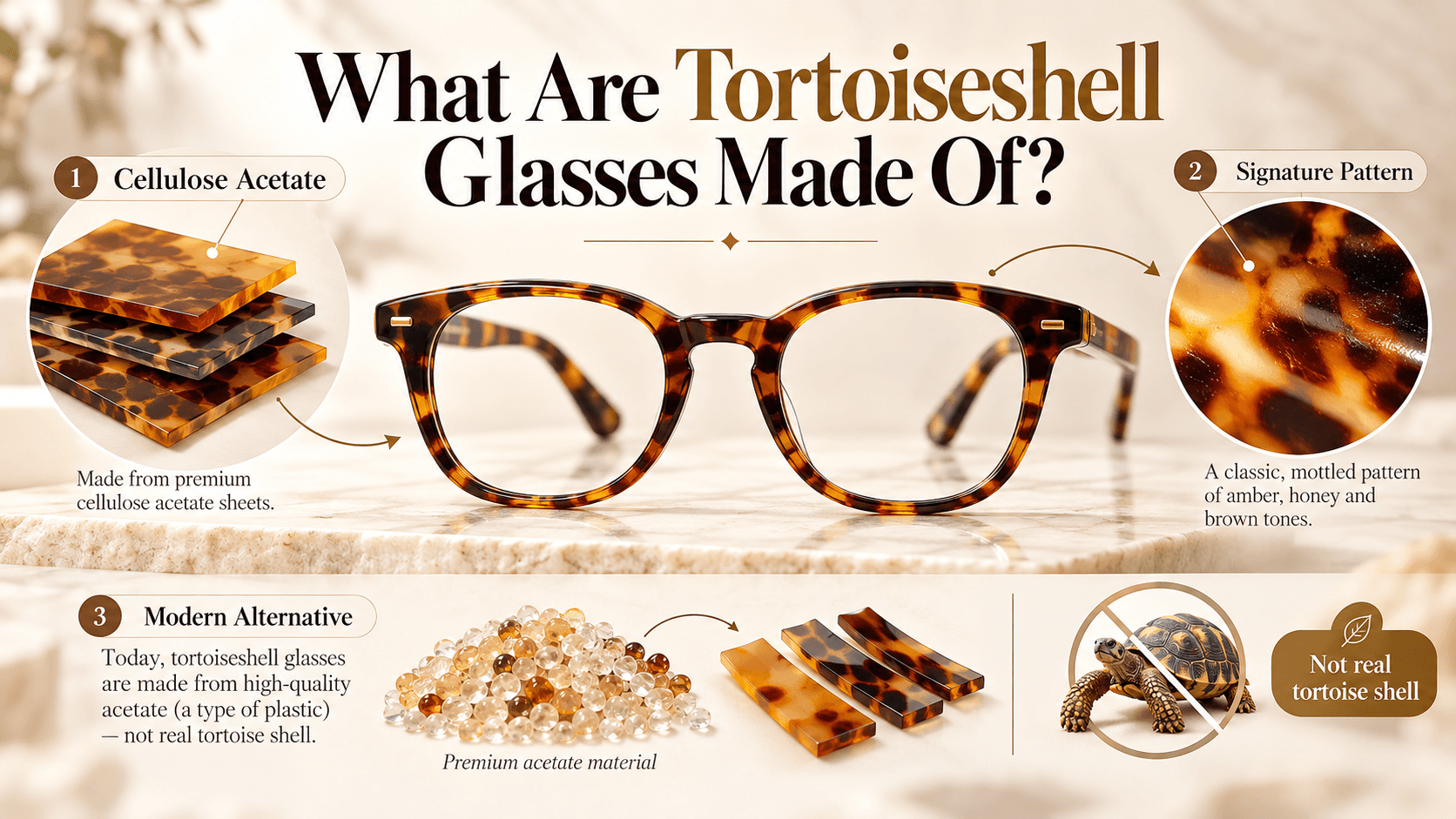
Modern tortoiseshell glasses are almost always made from cellulose acetate, a plant-derived plastic that can be layered, polished, and patterned to mimic the warm amber-and-brown mottled look of real tortoise shell. Genuine shell from the hawksbill sea turtle has been banned worldwide since 1973 under CITES. Today's acetate versions are safer, more durable, and far more varied in colour than the original ever was.
What Is Cellulose Acetate and Why Is It Used?
Cellulose acetate is made from wood pulp or cotton fibres treated with acetic acid. It is one of the most popular frame materials in the eyewear industry for good reason. The manufacturing process allows multiple coloured layers to be fused together, then cut and hand-polished into frames. This is precisely what creates the characteristic depth and translucency in a tortoiseshell pattern — no two pairs look exactly alike.
Compared to basic injection-moulded plastics, acetate frames feel denser and more premium in the hand. They are also hypoallergenic, making them a comfortable long-term choice for most wearers.
Real Tortoiseshell vs. Acetate: What Is the Difference?
Real tortoiseshell — harvested from sea turtles — was prized for centuries for its natural warmth and translucency. It is now illegal to trade globally. Modern acetate tortoiseshell replicates the visual appeal without any ethical or legal concern. In practical terms, acetate is actually superior: it is more consistent in thickness, easier to adjust for fit, and available in a much wider range of colours including classic amber, dark havana, honey, and green tortoise.
Are There Other Materials Used for Tortoiseshell Frames?
Yes. While acetate is the gold standard, you will also find tortoiseshell patterns applied to:
TR90 — a flexible, ultra-lightweight nylon blend. TR90 tortoiseshell frames are printed or injection-moulded rather than layered, so the pattern sits on the surface rather than running through the material. They are an excellent choice for sports or children's frames due to their flexibility.
Mixed-material frames — acetate front combined with metal temples. This gives you the visual warmth of tortoiseshell at the front with the slim profile of metal arms.
Polycarbonate — used in budget frames and safety eyewear. The pattern is surface-level and less visually rich than acetate.
How to Tell If Your Frames Are High-Quality Acetate
Run your thumb along the inside of the temple. Genuine acetate feels smooth and slightly warm, with colour that visibly runs through the entire thickness of the frame — not just on the surface. High-quality acetate frames are also hand-finished, so edges are rounded and polished rather than sharp. If the pattern looks flat or faded after a few months, the frames are likely made from a lower-grade injection-moulded plastic.
How to Care for Tortoiseshell Acetate Frames
Acetate responds well to a little basic maintenance. Avoid leaving frames in a hot car or in direct sunlight for extended periods, as heat can warp the shape. Clean with a microfibre cloth and lens solution — avoid alcohol-based cleaners, which can strip the surface finish over time. Store in a hard case when not in use. With proper care, a good pair of acetate tortoiseshell frames can last five years or more.
Whether you are choosing your first pair of prescription glasses or adding a second frame to your rotation, tortoiseshell acetate is a versatile, stylish, and responsible material choice that suits almost every face shape and skin tone.
