
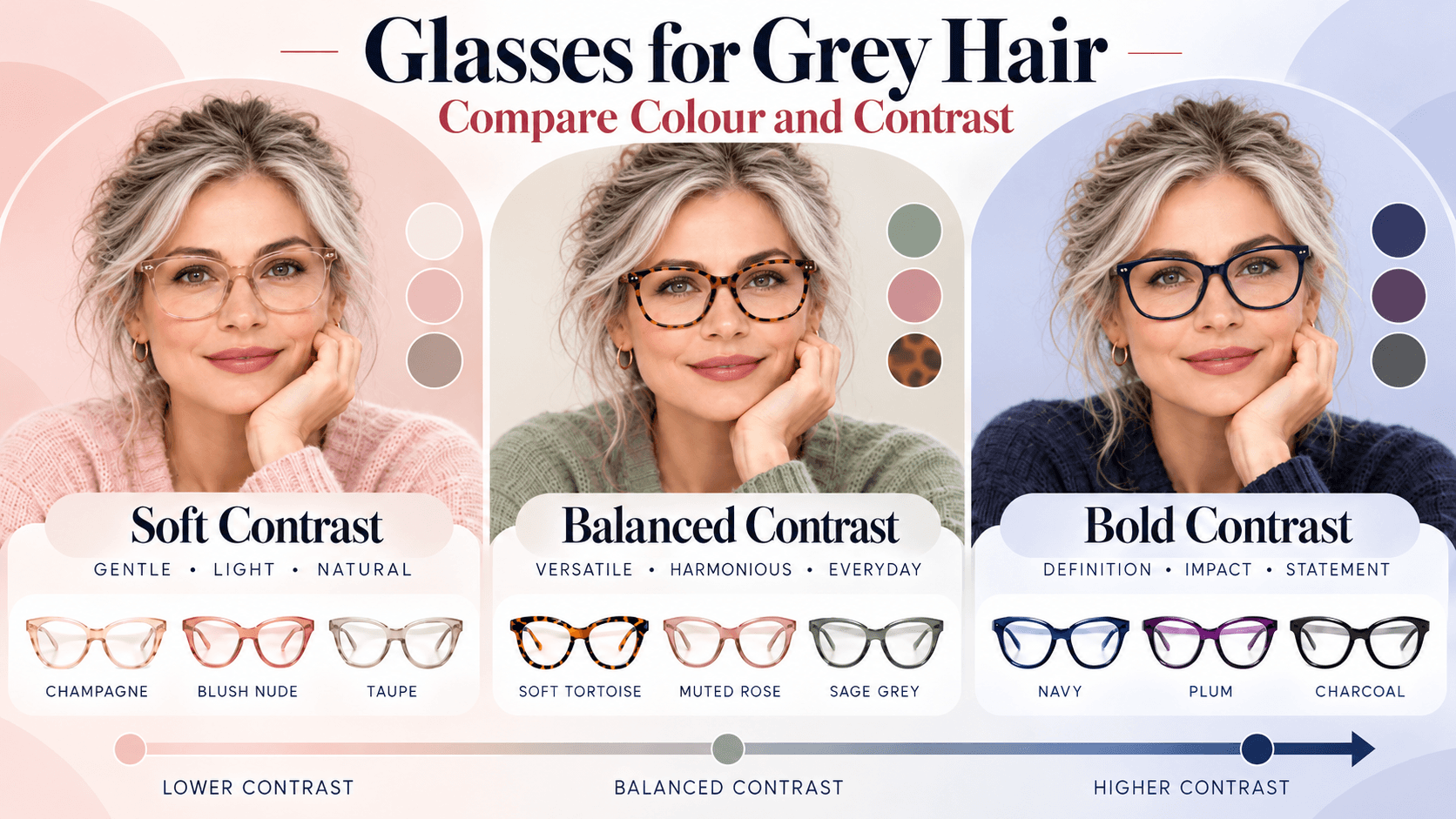
The best glasses for grey hair create contrast rather than blending in. Frames in warm tortoiseshell, deep jewel tones, bold black, or warm metallics tend to stand out beautifully against silver and white hair, while pale or washed-out colours can make features disappear. The key is understanding your skin's undertone alongside your hair, then choosing frames that add dimension.
Why Grey Hair Changes Your Frame Equation
When hair loses pigment, the contrast between hair, skin, and eyes naturally softens. Frames that once worked perfectly can start looking flat or heavy. To restore that visual balance, your eyewear needs to carry more of the colour story. Think of your frames as the new focal point of your face.
Warm vs Cool Undertones: Which Frames Work Best?
Before picking a colour, identify whether your skin has warm or cool undertones.
Warm undertones (golden, peachy, olive skin): Reach for tortoiseshell, honey brown, warm amber, copper, or gold metallics. These shades echo the warmth in your complexion and stop grey hair from looking ashy.
Cool undertones (pink, beige, or bluish skin): Gunmetal, silver, deep burgundy, navy, and classic black all work brilliantly. They harmonise with the cool bluish cast that grey hair often carries.
Neutral undertones: You have the most flexibility — both warm and cool palettes work, so experiment with contrast colours like rich plum or forest green.
The Contrast Principle: Bold vs Subtle
High contrast is your friend with grey hair. A jet-black frame against silver hair looks striking and modern. A dark tortoiseshell against salt-and-pepper hair adds depth. Where you want to be careful is with very pale frames — blush pink, light beige, or pastel colours — which can wash out your overall look rather than frame it.
That said, contrast does not have to mean dark. A vibrant cobalt blue or a deep emerald green frame against fully white hair creates stunning, fashion-forward contrast without going heavy.
Frame Materials and Finishes to Consider
Acetate frames in rich, layered colours are ideal — tortoiseshell, marbled patterns, and deep solid tones all photograph beautifully against grey hair.
Metal frames in gold or rose gold add warmth. Silver and gunmetal lean cooler and suit those with naturally cool-toned grey.
Rimless and ultra-thin frames keep the focus on your features but offer little colour contrast — best reserved for those who prefer a minimal aesthetic.
Sunglasses for Grey Hair: Same Rules Apply
When choosing sunglasses, the contrast principle holds. Dark acetate frames — tortoiseshell, black, or deep brown — complement grey hair in natural light. Mirrored lenses in gold or rose gold add a modern edge while flattering warm-toned complexions. Avoid frames that closely match your hair colour, as they tend to disappear in photos and in person.
A Quick Colour Guide by Hair Tone
Salt-and-pepper hair: Warm tortoiseshell, deep brown, burgundy, or warm gold metallics.
Fully silver hair: Bold black, cobalt blue, emerald green, or cool gunmetal.
White or platinum hair: Any deep jewel tone — navy, plum, forest green — or classic black for maximum contrast.
Warm grey (slightly beige): Honey brown, amber, or copper frames to echo the warmth.
Choosing glasses is ultimately about confidence. Use these principles as a starting point, then try several options — what creates the right contrast for your face, your features, and your personal style is the frame worth wearing.
