
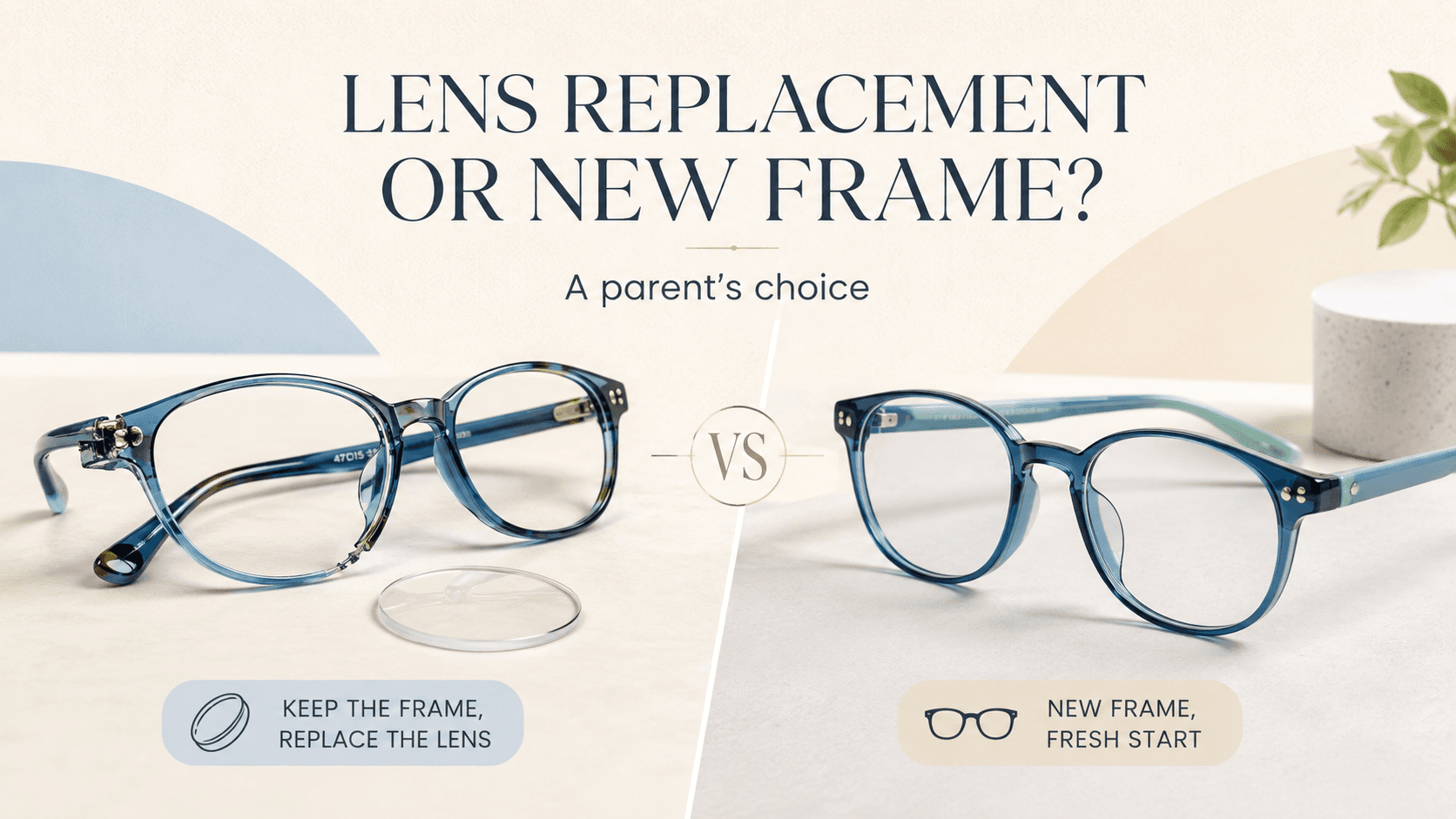
When a child's glasses are damaged, parents should first assess whether the frame is structurally sound. If the frame is intact and the prescription hasn't changed, replacing only the lenses is almost always the more cost-effective and faster option. If the frame is bent beyond repair, broken at the hinge, or the child has outgrown it, a new frame with fresh lenses makes more sense.
How to Tell Whether the Frame Can Be Saved
Not every scratch or scuff means a frame is finished. A frame is worth keeping if it still sits evenly on the face, the hinges open and close without stress, and the temples haven't snapped. Take the frame to an optician — most can heat and reshape acetate or metal frames at no charge. If the frame passes a basic physical check, lens replacement is the smarter call.
On the other hand, frames made from low-cost plastic that have cracked across the bridge or at a hinge joint are rarely worth repairing. Children's noses and ears grow quickly too, so a frame that no longer fits properly should be replaced entirely rather than patched.
When Has the Prescription Changed?
Children's eyes change rapidly, especially between ages 6 and 14. If your child's last eye examination was more than 12 months ago, a damaged pair of glasses is actually a good prompt to book a fresh eye test before ordering anything. Replacing lenses in an old frame with an outdated prescription wastes money twice — once now, and again when the correct prescription is finally issued.
If the prescription is current and confirmed by your child's ophthalmologist or optometrist, lens-only replacement is straightforward. Bring the original frame to a reliable optical store or use an online service that accepts frames for re-glazing.
Lens Replacement vs. New Frame: A Quick Comparison
Lens replacement only — Best when: frame is undamaged, prescription is unchanged, budget is tight. Turnaround is usually 3-5 working days.
New frame and lenses — Best when: frame is cracked or broken, child has grown significantly, prescription has changed, or the child simply needs a better-fitting style.
Frame repair plus new lenses — A middle path when the hinge or nose pad is damaged but the rest of the frame is solid.
What Types of Lenses Work Best for Active Kids?
Regardless of whether you are replacing lenses or buying new, children's lenses should be polycarbonate or Trivex — both are impact-resistant and significantly lighter than standard plastic. Anti-scratch and anti-reflective coatings are worth the small additional cost because children are hard on their eyewear. If your child spends time on screens, a blue-light filtering coating can be added at the same time.
Budgeting: Which Option Costs Less in India?
Lens-only replacement in India typically costs between ₹800 and ₹3,000 depending on lens type, coatings, and power. A full frame-plus-lens purchase at a reputable retailer starts from around ₹1,200 and can go much higher for branded frames. For families managing multiple pairs or frequent prescription changes, keeping a sturdy spare frame and ordering replacement lenses online is a practical long-term strategy.
Rimloo offers prescription lenses in a range of materials and coatings, and many frames in the kids' collection are designed with flexible hinges that survive everyday rough-and-tumble use — reducing the frequency of full replacements.
