
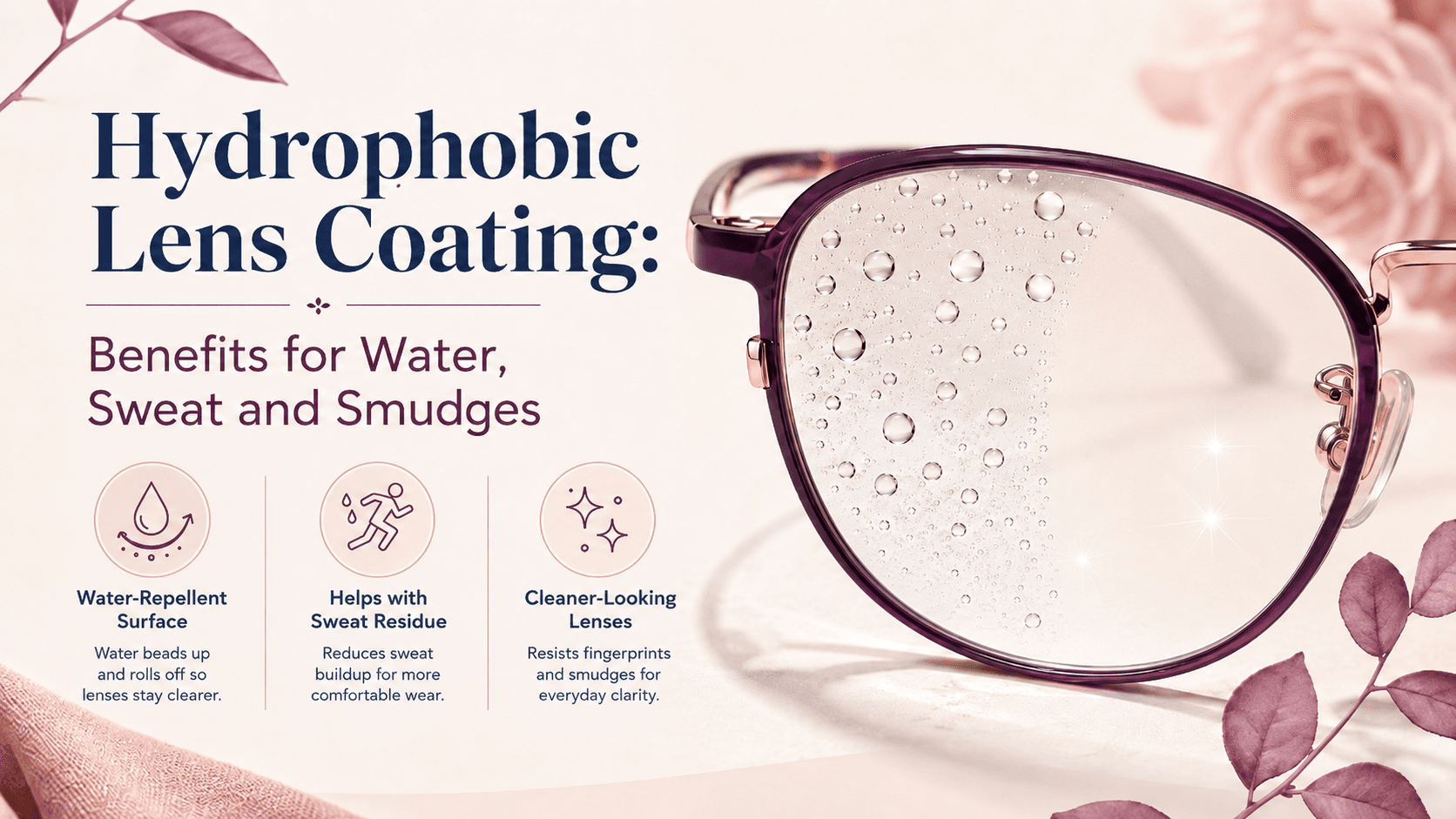
Hydrophobic Lens Coating: How It Helps With Water, Sweat and Smudges
Rain droplets, sweat, fingerprints and facial oils can quickly make eyeglass lenses look cloudy. Frequent wiping may be frustrating, especially when you wear glasses throughout the day.
A hydrophobic lens coating creates a smoother, water-repellent surface that helps liquids form droplets rather than spreading across the lens. It does not make glasses completely waterproof or self-cleaning, but it can help lenses stay clearer and make everyday cleaning easier.
What Is a Hydrophobic Lens Coating?
“Hydrophobic” describes a surface that resists being wetted by water. Instead of spreading into a flat film, water tends to gather into rounded droplets that can roll away or be removed more easily.
On eyeglasses, this treatment is normally applied as a thin top layer over the lens or as part of a multi-layer coating package.
Hydrophobic coatings are often combined with:
Anti-reflective coating
Scratch-resistant treatment
Oleophobic coating
UV protection
Anti-static properties
Available features vary by lens manufacturer and product package.
How Does Hydrophobic Coating Help?
1. Water forms droplets more easily
Without a water-repellent coating, rain or splashes may spread across the lens and create distracting marks.
A hydrophobic surface encourages water to bead into droplets. Some droplets may roll away when the glasses move, while others are generally easier to wipe from the lens.
This can be useful during:
Light rain
Outdoor exercise
Cooking
Travel
Moving between humid environments
Everyday accidental splashes
Hydrophobic coating does not stop water from reaching the lens, and droplets may still temporarily affect vision.
2. Sweat is easier to clean
Sweat can reach your lenses from your forehead, eyebrows or cheeks, particularly during exercise, warm weather or physical work.
A hydrophobic top layer may prevent moisture from spreading as widely across the lens. However, sweat also contains salts and oils, so dried marks still need proper cleaning.
For better resistance to oily residue, choose a coating that includes oleophobic protection as well as hydrophobic properties.
3. Fingerprints and smudges may wipe away more easily
Hydrophobic coating mainly repels water. Fingerprints and facial oils are better addressed by an oleophobic coating.
Many modern premium lens treatments combine both features, creating a smoother surface that makes fingerprints, makeup and greasy smudges easier to remove. Water- and oil-repellent lens treatments have long been used to reduce residue and simplify cleaning.
This does not mean the lenses will remain completely fingerprint-free.
Hydrophobic vs Oleophobic Coating
These terms are related but not identical:
Hydrophobic coating repels water and moisture.
Oleophobic coating resists oils, fingerprints and greasy marks.
For everyday glasses, a lens treatment combining both usually offers more practical cleaning benefits than a water-repellent coating alone.
Is Hydrophobic Coating the Same as Anti-Fog?
No.
Hydrophobic coating helps liquid water form droplets on the lens surface. Anti-fog treatments are designed to reduce the formation of tiny condensed droplets that create a foggy appearance.
Hydrophobic lenses can still fog when moving between temperatures, wearing a face covering or entering a humid environment.
Choose a dedicated anti-fog solution when fogging is your main concern, and always confirm that it is compatible with your lens coatings.
Who May Benefit From Hydrophobic Lenses?
Hydrophobic lens coating may be especially useful for:
People who frequently wear glasses outdoors
Athletes and active users
People living in rainy or humid climates
Anyone whose lenses collect sweat or facial oils
Children who frequently touch their glasses
People who prefer easier lens maintenance
Wearers of anti-reflective lenses, where smudges may appear more noticeable
It can be added to many prescription glasses, sunglasses and some photochromic lenses, depending on the lens package.
How to Clean Hydrophobic-Coated Glasses
Proper cleaning helps protect the coating.
Rinse loose dust from the lenses with clean lukewarm water.
Apply a lens-safe cleaning spray or a small amount of suitable mild soap.
Gently clean both sides of the lenses.
Dry them with a clean microfiber cloth.
Store the glasses in a protective case.
Avoid using clothing, paper towels, household glass cleaner, abrasive products or very hot water. These may scratch the lenses or damage their coatings.
Does Hydrophobic Coating Last Forever?
No lens coating lasts indefinitely.
Its durability depends on:
Coating quality
How frequently the glasses are cleaned
Cleaning products used
Exposure to heat, chemicals and abrasion
How the glasses are stored
General daily wear
Over time, water may stop forming droplets as effectively, or the lenses may become harder to clean. An optician can inspect the lenses and determine whether the coating has worn or the lenses need replacement.
Is Hydrophobic Lens Coating Worth It?
Hydrophobic coating is worth considering when you regularly deal with rain, sweat, splashes or frequent lens cleaning.
Its main benefits are convenience and easier maintenance—not complete protection from water or permanent resistance to dirt.
For broader everyday performance, look for a lens package that combines:
Hydrophobic protection
Oleophobic protection
Anti-reflective coating
Scratch resistance
UV protection
Final Takeaway
Hydrophobic lens coating helps water bead on the lens surface instead of spreading into a film. It may also make sweat residue and everyday marks easier to clean, particularly when combined with an oleophobic top layer.
It will not make your glasses waterproof, fog-proof or completely smudge-free, but it can help your lenses stay clearer with less effort.
